E-Paper



Odisha: Probe ordered into deaths of 2 people due to ‘wrong blood transfusion’
Keonjhar chief district medical officer Dr Sujata Rani Mishra said she has ordered a probe into the incident


BHUBANESWAR: Officials of the tribal-dominated district of Keonjhar in Odisha have ordered a probe into two separate cases of patients dying after they were allegedly transfused with wrong blood group during treatment in the district headquarters hospital.
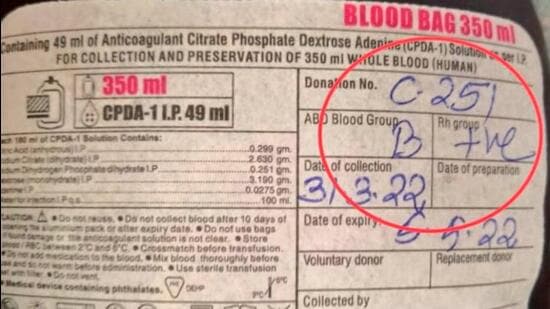
Officials in Keonjhar said family members of Dama Munda, a 70-year-old tribal man, and Suni Sahu, a 40-year-old lady, have lodged a complaint with the district collector seeking action against the doctors and paramedical staff after both died after a blood transfusion procedure.
Dama Munda of Kandaraposhi village in Keonjhar Sadar was admitted to the hospital on March 29. Though he was initially admitted to the orthopedics ward, he was later shifted to the tuberculosis (TB) department after doctors suspected he was suffereing from TB. Though Munda required blood from the ‘A positive’ group, his family members allege they were given ‘B positive’ blood.
“The blood transfusion was stopped midway after my brother-in-law Bhagaban Munda told a nurse that he was being given blood of the wrong group. The next day, ‘A positive’ blood was given to him. Though his condition deteriorated, doctors discharged him on April 3 declaring him fit. However, he died on May 11, most likely due to complications from the transfusion of wrong blood group,” Dama’s son Ajit said in his complaint, demanding action against the medical staff for negligence and ₹20 lakh compensation.
Similarly, Suni Sahu from Raisuan gram panchayat of Keonjhar was admitted to the district headquarters hospital on May 13. Sahu was transfused with two units of blood of ‘B positive’ group. However, her condition deteriorated, following which she was taken to the SCB Medical College and Hospital in Cuttack where her blood group was found to be ‘AB positive’.
Sahu’s elder brother Babaji said on May 21 that his sister was transfused with two units of ‘B positive’ blood group. Though her condition improved for the first few days, it deteriorated soon, leading to her death on May 29.
“My sister died solely due to the lethargic manner in which she was treated in the Keonjhar hospital,” Babaji said, demanding strict action against the erring doctors.
Keonjhar chief district medical officer Dr Sujata Rani Mishra said she has ordered a probe into the incident.
The allegations of deaths due to wrong blood transfusion came a little more than a week after the Orissa high court issued a slew of directions to the state government for improvement of conditions in government hospitals.