
 E-Paper



On Kargil anniversary, Army chief General Bipin Rawat says future conflicts will be more violent, unpredictable
On the 20th anniversary of the Kargil conflict, Army chief General Bipin Rawat said the formation of the Space, Cyber and Special Forces divisions is indication of the transformation that the armed forces are going through.

 Prefer HTon Google


Future conflicts will be “more violent” and “unpredictable” with technology, cyber domain playing a greater role, Chief of Army Staff General Bipin Rawat said on Saturday. He was speaking at a seminar in New Delhi to mark the 20th year of the Kargil conflict.
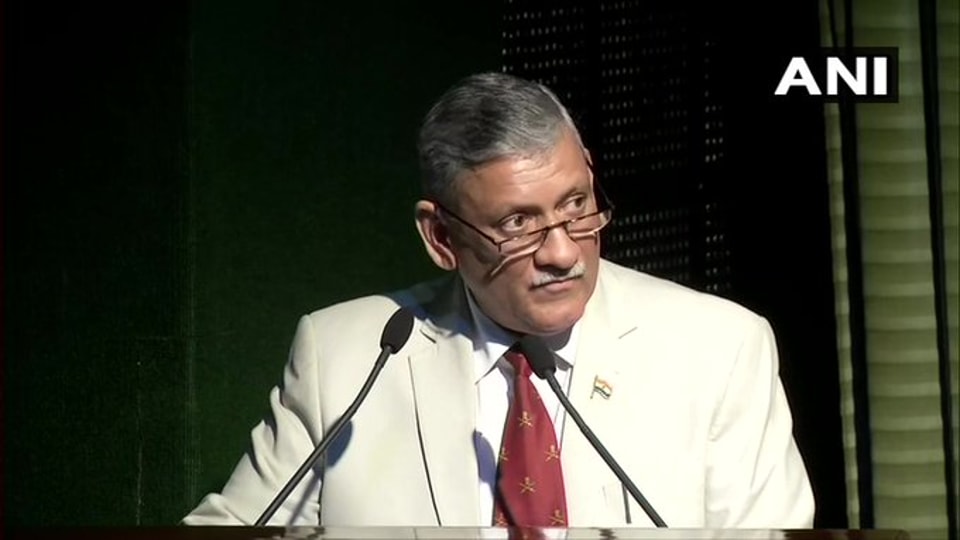
“The military must be ready for a mutli-spectrum war. The rise of non-state actors and the rapid changes in technology is changing the nature of warfare. Cyber and space domain will increasingly play a bigger role as the battle field becomes more contested and at the same time will be seamlessly connected,” General Rawat said drawing out the contours of future conflicts.
The Indian Army needs and is going through a transformation. “The formation of the Space, Cyber and Special Forces divisions is indication of the transformation that the armed forces are going through,” he said.
The cross border strikes after Uri Brigade Headquarters attack in 2016, and Balakot air strike after the Pulwama suicide bombing in February this year not only demonstrate the political-military resolve but also another indication of the changes, the army chief said.
Also read: Govt has okayed proposal to restructure army HQ: Bipin Rawat
In 1999, the intrusion by Pakistan Army was detected in the early stages despite it being spread over 160 km across Kargil over a few months, but General V P Malik, the Chief of Army Staff during the Kargil conflict ruled out intelligence failure.
“There was no intelligence or even assessment about Pakistan trying to carry out an operation,” the former Chief staff said in a candid admission at the seminar. As a result, for a long time, it was believed that the heights had been taken over by the Mujhahideen and therefore the approach adopted to was that of counter insurgency,” General Malik said.
“We lacked surveillance equipment and depended mainly on the foot patrols,” General Malik said and added, “Unlike Siachen, there wasn’t much awareness about the Kargil-Batalik sector. Winter clothing, special equipment weren’t even authorized for the Kargil-Batalik sector.”
The Kargil conflict saw one of the greatest counterattacks in military history when the Indian army overcame heavy odds to recapture strategic heights where Pakistani intruders had sneaked in and entrenched themselves firmly.


