
 E-Paper


Follow the latest breaking news, major developments and agenda-setting stories from India and around the world with the newsdesk at Hindustan Times. Operating round the clock, the desk brings together experienced editors, reporters and correspondents to deliver fast, accurate and contextual reporting across subjects that influence public policy, governance, business, society and international affairs. The HT News Desk covers politics, elections, government policies, the economy, business and markets, science and technology, the environment, law and order, infrastructure, education, climate issues and geopolitics, while closely tracking developments across states, institutions and global capitals. The team also leads coverage of major breaking news events, policy announcements, court proceedings, natural disasters, public emergencies and significant international developments. Reports published by the newsdesk are based on information gathered from reporters on the ground, official statements, government agencies, court records, regulatory filings, recognised institutions and other authoritative sources. Stories undergo editorial scrutiny and verification processes to ensure accuracy, fairness and relevance, and are updated as events evolve and additional information becomes available. Whether covering a key political decision in New Delhi, an economic policy shift affecting millions, a landmark court ruling or a major global event, the HT News Desk aims to provide readers with reliable, fact-based journalism that delivers not only the latest developments but also the context and analysis needed to understand their wider implications.
‘Open to talks if Pakistan stops terror’: S Jaishankar
Jaishankar made the remarks late on Friday during a meeting with European Commissioner Christos Stylianides after the latter reiterated the European Union’s stance that New Delhi and Islamabad need to reopen dialogue.


India is willing to discuss outstanding issues with Pakistan bilaterally in an “atmosphere free of terror and violence”, external affairs minister S Jaishankar has said in remarks that come against the backdrop of heightened tensions between the two countries after the National Democratic Alliance (NDA) government nullified Jammu and Kashmir’s special status.
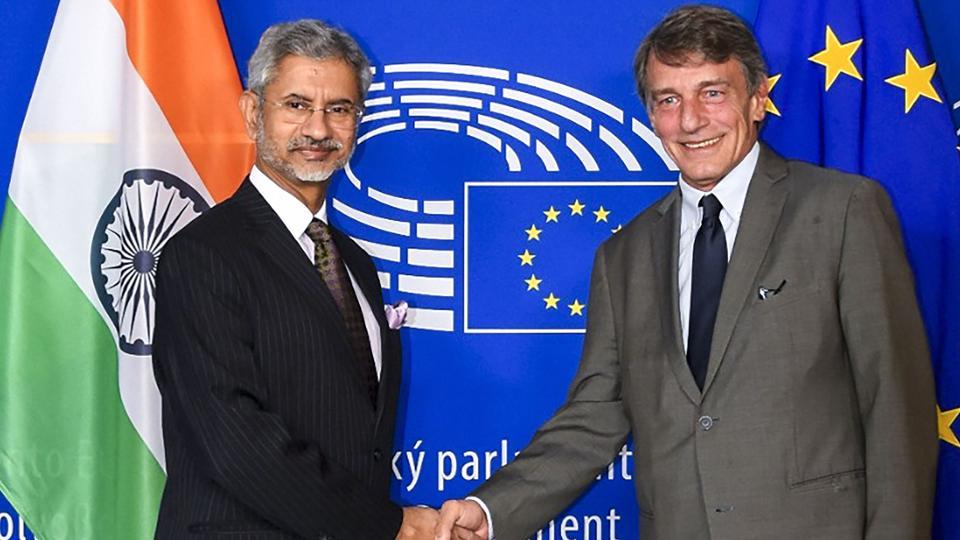
Jaishankar made the remarks late on Friday during a meeting with European Commissioner Christos Stylianides after the latter reiterated the European Union’s stance that New Delhi and Islamabad need to reopen dialogue through diplomatic channels for the de-escalation of tensions.
“A good meeting with EU Commissioner @StylianidesEU. Discussed our perspectives on Afghanistan and Iran. Spoke of our expectations for better governance and more development in Jammu, Kashmir and Ladakh,” Jaishankar tweeted after the meeting in Brussels.
“Underlined India’s openness to discuss other outstanding issues bilaterally with Pakistan in an atmosphere free of terror and violence,” the external affairs minister added.
India has condemned what it says are provocative and irresponsible statements by the Pakistani leadership following the effective revocation of Kashmir’s special status. Over the past few weeks, Pakistan Prime Minister Imran Khan and other ministers have spoken of the possibility of war with India even as New Delhi maintained that the changes in Kashmir were an internal matter. The Indian government has largely refrained from responding to these comments.
Tensions between India and Pakistan increased after New Delhi scrapped Jammu and Kashmir’s special status and split the state into two Union Territories on August 5.
On Saturday, a Pakistani media report quoted the country’s foreign minister Shah Mahmood Qureshi as saying that Pakistan was ready for “conditional dialogue” with India.
Qureshi said the talks could take place if India lifted restrictions in Kashmir, released the “imprisoned Kashmiri leadership” and allowed him to meet with them.
There was no immediate response by Indian officials on Qureshi’s remarks. India has repeatedly made it clear that talks with Pakistan are only possible after Islamabad stops sponsoring terror.
In an opinion piece in The New York Times on Thursday, Khan wrote that talks with India can take place only if New Delhi “reverses” its decision on Jammu and Kashmir’s special status.
Khan also repeated his warning that if the world does nothing to stop India’s decision on Kashmir, “there will be consequences for the whole world as two nuclear-armed states get ever closer to a direct military confrontation”.
The international community has indicated it is satisfied by India’s stance that the changes in Kashmir are an internal matter and this had been reflected in public statements by world leaders, according to people aware of the developments in New Delhi. Pakistan’s efforts to internationalise the Kashmir issue haven’t gained much traction, they said.


