E-Paper



Our environmental conservation culturally rooted, evidence based: India at IUCN
Union minister Kirti Vardhan Singh cited examples of traditional knowledge of Toda tribes of Nilgiris in predicting monsoon by observing nest building behaviour of ants

 Prefer HTon Google


The Indian model of environmental conservation advocates a policy framework that is evidence-based, equity-driven and culturally-rooted, India said in its intervention at a high level roundtable dialogue at the International Union for Conservation of Nature (IUCN) World Conservation Congress in Abu Dhabi on Friday.
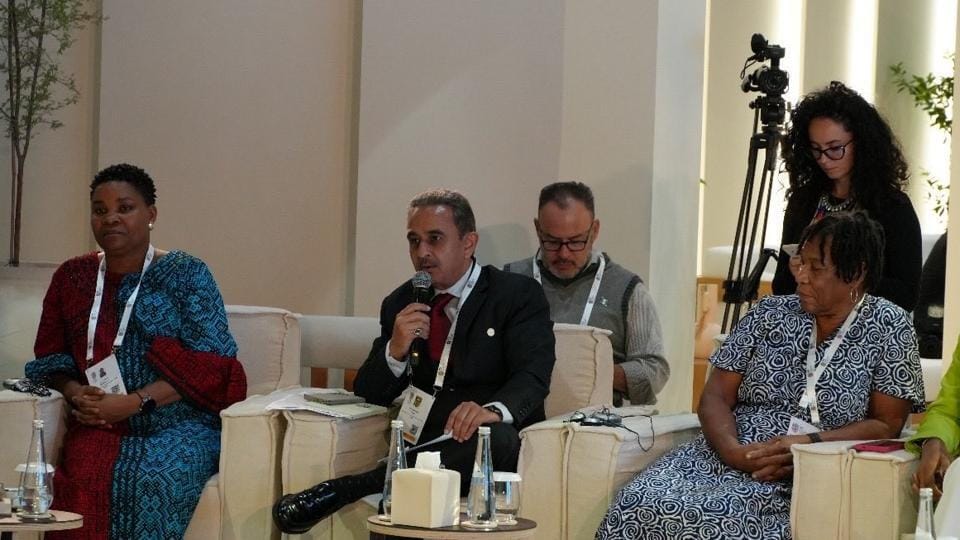
Union minister of state for environment Kirti Vardhan Singh highlighted the importance of conserving natural resources and living in harmony with nature is deeply rooted in Indian culture and traditions.
“While modern science uses terms like sustainability and climate change, India has long embodied these principles through practical, nature-aligned living,” said Singh.
Singh informed IUCN about ‘Mission LiFE’ launched by Prime Minister Narendra Modi at COP26 in Glasgow in 2021, calling upon the global community of individuals and institutions to drive LiFE as an international mass movement towards “mindful and deliberate utilisation, instead of mindless and destructive consumption” to protect and preserve the environment. LiFE’s vision revolves around encouraging environmentally conscious behaviour, rooted in India’s traditional ethos/knowledge, Singh said.
Also Read: Wildlife conservation in India: time to look beyond the tiger
Explaining the concept further, Singh stated that India’s ethos believes that science and traditional knowledge are complementing and not competing.
“India is working to document, validate and integrate these indigenous practices into formal systems of climate adaptation and biodiversity conservation,” he informed.
In his address, Singh cited examples of traditional knowledge of Toda tribes of Nilgiris in predicting monsoon by observing nest building behaviour of ants or Jarawas of Andaman predicting cyclones based on movement of fish.
He also talked about sustainable water conservation practices in Rajasthan with stepwells.
“As IUCN continues to advance nature-based solutions, the task ahead is to deepen this dialogue. Weaving the threads of modern science and traditional knowledge together will help to move from abstract concepts to tangible actions,” he said.
India launched the National Red List Assessment initiative to fulfil commitments under the Convention on Biological Diversity (CBD) and the Kunming–Montreal Global Biodiversity Framework.
Singh released India’s Vision 2025–2030 for the National Red List Assessment (NRLA) on Thursday, which will document and assess extinction risk of approximately 11,000 species – including 7,000 species of flora and 4,000 species of fauna – across India’s biodiverse ecosystems, according to Ministry of Environment, Forest and Climate Change’s (MoEFCC) report titled “National Red List Assessment of Indian Flora and Fauna.”
The framework for the assessment has been prepared by the Zoological Survey of India (ZSI) and the Botanical Survey of India (BSI), in close collaboration with IUCN-India and the Centre for Species Survival, India.
“This vision outlines our roadmap for a nationally coordinated, inclusive and science-based system to assess and monitor the conservation status of our species,” said Singh.