E-Paper



Over 10,000 unrecognised schools in Bihar, Jharkhand: Education Ministry
The education ministry has asked both Jharkhand and Bihar to take further course of action and issue suitable instructions to the authorities concerned regarding the unrecognised schools

 Prefer HTon Google


New Delhi: Jharkhand and Bihar together have over 10,000 unrecognised schools enrolling over 1.6 million students and having more than 88,000 teachers, according to the Union education ministry.
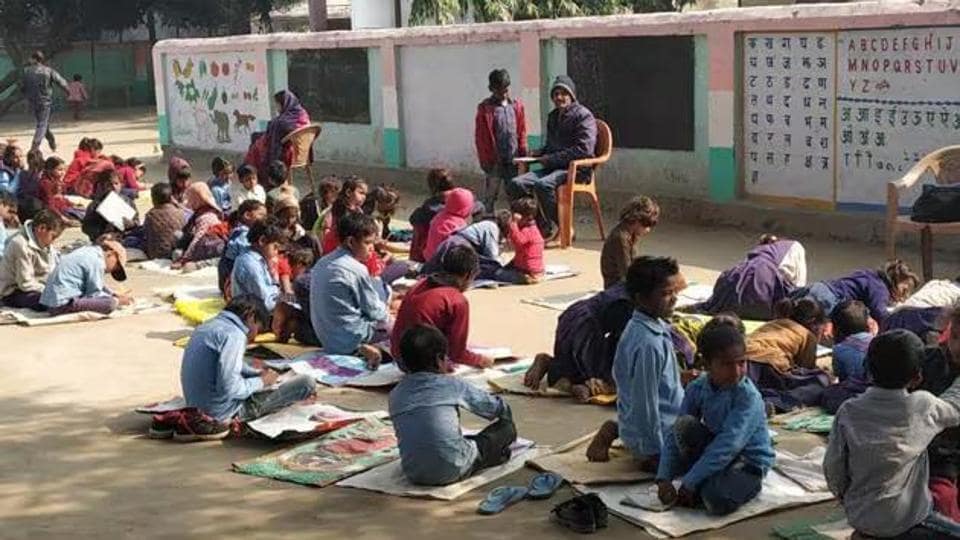
While Jharkhand has the “highest” 5,879 unrecognised schools in the country with an enrolment of 8,37,897 students and 46,421 teachers, Bihar has 4,915 such schools with an enrolment of 7,75,704 students and 42,377 teachers.
During Project Approval Board (PAB) meetings for the approval of budget and plans under Samagra Shiksha scheme for 2025-26 with the state officials between March and April 2025, the ministry stated that unrecognised schools are violating section 19 of the Right To Education (RTE) Act 2009 which requires pre-existing schools to meet prescribed norms within three years of the Act’s commencement.
“The Act also mandates that if such schools fail to fulfil the norms, the recognition shall be withdrawn, and the school shall cease to function,” said the minutes of the meetings uploaded on the ministry’s website.
The ministry has asked both the states to “take further course of action and issue suitable instructions to the authorities concerned to recognise these unrecognised schools or to take appropriate action as deemed fit at the earliest.”
The ministry has quoted data for unrecognised schools in Bihar and Jharkhand from Unified District Information System for Education (UDISE)+ 2023-24 report. However, the data on unrecognised schools is not publicly available in the said report released in January this year. The education ministry officials did not respond to HT’s queries on clarification.
“These [Unrecognised] schools started functioning before the implementation of RTE Act 2009. The state government has already issued directions for recognition of such schools. We have formed district-level recognition committees for recognition of such schools,” Sachidanand Diyendu Tigga, administrative officer at Jharkhand education project council told HT.
According to the minutes of the PAB meetings, the ministry has also flagged “large variation” in reporting of data about out-of-school children (OoSC) by Bihar and Jharkhand on the education ministry’s Project Appraisal, Budgeting, Achievements and Data Handling System (PRABANDH) portal and the National Sample Survey Office (NSSO) survey.
The Centre describes an OoSC as a child aged six to 14 years, who has never been enrolled in an elementary school or has remained absent from school after enrolment without prior intimation for 45 days. OoSC, therefore, include both never enrolled in schools and the dropouts. Data for OoSC is uploaded by states on PRABANDH portal, the online system used to monitor the implementation and progress of Samagra Shiksha, a shared scheme between the Centre and states supporting public schools with a funding ratio of 60:40.
According to the NSSO, ‘never enrolled’ children are those who have never attended any school or formal educational institution.
In Jharkhand, the PRABANDH portal recorded 37,409 Out-of-School Children (aged 6 to 19 years) for 2023–24. In contrast, the NSSO survey for 2022–23 reported 1,07,639 ‘never enrolled’ children in the 6 to 14 age group. In Bihar, PRABANDH data for 2023–24 showed 33,285 OoSCs, while the NSSO reported a significantly higher figure of 6,27,763 ‘never enrolled’ children for 2022–23.
The ministry advised both the states to “monitor the data uploaded on the portal by a responsible officer under the supervision of the State Project Director (SPD).” The ministry also directed both the states to initiate a special enrolment drive with full involvement of school management committees to ensure identification and admission of all OoSC.
Tigga said, “We will look into discrepancies in the number of OoSCs. We are running the campaign ‘back to school’ to enroll those students who are not going to the schools.”