
 E-Paper



‘Pak epicentre of instability in South Asia’: Retired IPS officer delves into ‘glocal terror’ in new book
Retired IPS officer Anju Gupta traces four decades of great-power rivalry, regional politics, and ideological shifts in her new book.

 Prefer HTon Google


Two townships named “Mecca” and “Madina” have been developed near terror outfit Lashkar-e-Taiba (LeT)’s headquarters in Muridke, Lahore, where plots are allotted exclusively to followers of Salafism, and the gates are guarded by armed cadres to enforce “purity”, retired Indian Police Service (IPS) officer Anju Gupta has said in her new book.
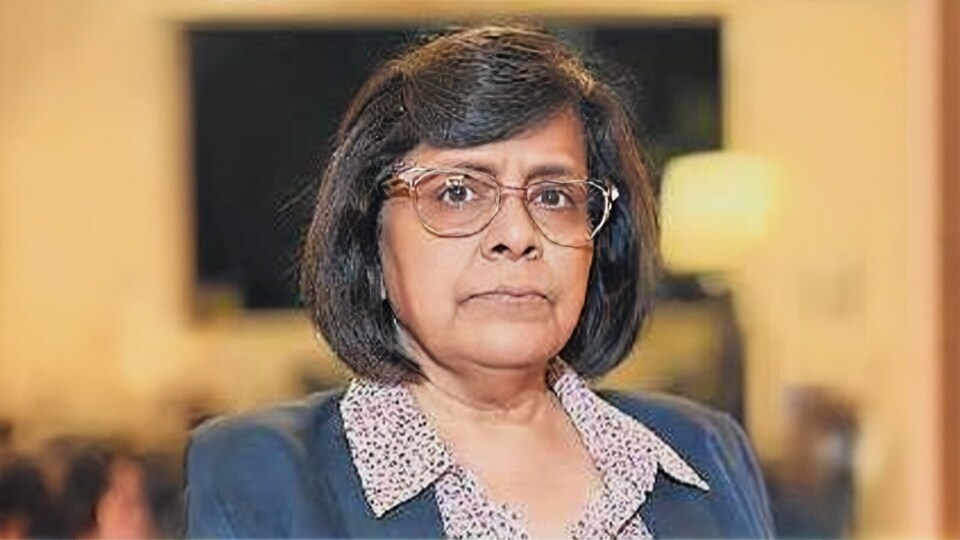
Gupta, a 1990-batch Uttar Pradesh cadre IPS officer who retired as a DGP-rank officer in the UP Police, is regarded as a security strategist with her experience spanning postings with the UN mission that held the administration of Kosovo, the United Nations Office on Drugs and Crime in Delhi, and her time as an officer who served in the Union government’s Cabinet Secretariat.
The insights are part of her new book — “Glocal terror in South Asia: tracing the roots in geopolitics and the tragedy of Afghanistan” — where Gupta traces four decades of great-power rivalry, regional politics, and ideological shifts that fuelled the rise of what she calls “glocal” terrorism.
Published by Simon & Schuster India, the book predicts several potential black swan events in the region, citing the historical interplay of geopolitics, Pakistan’s internal power dynamics, and the use of terror proxies in South Asia.
A black swan event is an unpredictable but high-impact development that could destabilise a region.
To lay out her contention, Gupta covers how Pakistan — a country she describes as “the epicentre of instability in South Asia” — reached where it is now, including the role of key terror figures in a chapter titled ‘Poster boys of glocal jihad in Af-Pak’.
LeT founder Hafiz Saeed, Jaish-e-Mohammed (JeM) chief Maulana Masood Azhar, 2008 Mumbai attack accused Sajid Mir and al-Qaeda leader Ilyas Kashmiri, she writes, acted as key human nodes plugging South Asia into al-Qaeda’s global network, while they themselves ran local insurgencies.
LeT, Gupta writes, has become the largest Jihadi group in Pakistan.
“The group’s headquarters is in Muridke, about 30 kms from Lahore. Two townships, called Mecca and Madina, have been developed there for the followers of the Salafi sect from all over the country in order to provide them with a pure atmosphere strictly in accordance with the Shariah law.”
She adds: “Plots are allocated only to the followers of Salafism and in order to keep them free from vices, the residents don’t have a right to read daily newspapers and to watch TV or photographs. In order to enforce such ‘purity’, armed youth of LeT remain present at the gates of the two colonies. In Lahore itself, there are hundreds of points that serve as recruitment centres as well as for collection of donations for the group.”
India bombed the Muridke headquarters of LeT during Operation Sindoor on May 7, 2025, in response to the April 22 Pahalgam terror attack.
The book draws an arc in the evolution of terrorism in Pakistan: from taking roots from the Afghan jihad in the late Cold War years, through regional conflicts wrought by groups such as Pakistan-based Harkat-ul-Mujahideen and other Salafi groups linked to al-Qaeda, to the joining of issue with Kashmir.
At one point, attempts to replicate the Afghan jihad model in Kashmir was attempted but failed and the insurgency then increasingly relied on foreign fighters and militants trained by organisations operating from Pakistan, Gupta contends.
Pakistan never succeeded in cultivating genuine political support in Kashmir, relying instead on cross-border terrorism as a strategy of disruption, she writes.
Now, a series of recent events — including the Russia-Ukraine war, the Israel-Iran conflict (the 12-day war in June 2025) — portend a “the realignment of relationships in South Asia and beyond” and “is likely to shape events in the coming months and years”.
“In this context, it is crucial to put under the scanner developments taking place at the epicentre of the instability in South Asia - Pakistan,” Gupta writes.
One of these is how Pakistan is clashing with neighbours on its either sides — Afghanistan to its east and India to its west. This makes the security of both the eastern and western front of Pakistan fragile and unstable”.
And then there is the elevation of Asim Munir as the field marshal of Pakistan, a move that gives him a complete free hand over security and foreign policy.
Gupta then ties the history with the present to argue that a “few potential Black Swan events” could play out in “coming months or years.”
She predicts one potential black swan event to be an internal revolt within the Pakistani army. “In Pakistan, the security and economic situation is precarious and the two borders with India and Afghanistan are tense.”
Referring to the 26 suicide attacks in Pakistan in 2025 alone, the book adds that “if the situation worsens and the Chief of Defence Forces (Munir) is unable to handle it, internal revolt in the army is a distinct possibility”.
Gupta then suggests that Munir could go to the extent of attempting to remove the Taliban from power, “even if it triggers a new phase of prolonged civil war or anarchy in Afghanistan”.


