
 E-Paper



Pakistan launched 8 BAT attacks at LoC in July-August
Between July 13 and August 4, the Pakistan Army’s Mujahid and special services group (SSG) battalions, along with Jaish-e-Mohammed (JeM) operatives, launched eight actions from the Uri to the Gurez and Tangdhar sectors.

 Prefer HTon Google


The Pakistan Army has been targeting the Line of Control (LoC) in north Kashmir, launching eight attempts by border action teams (BAT) to strike Indian Army personnel deployed in the region even as Islamabad prepares to accuse India of military aggression at the UN General Assembly session next month, according to people familiar with the developments.
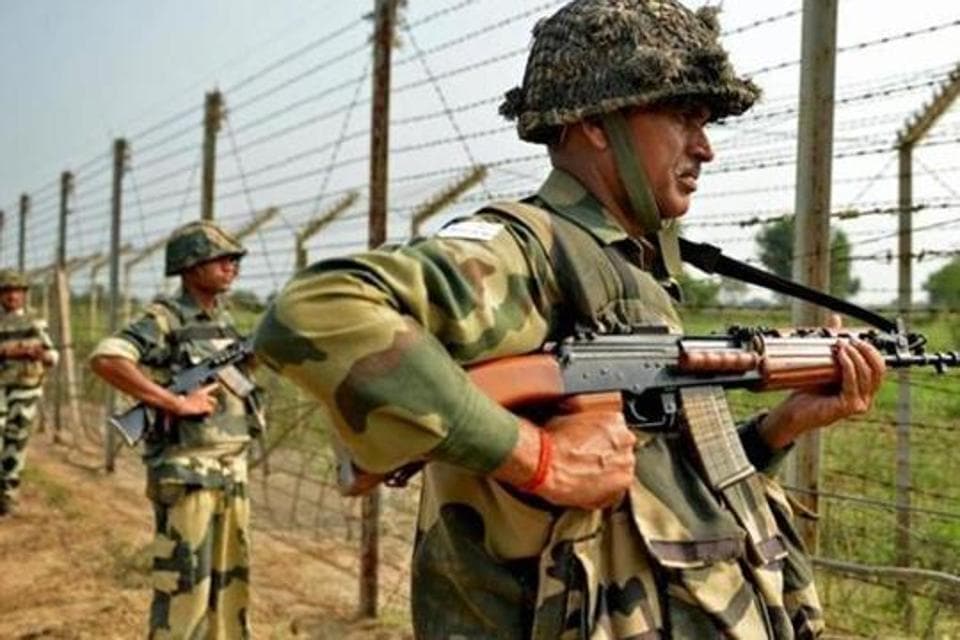
Between July 13 and August 4, the Pakistan Army’s Mujahid and special services group (SSG) battalions, along with Jaish-e-Mohammed (JeM) operatives, launched eight actions from the Uri to the Gurez and Tangdhar sectors. This led to India retaliating through depth shelling. Pakistan is estimated to have lost nine soldiers or terrorists in the incidents, while Indian Army sustained one loss at Machchil sector in the last week of July, the people cited above said.
According to senior military commanders based in Jammu & Kashmir and diplomats in New Delhi, the Pakistan foreign secretary briefed envoys from the US, France, Russia and China, accusing India of escalating tensions along the LoC by using prohibited cluster bombs.
The Indian Army, while reiterating its right to respond, has strongly denied it has used cluster bomb.
The use of cluster bombs, which emit deadly exploding shrapnel, or smaller bomblets, is prohibited under several international treaties.
One of the people cited above said that, according to reports reaching India, the Pakistan has already mobilised troops along the LoC as well as put its air force on operational alert in Pak-occupied Kashmir and the northern areas.
After BAT actions being repelled from northern Kashmir, intelligence reports indicate that at least four SSG teams — of four to five commandos — are camping in Bhimber, Kotli, Kel, and Lipa brigade headquarters of the Pakistan Army with the objective of carrying out BAT, sniper or IED action against Indian troops in the Bhimber, Kota, Lipa, and Neelum sectors south of Pir Panjal.
According to a Pakistan watcher who asked not to be named, Rawalpindi GHQ have been emboldened after the mediation offer by US President Donald Trump, and decided to escalate military tensions on the LoC so that the international community (particularly Washington) puts pressure on India to talk to Islamabad. “Pakistan will again rake up Kashmir in UNGA, as in the past, when the session starts on September 17. Since it knows that India will never accept mediation, the objective would be to ensure that PM Narendra Modi talks to Pakistan,” said a senior Indian diplomat.
PM Modi is also expected to be in the US for the UNGA in New York and a bilateral meeting with Trump in Washington.
The BAT action in north Kashmir began just before Pakistan PM Imran Khan was scheduled to go to Washington last month, and increased in frequency since then. There was an IED blast at the LoC near Uri on July 13; three BAT actions in Tangdhar on July 14, 21 and August 2; two BAT actions in Machchil sector on July 27 and August 4; and one BAT action in Gurez on July 30.
On August 13, the BAT action at Manjit Forward Post held by the 2 Assam Regiment was heavily retaliated by the Indian defenders as a result of which five to seven Pakistani personnel lost their lives.


