
 E-Paper



Who were 2 Mumbai doctors who kept Jinnah's health secret, set to receive Pakistan’s highest civilian awards?
The announcement has brought back attention to a little-known episode from history, and also sparked interest among members of Mumbai's Parsi community.

 Prefer HTon Google


Two Parsi doctors from erstwhile Bombay (now Mumbai), Jal Patel and Jal Daeboo, will be posthumously honoured with one of Pakistan’s highest civilian awards, the Nishan-e-Quaid-i-Azam, on March 23, 2027.
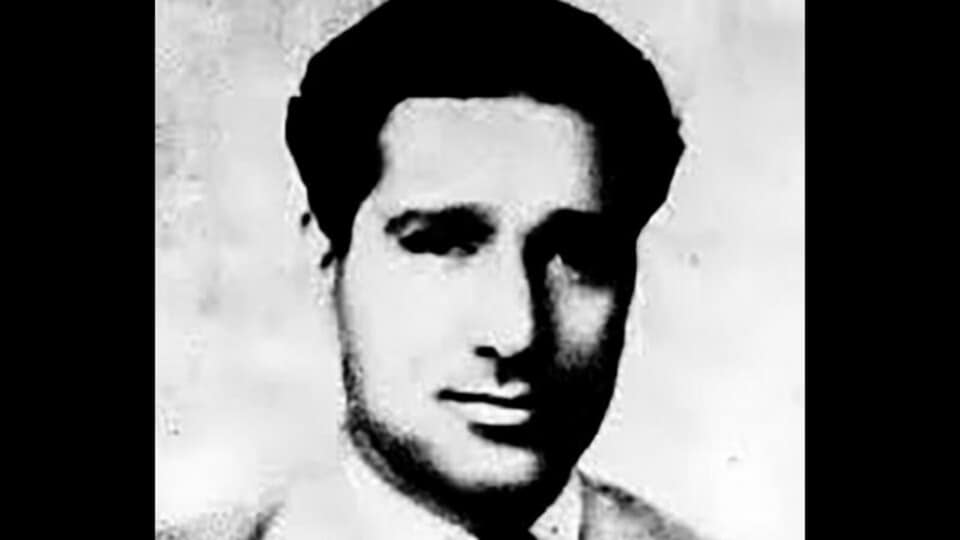
The honours list, issued on August 14, Pakistan's Independence Day, names the two doctors “for conferment on citizens of Pakistan and foreign nationals for exceptional achievements, excellence and courage in their respective fields”.
ALSO READ | ‘What have I done?’: When Jinnah confronted Partition’s horrors from the skies over Punjab
Who were the doctors and why is Pakistan honouring them?
Deep Dive

The announcement has brought back attention to a little-known episode from the history of the subcontinent. It has also sparked interest among members of Mumbai's Parsi community.
Dr Patel was the physician treating Muhammad Ali Jinnah, the founder of Pakistan. Along with radiologist Jal Daeboo, he kept Jinnah's terminal tuberculosis confidential, a secret that allowed the Pakistan leader to continue his final push for the country's creation, HT reported earlier.
The two doctors are said to have remained bound by their Hippocratic oath and medical ethics. Their decision to keep Jinnah's condition confidential has since been described as one of the most consequential secrets of the twentieth century. The story was brought to public attention in Dominique Lapierre and Larry Collins's book, ‘Freedom at Midnight’, on India's independence.
Citing the book, Pakistan’s federal minister for planning, development and special initiatives, Ahsan Iqbal Chaudhary, wrote in a social media post: “Lord Mountbatten later acknowledged that, had he known how seriously ill Jinnah was, he might have delayed Partition - potentially altering the course of history and perhaps even jeopardising the creation of Pakistan.” Jinnah was diagnosed with late-stage tuberculosis in 1946 and died in September 1948.
“If Louis Mountbatten, Jawaharlal Nehru, or Mahatma Gandhi had been aware in April 1947 of one extraordinary secret, the division threatening India might have been avoided…Yet, so precious was the secret that even the British CID, one of the most effective investigative agencies in the world, was ignorant of its existence,” wrote Collins and Lapierre, who interviewed Jinnah's daughter Dina Wadia, Dr Jal Patel himself, and, according to some accounts, Homai Daeboo, the daughter of radiologist Jal Daeboo.
ALSO READ | India and Pakistan: Space competition and governance challenge
What we know about Dr Patel
Dr Patel's relatives still live in south Mumbai. However, far less is known about Dr Daeboo's family and background. Apart from being India's first Indian radiologist, little information is available about him, a Parsi doctor who did not wish to be identified told HT.
The doctor said, “All this talk about these gentlemen being in a position to change the course of history is just conjecture. These were professional secrets to be maintained and they did that. The rest is just noise. How could they have shared personal health details of their patient with people outside of the family?”
Patel's 85-year-old nephew, Dr Sorab Javeri, told HT that his uncle was a naval officer with a long list of professional achievements and attended to “Bombay's then elites.” According to Javeri, Dr Patel had also been the personal physician of another Pakistani leader, slain prime minister Zulfikar Ali Bhutto, during Bhutto's time as a student at Campion School.
Javeri said his uncle never married and was the chief medical officer of Tata Sons. He had his own clinic on the ground floor of Bombay House. Patel was conferred with the Padma Bhushan in 1962 for his contribution to medicine, and his portrait hung at Grant Medical College.
After Patel died in 1976 at the age of 82, the Pakistan high commissioner's office contacted his family. “That was the last time, and now suddenly out of the blue I hear about this honour being bestowed on my uncle.”
What we know about Dr Daeboo
Unlike Dr Jal Patel, little is known about Dr Jal Daeboo and his family.
An account published in Pakistan's financial daily ‘Business Recorder’ on August 17, 2013, said Daeboo, who served as Jinnah's radiologist, had died long before Lapierre and Collins began working on ‘Freedom at Midnight’.
According to the account, Lapierre later met Daeboo's daughter Homai, who was in her mid-forties at the time.
“She used to work, part time, as an attending nurse, under study of her father when Jinnah was X-rayed at Dr Jal Daeboo's clinic in “Dhobi Talau” that is a walking distance from St. Xavier's College. Homai gave an identical version that was rendered to Lapierre by Dr Professor Jal Patel. Jinnah's lungs X-ray showed that he had tuberculosis that had become terminal and that he had just a year or two to live.”
‘Freedom at Midnight’, however, does not quote Homai Daeboo anywhere.


