
 E-Paper



Pakistan honours for 2 Bombay doctors who kept 20th century’s big secret
The honours list, released on August 14, Pakistan’s Independence Day, lists the names of Doctors Jal Patel and Jal Daeboo.

 Prefer HTon Google


On March 23, 2027, two Parsi doctors from what was then Bombay, will posthumously receive one of Pakistan’s highest civilian awards, the Nishan-e-Quaid-i-Azam, announced Pakistan’s federal minister for planning, development and special initiatives, Ahsan Iqbal Chaudhary.
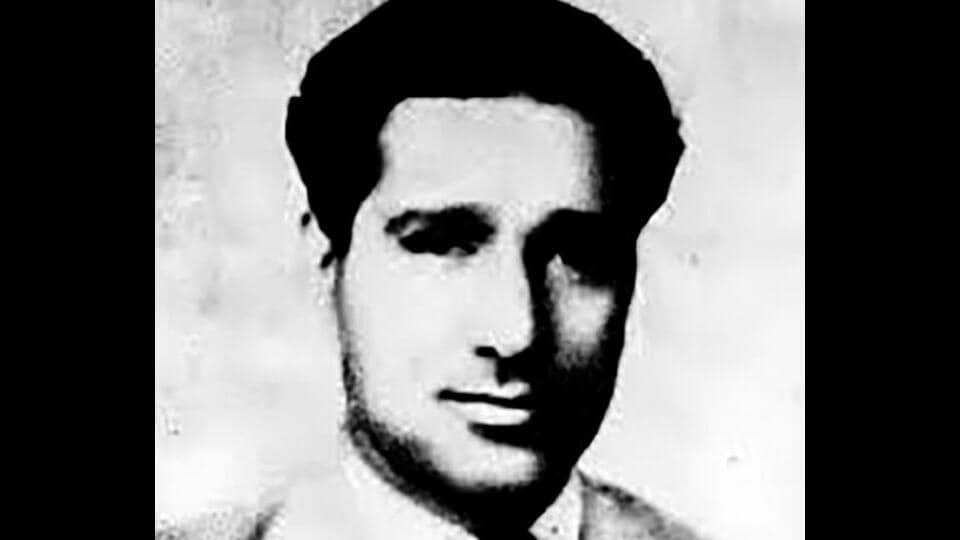
The honours list, released on August 14, Pakistan’s Independence Day, lists the names of Doctors Jal Patel and Jal Daeboo, “for conferment on citizens of Pakistan and foreign nationals for exceptional achievements, excellence and courage in their respective fields.”
The announcement shines a light on a near-forgotten chapter of modern Indian history, and has created a stir in Mumbai’s Parsi community. Dr Patel was Muhammad Ali Jinnah’s treating physician, who along with his fellow doctor Jal Daeboo, a radiologist, kept the secret of Jinnah’s terminal tuberculosis, allowing him to wage the final campaign for the creation of Pakistan.
Could Jinnah's health concerns have altered history?
The two doctors’ fidelity to their Hippocratic oath and medical ethics has been described as one of the most consequential secrets of the twentieth century. It was first revealed in authors Dominique Lapierre and Larry Collins’s account of Indian Independence ‘Freedom at Midnight’. Referring to that book the Pakistani minister said in a social media post: “Lord Mountbatten later acknowledged that, had he known how seriously ill Jinnah was, he might have delayed Partition - potentially altering the course of history and perhaps even jeopardising the creation of Pakistan.” Jinnah was detected with late-stage tuberculosis in 1946 and he died in September 1948.
“If Louis Mountbatten, Jawaharlal Nehru, or Mahatma Gandhi has been aware in April 1947 of one extraordinary secret, the division threatening India might have been avoided…Yet, so precious was the secret that even the British CID, one of the most effective investigative agencies in the world, was ignorant of its existence,” wrote Collins and Lapierre who interviewed Jinnah’s daughter Dina Wadia, Dr Jal Patel himself, and by some accounts, Homai Daeboo, daughter of the radiologist Jal Daeboo.
Also Read: ‘What have I done?’: When Jinnah confronted Partition’s horrors from the skies over Punjab
Who were the two doctors?
While Dr Patel’s relative lives in south Mumbai, not much is known about Dr Daeboo’s family or his past other than the fact that he was the country’s first Indian radiologist, said a Parsi doctor who did not wish to be identified. “All this talk about these gentlemen being in a position to change the course of history is just conjecture. These were professional secrets to be maintained and they did that. The rest is just noise. How could they have shared personal health details of their patient with people outside of the family?”
Patel’s 85-year-old nephew Dr Sorab Javeri told HT that his uncle, a naval officer, was a person with a rich legacy of professional achievements and who tended to “Bombay’s then elites.” Dr Patel, he said, was also the personal physician to another Pakistani leader, slain prime minister Zulfikar Ali Bhutto, when Bhutto was a student at Campion School.
Javeri recalled that his uncle who remained a bachelor, was also the chief medical officer of Tata Sons, with his own clinic space on the ground floor of Bombay House. In 1962, Patel was conferred with the Padma Bhushan for his contribution to medicine, and for long, a portrait of his hanged at the Grant Medical College. “A proud naval officer, he would make it a point to wear his uniform complete with all insignia including a sword for all important government functions,” recalled Javeri, a retired orthodontist from Bombay Hospital. The family also had a sizable collection of pictures of Dr Patel with various dignitaries including Queen Elizabeth, Joseph Stalin, Archbishop Desmond Tutu but which have since been infested with termites. Dr Patel, his nephew revealed, also served as the doctor on board--until his death in 1976--for several Indian presidents right from the first president Dr Rajendra Prasad.
When Patel died in 1976 at the age of 82 the Pakistan High Commissioner’s office made enquiries about his family. “That was the last time, and now suddenly out of the blue I hear about this honour being bestowed on my uncle.”
While information of Dr Jal Patel is aplenty, not much is known about Dr Jal Daeboo or his family. According to an account published on August 17, 2013, in ‘Business Recorder’, a financial daily in Pakistan, Daeboo, who was Jinnah’s radiologist, died well before Lapierre and Collins started writing ‘Freedom at Midnight’. The account states that Lapierre spoke to Daeboo’s daughter Homai who was then in her mid-forties. “She used to work, part time, as an attending nurse, under study of her father when Jinnah was X-rayed at Dr Jal Daeboo’s clinic in “Dhobi Talau” that is a walking distance from St. Xavier’s College. Homai gave an identical version that was rendered to Lapierre by Dr Professor Jal Patel. Jinnah’s lungs X-ray showed that he had tuberculosis that had become terminal and that he had just a year or two to live.” ‘Freedom at Midnight’ however does not quote Homai Daeboo anywhere.


Stay updated with all the Breaking News and Latest News from Mumbai. Click here for comprehensive coverage of top Cities including Bengaluru, Delhi, Hyderabad, and more across India along with Stay informed on the latest happenings in World News.


