E-Paper



‘Panikkar was ambitious, brave and tried it all — a real Renaissance man’
Born in Travancore in 1895, Kavalam Madhava Panikkar was the first editor of the Hindustan Times

 Prefer HTon Google


Born in Travancore in 1895, Kavalam Madhava Panikkar was the first editor of the Hindustan Times. In an interview with Somya Lakhani, Narayani Basu, the author of the recent book, A Man For All Seasons: The Life Of K.M. Panikkar, sheds light on the academic, politician, diplomat, author and administrator. Edited excerpts:
Tell us about KM Panikkar’s journey as he became the first editor of HT in 1924.
In 1924, a 30-year-old Panikkar landed up in Bombay to check the credentials of a newsroom job and met social reformer CF Andrews, who he knew since his Oxford days. Instead of advising him about the job, Andrews – who was close to Mahatma Gandhi – suggested that he go to Amritsar as Gandhi’s emissary to the Akalis. This was a great chance for Panikkar to meet Gandhi, to be noticed by him, so he moved to Amritsar and dutifully reported back to both Jawaharlal Nehru and Gandhi.
Months later, the Akalis, who were pushing for an English newspaper, took Panikkar into confidence and saw in him a man fit to run it. But Panikkar was wary; he had been burnt in the past when he worked at Swarajya. Before this, he had also been asked by Nehru to edit a collection of essays on the non-cooperation movement, which was not what he wanted to do. He already had a formidable body of work behind him, including writing on nationalism, citizenship and identity; this was why the Akalis were keen to bring him on board as the editor of the English newspaper, which came to be known as the Hindustan Times.
And though he couldn’t speak Hindustani, he knew English, and this was going to be an English newspaper, so he was the perfect choice. This was an exciting opportunity for Panikkar, because he was being given the chance to run it the way he deemed fit. The paper was a stepping stone in the direction of his political ambitions.
Did the Akalis want the paper to be based out of Amritsar?
Yes, and Panikkar put his foot down on that point. If they wanted larger reach, they needed to be in a place like Delhi. Who was going to read it in Amritsar? Panikkar was an ambitious man who wanted to be in a place where he could be seen and heard. He wanted to be at the centre of power.
Who gave the paper its name?
Panikkar did. He was adamant that the paper be called Hindustan Times, and not Bharat or anything else because up north, this is what people called the country – Hindustan. It was the first English daily out of Delhi.
How were the initial months?
Initially, they weren’t sure if it was going to be a daily paper. Panikkar didn’t know very much about running a paper. I think HT taught him everything from scratch. At first, he had no idea how to fund this. The Akalis and Panikkar thought ₹1 lakh was enough to run it. They only managed to raise ₹25,000 and then some money was put in by Panikkar. By this point, he was committed and couldn’t pull out. So, he found an office, zeroed down on a three-storeyed building on Burn Bastion Road in old Delhi, put a Dawson Payne hand-fed stop cylinder press and a Miele Press on one floor, and tables and chairs for the editorial staff on another. All he needed was Gandhi’s blessings at the inauguration.
Gandhi did inaugurate HT on September 15, 1924.
He did. Nationally and internationally, Gandhi was the face of the national struggle. At the time, communal riots had broken out in Delhi and had spread to Lucknow, Shahjahanpur, Jabalpur, Gulbarga, Allahabad, Calcutta and Kohat. Since Gandhi had committed to, he attended the event and gave a speech. He said, “There should not only be no untrue statements, but no suggestio falsi or suppressio veri,” which I think was very much in line with what Panikkar had in mind for HT.
What was the paper like under Panikkar?
He used the newspaper as a vehicle to express his views on nationalism and unity. Through his editorials, he called for unity in the face of communal disharmony, and against colonial powers. The paper wrote about corrupt state governments and pushed the Congress to develop its own policy towards the princely states, which Panikkar emphasised were not autocracies. Under Panikkar, HT stood for “country first”. His idea of India was grounded in Hinduism but inclusive Hinduism. He brought to the paper the opinion that we needed to unite against religious disharmony, religious fissures and political fissures.
So he carried these serious themes but also put gossip on page one – for instance, one about Mr A or Maharaja Hari Singh of Kashmir . He knew that fundamentally this was what caters to people’s sense of enjoyment.
In less than a year since Gandhi inaugurated HT, both the paper and its editor were struggling. What happened?
Panikkar was a fearless man. In 1925, he ran a series of stories exposing the corruption of CHC Cotton, the British Resident of Travancore. The state government denied the allegations and Panikkar’s only uncle wrote to him, saying how attacking Cotton would be harmful for the entire Nair community. Panikkar promised to resign. He also realised that journalism was not for him. As I write in the book, “Journalism, whether one ran a paper or reported for it, was subject to certain conditions. Not for Panikkar these conditions and endless strictures on which line could be crossed and which must be toed.”
Apart from this, the paper itself had run into losses. The Akalis had lost interest after their political demands were met. It was time for change. Rumours started circulating that the paper would likely be sold to either Lala Lajpat Rai or Madan Mohan Malaviya, and Panikkar wanted nothing to do with it. As much as Panikkar wanted to be a journalist, he learnt – rather bitterly – that this wasn’t the field for him.
Tell us about the relationship between Nehru and Panikkar.
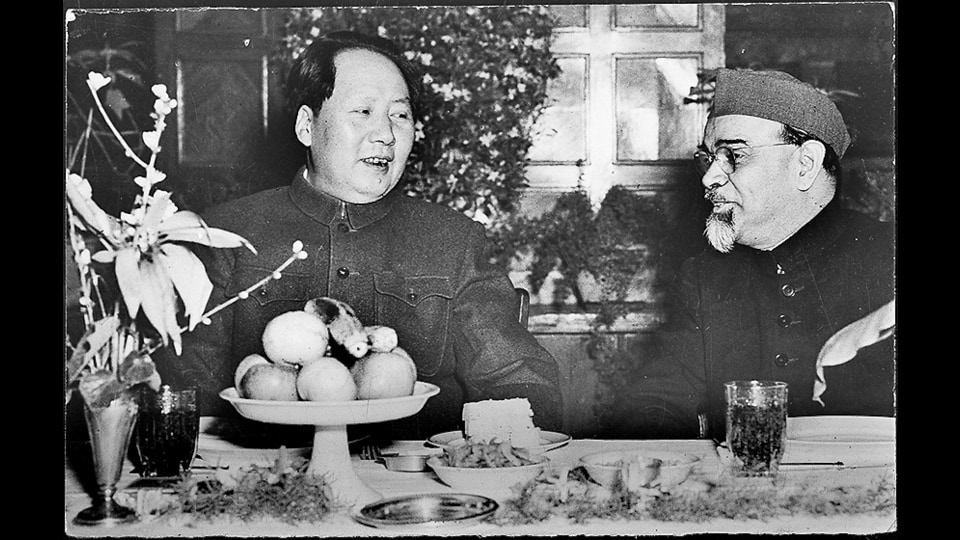
They first made contact in the 1920s, and Nehru was very impressed with Panikkar. They had a ton of respect for each other and they often disagreed on their opinions on geopolitics and nationalism. Their relationship suffered due to Panikkar’s time in China. As the ambassador of India to China, Panikkar’s two years there were hugely controversial and haunted him till the end of his life.
Panikkar was also made a member of the State Reorganisation Commission. What was his contribution there?
Nehru was not too happy about the report. But at the core of Panikkar’s arguments was the theme of unity. He looked at it from a point of view of linguistic unity and federal unity and that’s why he argued for the bifurcation of Uttar Pradesh, which again led to intense dissent and strife. For me, this was another instance of him being unafraid. What I respect about Nehru is that he expected nothing less from Panikkar, no matter how much grief it brought him.
In the book, you call him one of India’s “impossible men.” Why?
This was how one of his friends described him in fact, and I thought it was the perfect description. You can’t ignore him. While his foreign policy writings display a great far-sightedness, he also irritated prime ministers. He wrote romantic poetry. He was so ambitious, and he was not an easy man. He was fearless and tried everything – academia, teaching, journalism. He was a historian, a foreign policy mandarin, a diplomat, an administrator, and a poet and writer.