The department of pharmaceuticals has warned manufactures, importers and suppliers against overpricing and hoarding of N-95 masks, after receiving complaints that the item was being sold at exorbitant rates.
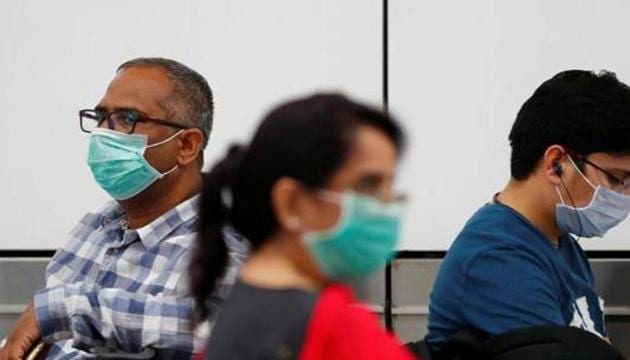
The government has already declared the masks an essential commodity due to the Covid-19 pandemic.
The department of pharmaceuticals, in a directive, asked states to ensure that N-95 and surgical masks, gloves and hand sanitisers are available in sufficient quantities and their sales price doesn’t exceed the maximum retail price mentioned on the pack.
“This refers to the grievances being received regarding hoarding, black marketing and differential higher pricing of N-95 masks in the country…It is hereby informed that N-95 mask has been notified as an essential commodity on March 13 under the Essential Commodities Act…hoarding, black marketing of the essential commodity is punishable offence under the Act,” said the directive issued on Thursday.
Coronavirus outbreak: Full coverage
Under the Essential Commodities Act, those who fail to comply with the directive can be punished with a prison term of a minimum of three months and a fine, and the prison term can go up to a maximum of seven years.
The department of pharmaceuticals has received several complaints about the over-pricing of the product and a mismatch between demand and supply because people had started hoarding masks.
{{/usCountry}}The department of pharmaceuticals has received several complaints about the over-pricing of the product and a mismatch between demand and supply because people had started hoarding masks.
{{/usCountry}}However, there are clear-cut guidelines from the Union health ministry and the World Health Organization (WHO) that medical masks are meant only for frontline healthcare workers.
“We have always reiterated that medical masks are not meant for the general public. It is only meant for doctors and other personnel dealing with either positive patients or suspected and high-risk cases directly,” Lav Agarwal, joint secretary in the health ministry, has said at several press briefings.
The most recent complaint was from the Maharashtra government, which also wrote to the National Pharmaceutical Pricing Authority (NPPA) last week, asking the price for items such as N-95 masks and personal protective equipment (PPE) kits should be fixed as they are being sold at higher rates in markets.
To meet the demand for safety gear, the government has been procuring N-95 masks in bulk directly from manufacturers, importers and suppliers at bulk rates and ex-factory prices, while other procures such as non-government entities are getting them at differential prices that ultimately trickle down to the consumers, who end up paying a higher price.
“Thus, in order to ensure availability of N-95 masks at affordable prices in the country, NPPA hereby directs manufacturers, importers, suppliers of the N-95 masks to maintain parity in prices for non-government procurements, and to make available the same at a reasonable price. Any instance of hoarding, black marketing and higher pricing of N-95 masks reported will be viewed seriously and action shall be initiated by the government under the Essentials Commodities Act, 1955,” the government order stated.
A senior government official said the directive was necessary because people were selling the masks at widely different rates.
“It has been reiterated that flouting norms could land them in trouble. Profiteering at this time when people are fighting a pandemic is not acceptable,” the official said on condition of anonymity.