
 E-Paper



PM Modi gives vacation homework to babus, fires up ministers for 2024 elections
During the extensive deliberations, Prime Minister Modi delivered a series of messages to his existing council of ministers.

 Prefer HTon Google


As Prime Minister Narendra Modi immerses himself in campaigning ahead of the Lok Sabha elections, the Prime Minister has given a specific task to his bureaucrats. In a recent meeting, the PM told the top bureaucracy that while it was vacation for them as he fights the 2024 general elections, they have to prepare a strong agenda for the first 100 days of the Modi 3.0 government. PM Modi told all the secretaries present that he will be reviewing two ministries in a day when he comes back in May 2024. So, what will be the focus areas of Modi govt 3.0? Will the Prime Minister induct young blood in the cabinet & bureaucracy?
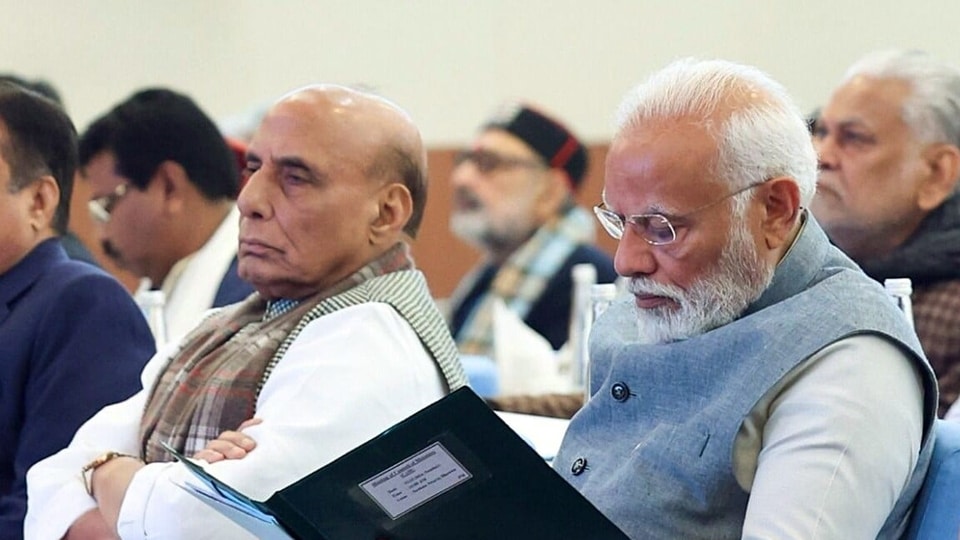
During the extensive deliberations, Prime Minister Modi delivered a series of messages to his existing council of ministers and the top bureaucracy underscoring the priorities and expectations for his third term in office.
He expressed confidence in the BJP-led NDA's return to power with a stronger electoral mandate for the third consecutive term. However, he cautioned his ministers against complacency.
Stressing the importance of grassroots outreach, Prime Minister Modi urged all ministers, including those from the Rajya Sabha, to connect with the public. Top ministers like Finance Minister Nirmala Sitharaman and External Affairs Minister S Jaishankar were hinted about their domestic political duties apart from their official work and travel.
Also Read: In Modi 3.0, India will be free from terrorism, separatism, Naxalism: Amit Shah
He tasked the top bureaucracy with formulating a robust agenda for the first 100 days of the Modi 3.0 government. The prime minister told the top bureaucracy that while it was a vacation for them while he fights the 2024 general elections, they have to prepare a strong agenda for the first 100 days. This, he said, was their homework. He said what has been done in the last 100 days of the government in the past will be done in the first 100 days of his third term.
PM Modi told all the secretaries present that he will be reviewing two ministries in a day when he comes back in May 2024. So believe it or not, the secretaries to government have already mulled over the agenda for the next term and beyond.
While no one can predict electoral results in a society as diverse as India, it was quite evident from Prime Minister Narendra Modi’s interaction that he will overhaul his own PMO bureaucracy with younger blood and the focus will be on governance.
This could mean that the top mandarins on Raisina Hill and the process will start from PMO with Cabinet Secretary, Home Secretary, Foreign Secretary, Director, Intelligence Bureau, Army Chief and Navy Chief are slated to complete their terms in 2024. Key diplomatic appointments like Ambassador to US and Permanent Representative to the UN will also be done in Modi 3.0.
There is a distinct possibility that PM Modi will take strong political decisions in his next term including those which may be unsavoury in the short term. These tough political decisions will be aimed at taking India to the next level economically and politically in the world.
Just as the bureaucratic overhaul is imminent after the elections if PM Modi comes back to power, it is also most likely that the PM will have younger professional blood inducted into the cabinet while retaining the vast political experience of leaders like Home Minister Amit Shah. It was Shah who changed the scenario in the Valley by forcefully piloting the removal of Article 370 and Article 35 A and by taking on the challenge posed by Islamist radicals supported by Pakistan in Jammu and Kashmir. Shah has now taken the challenge to wipe out Maoist insurgency in south Chhattisgarh and plans to free India from left-wing extremism in the next five years.
Another change that might take place in Modi 3.0 is that the PM will start spending more time in his office in South Block rather than his Lok Kalyan Marg office to ensure that the government is on its toes on Raisina Hill. It was due to the coronavirus pandemic that the PM had restricted his movement to the South Block office as RTPCR protocols had to be strictly observed for those meeting PM Modi. As was evident on March 3 when the PM sat in his office till 11 pm in the night, he will continue the rigorous regime when he comes back in May. This will also ensure that all the ministers come to their offices rather than work from their camp offices at home.
To make India a five trillion dollar economy and number 3 economic power in the world, PM Modi will continue to take a tough stand on terrorism and radicalization in the next term with no quarters given either to radicals within or outside the country. Modi 3.0 will have zero tolerance towards terrorism emanating from Pakistan and on Chinese expansionist plans in South Asia.
While BJP-led NDA is in a pole position to return back power in May 2024 with the Opposition largely in disarray, PM Modi is in warp-speed political mode leaving nothing to chance. By adopting a punishing work schedule, PM Modi is also inspiring the ‘karyakartas’ on ground not to take the forthcoming elections lightly and ensure that BJP roars back to power with maximum seats in Lok Sabha.
By leading from the front, PM Modi is also sending a clear message that there is no space for political laggards in his next cabinet and work to rule bureaucrats in future. Next-level governance and all-round accountability will be the motto of Modi 3.0 and the objective is to make India a developed country by 2047. He has already indicated that all steps will be taken in that direction.
Globally, PM Modi will be the senior most leader of the democratic world and of QUAD in particular. Faced with paramount leader Xi Jinping of Communist China, authoritarian leadership of Vladimir Putin in Russia with on-going wars in Ukraine and Gaza, PM Modi is the best bet for India in an unstable world.


