
 E-Paper



PM Modi’s ‘thank you’ note to the Gulf sharpens the contrast with Pak | Analysis
India’s ties with the Gulf countries, crucial to meet New Delhi’s energy needs, had improved manifold in recent years, Prime Minister Narendra Modi said in his Independence Day address to the naton

 Prefer HTon Google


Prime Minister Narendra Modi on Saturday spoke of India’s deepening ties with the Gulf countries and thanked them for letting Indians stay for an extended period amid the coronavirus pandemic. India is grateful to them for honouring New Delhi’s request, he said in his 90-minute address to the nation from Red Fort.
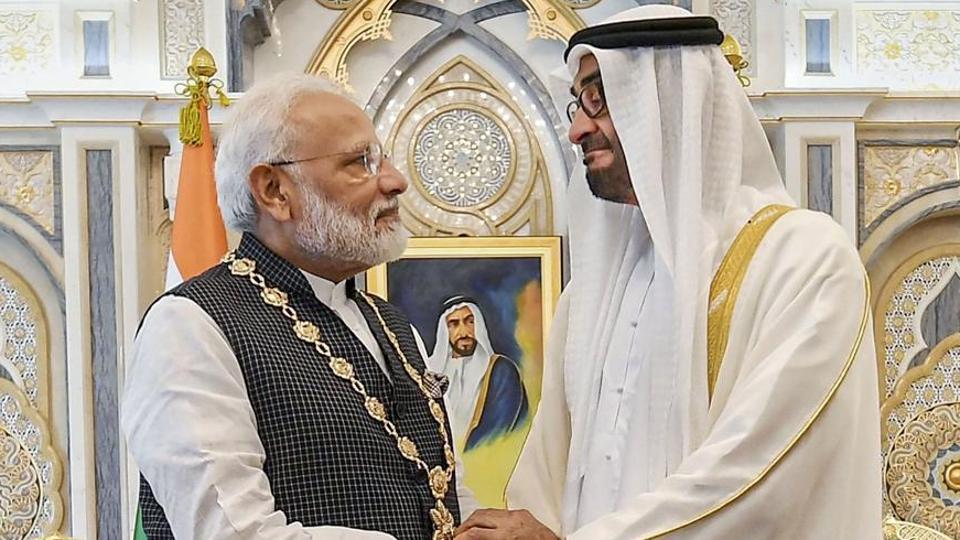
India’s ties with the Gulf countries, crucial to meet New Delhi’s energy needs, had improved manifold in recent years, PM Modi said. The explicit expression of gratitude to countries such as the United Arab Emirates, Saudi Arabia, Kuwait and Qatar comes amid the government’s consistent efforts to strengthen ties with the Gulf across sectors.
PM Modi’s remarks, as also India’s unequivocal statement welcoming UAE’s accord with Israel, contrasted sharply with Pakistan’s guarded response to full normalisation of relations between UAE and Israel.
“Pakistan’s approach (to the accord) will be guided by our evaluation of how Palestinians’ rights and aspirations are upheld and how regional peace, security and stability are preserved,” Islamabad’s statement said,
India’s statement, issued after UAE Foreign Minister Abdullah bin Zayed Al Nahyan briefed his Indian counterpart S Jaishankar, was unambiguous and welcomed restoration of full diplomatic ties between New Delhi’s two strategic partners. New Delhi also maintained its traditional support for the Palestinian cause and hoped for early direct negotiations for an acceptable two state solution.
Israeli foreign minister Gabi Ashkenazi spoke to Jaishankar on Saturday to brief him on the accord.
Also Read: From Red Fort, PM Modi delivers one message to 2 neighbours, China and Pak
Since he took over as PM, Narendra Modi has made cementing relations with Gulf countries his topmost priority. He was the first prime minister to visit Abu Dhabi in 2015 after 34 years. The next year, he traveled to Saudi Arabia, the flag bearer of Sunni Islam. The two Sunni countries along with Kuwait and Qatar are at the heart of PM’s Middle East diplomacy as New Delhi realises the role these countries play in its energy security, the well-being and progress of the Indian diaspora safety as well as the Organisation of Islamic Cooperation (OIC), the 57-member grouping of Islamic countries.
An Indian diplomat said the statements by New Delhi and Islamabad on the UAE-Israel accord reflecting their different priorities.
“While India has found partners for peace in the Middle East, it is for Pakistan to answer whether it will partner on-going Shia revolution in Iran or restoration of Ottoman empire in Turkey or revival of Muslim Brotherhood in Qatar. It is quite evident that the UAE-Israel accord will restore peace in the normally restive region as opposed to polarisation that Pakistan has exploited in the past using either Palestine or Kashmir as per its political convenience,” said a senior Indian diplomat.
It was a reflection of the strength of ties between India and the Gulf countries that Pakistan’s repeated requests to convene a meeting of the OIC’s Council of Foreign Ministers have not been accepted so far. The Saudi-led OIC’s refusal drove foreign minister Shah Mahmood Qureshi to tell a TV channel that he would ask Prime Minister Imran Khan “to call a meeting of the Islamic countries that are ready to stand with us on the issue of Kashmir”.
The Imran Khan government, which came under attack from opposition parties for Qureshi’s remarks, is learnt to have hugely upset the kingdom. Pakistan is planning to send its Army Chief General Qamar Javed Bajwa to Riyadh to try to repair relations but is yet to get confirmation from Saudi Arabia for an appointment with the Saudi leadership.


