
 E-Paper



‘PM Modi's Make in India was a good idea but…': Rahul Gandhi in Lok Sabha
Addressing the Lok Sabha, Rahul Gandhi said both the NDA and UPA governments have faltered in generating adequate employment.

 Prefer HTon Google


Leader of Opposition in Lok Sabha Rahul Gandhi said on Monday that Prime Minister Narendra Modi's 'Make in India' initiative was a good idea but it failed.
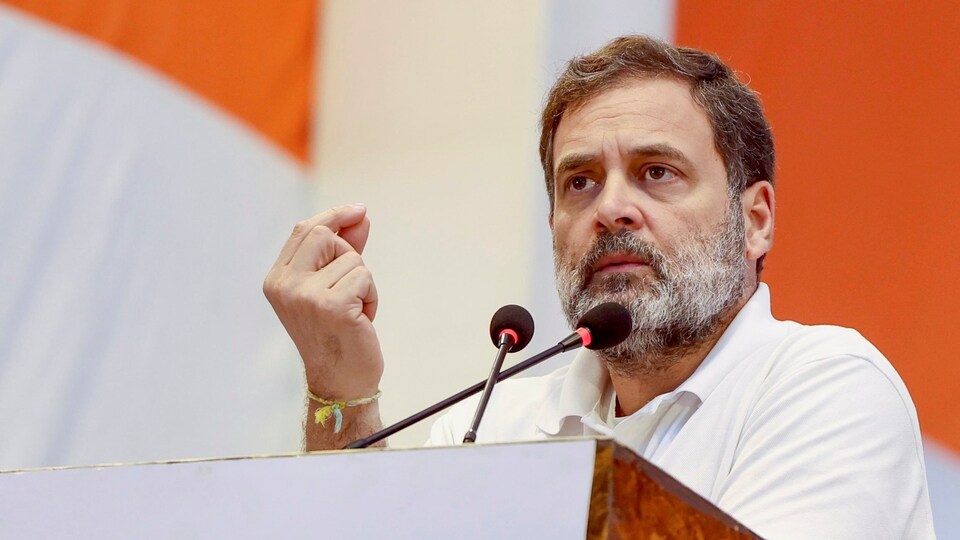
"The Prime Minister proposed the 'Make in India' program, I think it was a good idea...The result is right in front of you, manufacturing fell from 15.3% of GDP in 2014 to 12.6% of GDP today, which is the lowest share of manufacturing in 60 years. I am not blaming the Prime Minister, it would not be fair to say that he did not try. I could say that the Prime Minister tried but he failed," he said in the parliament.
"We have as a country failed in organising production and handed it over to the Chinese," he added.
Addressing the Lok Sabha, Rahul Gandhi said both the NDA and UPA governments faltered in generating adequate employment.
"Even though we have grown, we've grown fast, growing slightly slower now but we are growing. A universal problem that we have faced is that we have not been able to tackle the problem of unemployment. Neither the UPA govt nor today's NDA government has given a clear-cut answer to the youth of this country about employment," he said.
He also remarked on President Droupadi Murmu's recent address to the Parliament.
"I must say, I struggled through the President's address to maintain my attention on what was being said because I had heard pretty much the same President's address the last time and the time before that. It was the same laundry list of the things that the Govt has done," he added.
Rahul Gandhi on AI
Rahul Gandhi further claimed that India is 10 years behind China when it comes to data.
"People talk about AI, but it's important to understand that AI on its own is absolutely meaningless because AI operates on top of data. Without data, AI means nothing. And if we look at data today, there is one thing which is very clear. Every single piece of data that comes out of the production system in the world. The data that was used to make this phone, the data that is used to make electric cars. The data that is used to make basically all electronics on the planet today is owned by China. And the consumption data is owned by the United States... China has at least a 10 year lead on India in this space. China has been working on batteries, robots, motors, optics for the last 10 years and we are behind," he said.
Rahul Gandhi on banking
He also demanded reform in the banking sector.
"We would ensure that our banking system is not captured by 2-3 companies that basically do not allow you to build a production system. But our banking system is open, dynamic and accessible to small and medium businesses and to millions and millions of entrepreneurs who want to take part in this revolution. Our foreign policy would take into account this revolution. When we talk to the United States, we would not send our foreign minister to invite our Prime Minister to his coronation...Because if we had a production system and if we were working on these technologies, the American President would come here and invite the Prime Minister," he added.
With inputs from ANI, PTI


