E-Paper



PM Modi assures support to Nepal’s caretaker govt to restore peace, stability
PM Modi said that he pledged India's unwavering support to Nepal during this critical time.

 Prefer HTon Google


India stands ready to back the efforts of Nepal’s caretaker administration to restore peace and stability, Prime Minister Narendra Modi told his Nepalese counterpart Sushila Karki on Thursday, reiterating New Delhi’s commitment to strengthen ties between the two countries.
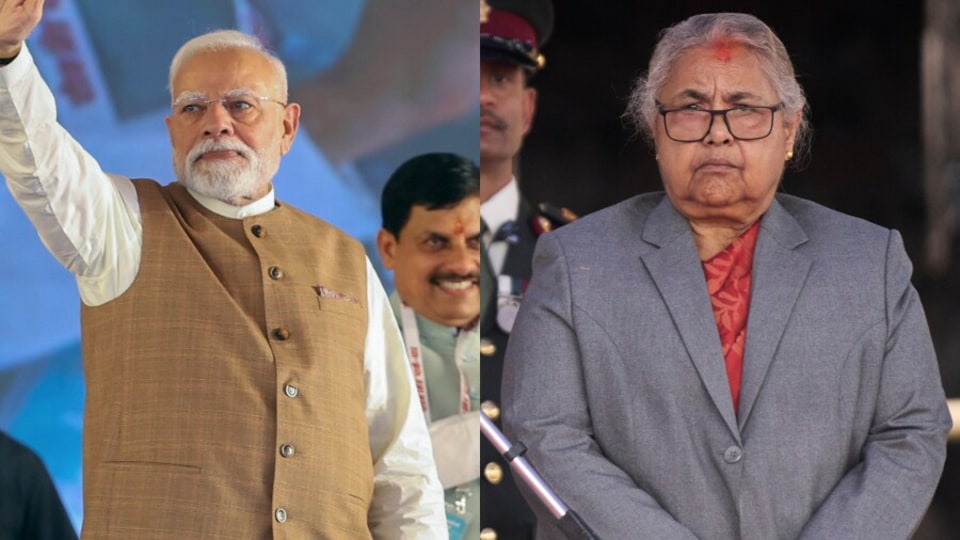
This was Karki’s first phone conversation with a foreign head of government since she was sworn in a week ago as the leader of the interim government in Kathmandu. An anti-corruption activist and former chief justice, the 73-year-old Karki was the choice of Gen Z activists whose protests led to the resignation of former premier KP Sharma Oli last week.
“Had a warm conversation with Mrs Sushila Karki, Prime Minister of the Interim Government of Nepal. Conveyed heartfelt condolences on the recent tragic loss of lives and reaffirmed India’s steadfast support for her efforts to restore peace and stability,” Modi said in a social media post, referring to the death of some 70 people in the anti-corruption protests last week.
Modi, who had assured Karki of India’s commitment to the peace, progress and prosperity of Nepal in a message a day after her swearing-in, also extended greetings to her and the people on Nepal’s National Day on September 19.
India’s ambassador in Kathmandu, Naveen Srivastava, paid a courtesy call on Karki and conveyed a similar message. Karki, who has old connections with India, has expressed interest in maintaining close ties with India, people familiar with the matter said on condition of anonymity.
A readout from Nepal’s foreign ministry stated that Karki appreciated Modi’s message of solidarity and said elections will be the “topmost priority” of her government in response to the call of the Gen Z movement. She also said the government is determined to ensure “accountable, responsive and corruption-free governance, reflecting the aspiration of the youth”. Modi assured Kaeki of full support and cooperation in line with the priorities of Nepal’s government.
Modi also said India “stands in solidarity with Nepal during this pivotal moment”, and both PMs pledged to continue the “strong momentum of bilateral cooperation and partnership” for the benefit of the people of the two countries, according to the readout.
The widespread changes in Nepal present an opportunity for the Indian side to craft a more positive relationship after years of political instability in Kathmandu, the people cited above said. Even as the situation was unfolding following the start of the Gen Z protests last week, India’s Cabinet Committee on Security met in New Delhi to make an assessment.
India’s call for resolving issues through dialogue and peaceful means, articulated by the PM, was appreciated in Nepal, especially as New Delhi was not seen as taking any sides, the people said.
“India’s response to the developments in Nepal was swift and nimble, and India offered support for Nepal’s efforts without being prescriptive in any way,” one of the people said. “At the same time, India welcomed a solution found by the people and stakeholders in Nepal within their constitutional framework, while upholding democratic values.”
India swiftly welcomed the formation of Nepal’s interim government through a statement issued by the external affairs ministry a few hours after the swearing-in of Karki, while Modi also congratulated her on social media. Modi also referred to the situation in Nepal in a speech during his recent visit to Manipur, saying that the neighbouring country is a “close and trusted friend” of India.
Unlike previous instances of political unrest in Nepal, India was not accused of interference in the country’s internal affairs during the recent upheaval. “The developments in Nepal may lead to the emergence of new leadership, which may be more forthcoming in seeking a closer partnership with India,” a second person said.
The Indian side also put in place measures to strengthen security along the border with Nepal to ensure miscreants and criminals who escaped from prisons didn’t cross the boundary. This was done without hampering the movement of essential items to Nepal through close coordination between Indian organisations such as the Sashastra Seema Bal (SSB), customs, immigration and Land Port Authority and Nepalese authorities.
The Indian side also issued an advisory for Indian nationals in Nepal after the recent protests led to violence, and the Indian embassy set up a 24x7 helpline and coordinated with Nepalese authorities for the safety of stranded Indians. As soon as air operations resumed at Tribhuvan airport in Kathmandu, Indian authorities arranged for additional flights to facilitate the return of stranded Indians. Steps were also taken to facilitate the return of a large number of Indian pilgrims who had travelled to Kailash Mansarovar via Nepal.