
 E-Paper



In times of coronavirus, work as usual for Prime Minister Modi
PM Modi is observing his strict Navratri fast and closely monitoring committees on containment of Covid-19 while being in constant touch with all chief ministers

 Prefer HTon Google


Prime Minister Narendra Modi will interact with major non-governmental organisations (NGOs) as well as the heads of Indian missions on Monday evening to get their feedback on the Covid-19 measures and shore up the confidence of those at the front-lines of the battle against the disease.
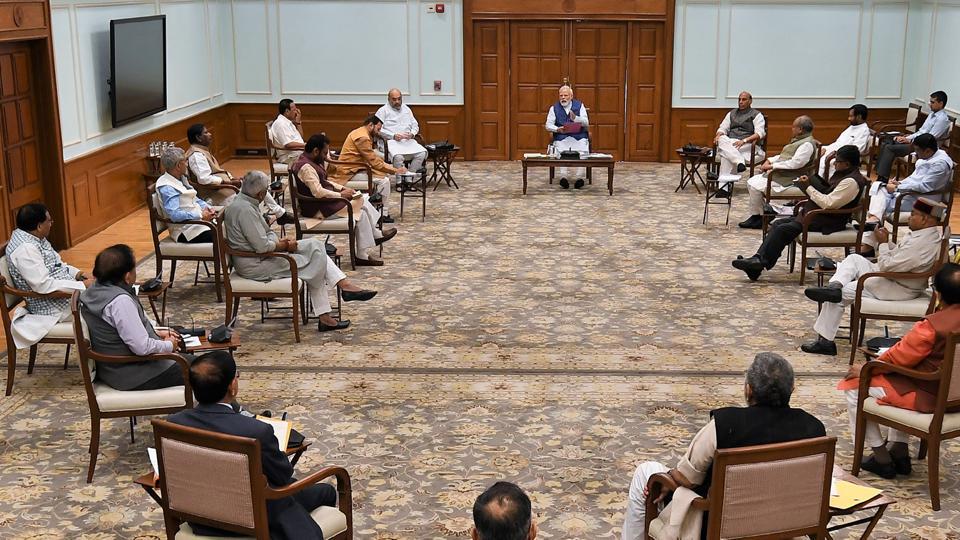
The heads of missions will include those in countries most affected by the crisis – including the US, Spain and Italy – to get a better understanding of how to respond to the pandemic, officials familiar with the matter said.
PM Modi is observing a Navratri fast during the auspicious period that ends on April 2 while “working from home” at 7, Lok Kalyan Marg during the 21-day lockdown. Senior officials in the Prime Minister’s Office (PMO) told HT that strict protocols have been placed to ensure the health and safety of the PM, with visitors screened for temperature and other health checks, and travel history, before meeting him.
“There has been no deliberate curtailing of visitors apart from strictly observing social distancing, and there are no restrictions on the PM handling files or notes,” said an official who asked not to be named. Cabinet meetings and other important discussions have been taking place at his LKM office as usual.
In the past 10 days, Modi has spoken to state chief ministers through video-conferencing, and specifically to the CMs of Maharashtra, West Bengal and Delhi over the spread of the coronavirus disease and related issues such as the migrant movement, which he has been deeply concerned about, officials said. They added that Modi and Kejriwal spoke in detail about the migrant exodus, and how it could fail the entire purpose of the lockdown if left unchecked.
During the lockdown, Modi also talked to business leaders across the spectrum with the objective of picking up ideas and inputs from. The PM-CARES Fund, launched on Saturday, was a result of such brainstorming discussions.
On the foreign affairs front, Modi has had conversations with all the P5 leaders (the UN Security Council’s five permanent members - China, France, Russia, UK and US), while engaging with the G20 community and the Saarc countries to contain the spread of the disease by pooling in efforts.
He is also closely monitoring empowered committees on Covid-19 headed by principal secretary PK Mishra and cabinet secretary Rajiv Gauba through video conference. While the fight against Covid-19 takes up the majority of time, officials said that the PM is routinely briefed by external affairs minister S Jaishankar, National Security Adviser Ajit Doval and R&AW chief Samant Goel on the diplomatic and national security issues, such as the attack on Kabul gurdwara.


