
 E-Paper



Police rulebook says cops should use humour, witty remarks to manage crowd
The handbook recommends that police should make ‘persuasive appeals’ to the crowd so that it feels that police is on its side.


Last week, Bengaluru DCP Chetan Singh Rathore was seen singing national anthem along with the anti-Citizenship Amendment Act protesters to cool the tempers. In Delhi, police was seen distributing tea and biscuits to the students who had gathered at Jantar Mantar.
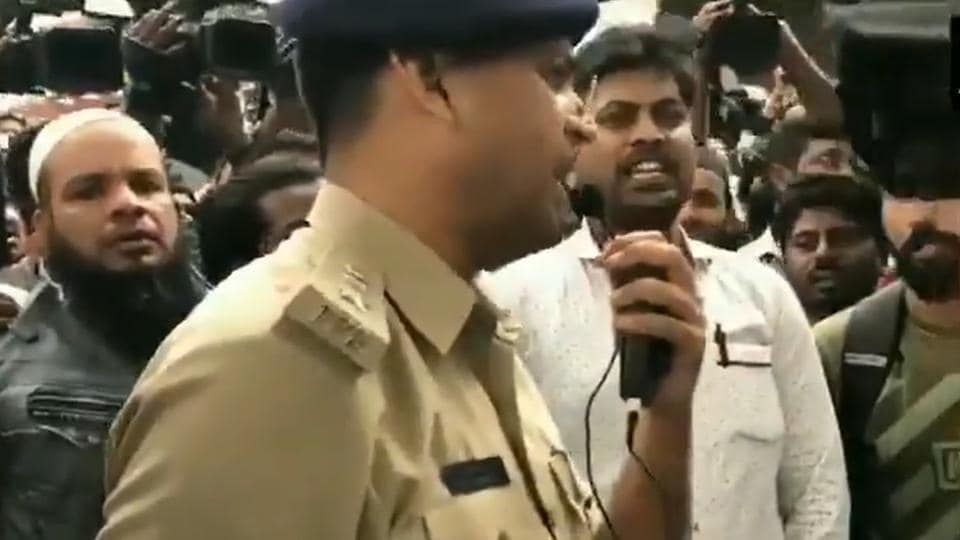
In a handbook released to the states in 2016, Bureau of Police Research and Development (BPRD), a police think-tank of Ministry of Home Affairs (MHA), has listed several other interesting psychological methods using which police can actually reduce the excitement and tension in a crowd and disperse it instead of firing at them or resorting to lathicharge.
It strictly advises the cops not to resort to force, especially against students, even when it is legally justified.
Quoting Pandit Jawahar Lal Nehru, the handbook says “A crowd is numerically stronger than the police force. Of course you can frighten it by opening fire or ordering a lathicharge. But these are extreme steps. The reaction of a normal crowd would depend on whether it is tactfully or foolishly tackled.”
The handbook recommends that police should make ‘persuasive appeals’ to the crowd so that it feels that police is on its side. “A police officer very sincerely trying to put forth good arguments and logical facts may not make much of an impact on a crowd gripped by excitement. In such a situation, an appeal to sentiments rather than to reason may help. An officer seeming to agree with the crowd’s emotions is more likely to evoke a response,” it states.
Humorous and witty remarks used by police at an early stage of crowd gathering also often breaks down the mob’s hostility, it says. It cites an example of an incident in UP sometime back when a crowd gathered on national highway protesting against frequent power cuts. The SP of the area engaged the crowd in a conversation on Football World Cup and after a while tensions subsided and crowd dispersed.
The handbook says that cops should take assistance of persons of acknowledged influence in a particular area/community. “An appeal to his sentiments and vanity can often prove useful. Police officers must, therefore, cultivate good relations with public personages and local influential persons,” it says.
To have a successive crowd control, BPRD says, a lot also depends on the emotional stability of the leader of the police and his ability to stay calm even under the gravest of circumstances, anger and insults. “A calm and collected poise exerts a powerful influence not only on the officer’s subordinates, but also on the crowd. If an officer has built up a reputation of being fair and firm, he can often succeed in persuading an excited crowd to disperse,” it notes.
Interestingly, BPRD says that a distraction always helps in controlling the anger of crowd. “For instance, an accident occurring at the time of crowd formation can result in the crowd’s attention being diverted, and shift its focus of attention to helping the injured. However, the police officer should not try to engineer a diversion as the consequences would be risky if the crowd realises the trick,” the handbook says.
Another interesting suggestion by BPRD is that police should pretend to include onlookers in the investigation. “Sometimes an inquisitive crowd will disperse when the police start to note the names of the individuals with the declared objective of utilising them as witnesses. Most casual observers prefer to disperse,” it says.
It adds that once a mob has been pushed back and dispersed, it is important that it is not given an opportunity of regrouping so it should be pursued.
“Often a retreating crowd indulges in vandalism and violence when there is no police force pursuing it. Crowds should therefore be pursued and pickets set up at strategic places to deny it the opportunity of regrouping,” the handbook says.
Lastly, BPRD says, police should be confident while dealing with the agitators.
Prakash Singh, former DGP of Uttar Pradesh had a different view. He says, “All these suggestions are valuable but they may not work when the crowd is amenable to listening and when they have come with a plan to create a ruckus.”
Singh said from what he has seen so far, police in most of the states have shown restraint despite being thrashed and chased.


