E-Paper



Politics & faith: Jagannath project marks BJD’s Odisha push
The changes have taken place under a ₹400 crore project called the ‘Shreemandir Parikrama Project’ launched by the Naveen Patnaik-led Odisha government


In the summer of 2021, Gourahari Pradhan, 65, would stand less than a hundred metres away from the iconic Jagannath Temple in Puri, usually in a state of irritation and annoyance.
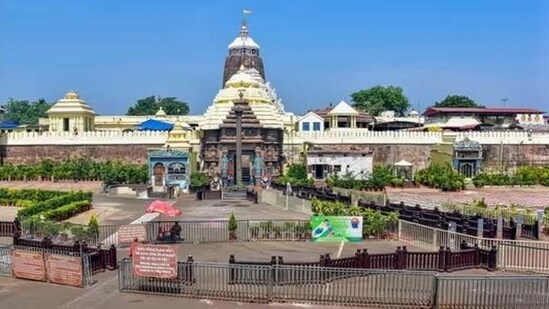
Pradhan grew up in the city, and the temple framed his devotion. The world could change around him, but this was his constant; an unfailing, every day walk from his home 1km away to the cobbled stone that announced the periphery of the 12th century temple built during the Ganga dynasty, one among the holiest “char dhams”. But even from that proximity, the temple would be completely obscured from his view, only the tip and a flag fluttering in the wind was visible. It was not the elements that blocked the temple; the winter mist was months away, and the torrential Odisha monsoon yet to begin. Instead, the temple was surrounded by illegal settlements that blocked the view, and sullied the surroundings – restaurants, random street vendors, and mounds of waste in the narrow lane that led to the main door. “There was very little divinity that existed,” Pradhan said.
One day last week, Pradhan stood at the same spot. In front of him, the majestic structure stood tall. The buildings, shops and eateries were all gone, replaced by a thirty foot wide pathway made of khondalite stone. Along the periphery is a boundary wall marked by small pillars, embellished with flowers. “The temple has regained its glory,” he said.
The changes have taken place under a ₹400 crore project called the “Shreemandir Parikrama Project” launched by the Naveen Patnaik-led Biju Janata Dal (BJD) Odisha government that includes a new flyover for access to the shrine, multi-level car parking, and spanking new civic amenities. The project will be inaugurated in three glittering days between January 15 and January 17, five days before the consecration ceremony of the Ram temple 1200km away. Unlike Ayodhya, there is no new temple being built in Odisha. But like Ayodhya, the project in Puri is framing the state’s politics, three-and-a-half months away from a crucial state and national election, where voting is held on the same day.
The temple push
Launched in 2021, the “Shreemandir Parikrama” project is a confluence of 22 development projects, chief among them, a seven-metre wide buffer zone adjacent to the Meghnad Pacheri (the 24ft high wall that forms the boundary wall of the shrine), a 10m wide “antar parikrama”(circumambulation) that will allow for the ceremonial procession of deities, an eight-metre wide parikrama path for devotees, and a 10m wide public convenience zone that has modern restrooms, a drinking water fountain, cloakrooms for 4,000 families, and pavilions. There is also a five-metre wide service lane for the maintenance of the corridor, a 4.5m dedicated shuttle-cum-emergency lane, a 7.5m mixed traffic lane to aid the movement of vehicles around the corridor and a seven metre wide shaded footpath with trees.
Then there is a 1.5km long and 60m wide trumpet bridge that will allow vehicles arriving from Odisha’s capital Bhubaneswar, 60km away, to head straight into a multi-level parking area 600m from the temple, bypassing the bustling town’s chaotic traffic.
The next phase of development, scheduled to begin few months after the inauguration, includes a reception centre with a capacity for 6,000 devotees, and the rebuilding of the Raghunandan library that houses rare books on scriptures related to the Jagannath temple.
Jaya Krushna Das, director of the Odisha Bridge Construction Corporation, the state government firm that is in charge of the development project, said that the project is important, not just for matters of safety or convenience, but to restore the temple’s relevance itself. “The development of the perimeter around the temple was a long overdue step as it had become difficult for pilgrims to see the temple in all its glory due to the massive encroachments all around. There were triple-storied buildings around the temple which spoilt the skyline.”
This “relevance” will be underlined in a three-day programme unlike any seen in Odisha before. The “public dedication” ceremony will begin at 7am on January 15 with a havan presided over Puri king Gajapati Dibyasingh Dev in the north-eastern corner of the temple, and will end with a purnhauti (final offering) by him and chief minister Naveen Patnaik on the afternoon of January 17 . It will also see a vedpath (recitation of the four holy vedic texts) at the four gates of the temple, and a 24-hour long akhand sankirtan (non-stop chanting of hymns) by sadhus.
The state has sent instructions to all block development officers and officials in urban areas to arrange cultural programmes, and organise the live telecast of events on giant LED screens on January 17, with ₹200 crore provisioned for the event. All major highways of the state have been adorned with massive billboards featuring Patnaik with folded hands welcoming people to Puri. From January 18 onwards, thousands of people from villages across the state will be ferried to Puri till February 20 to showcase the makeover.
Among the 1,000-odd devotees that will be present during the three days, will be representatives of 857 temples in Odisha and 180 major temples from outside the state including Vaishno Devi, Kamakhya Temple, and Shirdi Sai temple. Nearly 80 political dignitaries cutting across party lines such as Leader of opposition Jaynarayan Mishra, Union education minister Dharmendra Pradhan, Congress legislature party leader Narasingha Mishra and assembly speaker Pramilla Mallick will be in attendance.
But front and centre, will be 77-year old and fifth-term Odisha chief minister Naveen Patnaik.
The politics
Chief minister Patnaik is acutely aware of the Jagannath temple’s significance in the Odia consciousness. Ever since 2000, when he first ascended to the post, Patnaik has always begun his electoral campaigns from Puri, and after every win, he travels to the temple town for thanksgiving to the Lord Jagannath. “Our history, culture, tradition and belief systems are all centred around the Almighty. Visiting the Jagannath Temple once in a lifetime and getting a glimpse of the Lord is the only prayer of millions of people. All devotees, who come to the Jagannath Temple in Puri to see the Lord, have a desire in their hearts to see deities in a calm, beautiful, and spiritual environment,” Patnaik said as he tabled a resolution that promised an early completion of the temple corridor in February 2021.
VK Pandian, Patnaik’s trusted aide who recently quit the administrative services to join the BJD said that when he was accompanying the chief minister on a visit to Puri on New Year’s day in 2016, he spotted the leader folding his hands constantly even when he saw Jagannath’s images on roadside posters. “When I saw him closing his eyes and folding his hands while praying to the Lord along the 60-km stretch (from Bhubaneswar to Puri), I realised his ardent devotion to the Lord,” said Pandian.
But there is another reason why politics around the Jagannath temple has been ratcheted up. Since 2019, Patnaik has had to look over his shoulder at the rise of the Bharatiya Janata Party, nationally seen as the party that represents Hindutva. In the 2014 assembly polls, the BJP won 10 seats and 18% of the vote. In 2019, the BJP grew considerably to 32.5 % of the vote and 23 seats, becoming the principal opposition in the state for the first time in the state’s history.
Hindus constitute an overwhelming 93.6% of Odisha’s 42 million population according to the 2011 census. To be sure, this counting includes in its definition of “Hindus”, 8.6 of the 9.5 million tribals in the state. Though there are around 30 assembly and six Lok Sabha constituencies in and around Puri district where the BJD hopes to keep its vote cache intact, the impact, senior leaders said, may well be felt all across the state.
Senior BJD leaders said that the grand event on January 17 was an effort to foil the BJP’s Hindutva card, and reinforce the BJD as both the custodian of “Jagannath culture” and regional pride. “The chief minister’s focus is absolutely an attempt to keep the BJP’s ploy of painting opponents as insensitive to Hindu aspirations in check. He is intelligent and knows he must pre-empt any damage,” a senior BJD leader said, asking not to be named.
Former president of the BJP’s Odisha unit, Samir Mohanty said that the CM’s move to appropriate Jagannath culture was a “desperate attempt to stop the rise of the BJP.” “In the last assembly elections, the BJP was just 10 percentage points behind the BJD. In the last five years of his rule, Patnaik has abdicated his responsibilities and given the levers of power to a section of the bureaucracy who are looting the state. The sudden love for all things Jagannath will not work.”
Political analyst Rabi Das said that there is a clear turn in Patnaik’s politics, from a largely secular politician, to now positing a “soft Hindutva” stance. “He has the women voters firmly behind him and now probably hopes that a soft Hindutva turn will stop any erosion in his vote base.”
The Broader Odisha Push
To be sure, the BJD has hardly limited its religious push to areas in and around the Jagannath temple. In the days running up to the grand event, retrofitted chariots named Arpan Raths accompanied by kirtan mandalis (religious troupes chanting prayers) have started moving from house to house in each of the 6,794 gram panchayats as well as civic bodies of the state, collecting rice and betel nut which will then be consecrated at the Jagannath Temple. Each of these vehicles have photos of Patnaik folding his hands before Lord Jagannath.
Further, over the last three years, the Patnaik government has spent ₹1,300 crore on the development of dozens of other prominent temples including the Maa Samalei temple in Sambalpur, Maa Taratarini temple in Ganjam, Akhandalamani temple in Aradi and Maa Cuttckchandi temple in Cuttack. Of the ₹4,000 crore “Ama Odisha Nabina Odisha” scheme announced in October 2023, a programme that aims at transforming rural Odisha taking up measures to augment rural infrastructure the preservation of cultural heritage, close to half the amount is being spent on the renovation of around 10,000 temples in gram panchayats, a senior official of the state panchayati raj department said, asking not to be named.
BJD leaders however said that the motive of these schemes were not entirely political and the beautification of temples will lead to an inflow of tourists, and in turn help the state economy to grow. BJD vice president Debi Mishra said that in Tamil Nadu for instance, former chief minister, the late M Karunanidhi was far from religious, but spent money on the beautification of temples. “In Odisha we are proud of our temples. If we can beautify the exterior of our temples then more and more tourists will come. These temples will be our growth engines.”
Standing on the cobbled stone of the Jagannath Temple, Pradhan, nods his head in agreement. Even some months ago, the temple entrance was dirty and chaotic, far from inviting, he said. “Now, people that have money will not balk from coming here. It is a good thing and will help the temple grow, as long as the government keeps it this way,” he said.
In Bhubaneswar, Naveen Patnaik will hope that the push helps both Puri’s economy, Pradhan’s pride, and the BJD’s electoral prospects.
 ABOUT THE AUTHORDebabrata Mohanty
Debabrata Mohanty is a senior assistant editor of Hindustan Times who works as state correspondent from Odisha covering the state's politics, governance, public policy, natural disasters, environment and its society for close to three decades. With his long years of reporting from the state capital of Bhubaneswar, Mohanty has been known as one of the most experienced and credible journalists covering Odisha for the national English dailies. His reporting combines on-ground detail with deep institutional knowledge detailing the state's changing politics, governance issues, administrative reforms and the functioning of its public institutions. He has regularly reported on issues ranging from legislative developments and public policy implementation. Politics is his core areas of expertise as he closely tracks Odisha's political landscape, including the rise and transformation of the Bharatiya Janata Party (BJP), the Biju Janata Dal (BJD), the two principal political parties in Odisha. His long association with the state's political establishment enables him to write on contemporary developments in a larger political context. Mohanty takes a deep interest in writing human interest stories, environmental issues and documenting the impact of cyclones, floods, heatwaves, and other climate-related events in one of the most disaster-prone states. His coverage extends to public health, governance reforms and stories on accountability of government institutions. Before joining Hindustan Times, Mohanty worked with The Indian Express, Mail Today, and The Telegraph, where he covered at least six general elections and as many assembly elections. In 2007, he was selected for the prestigious Chevening Young Indian Print Journalist Programme at the University of Lincoln, United Kingdom, where he received advanced training in print journalism. In 2009 he won the Press Institute of India-International Committee of Red Cross award on conflict reporting for his on-ground reportage of 2008 Kandhamal riots.Read More