E-Paper



Prashant Kishor's big promise to lift Bihar liquor ban sparks debate | Prohibition and politics, explained
Jan Suraaj vows to lift Bihar’s liquor ban, citing economic benefits. Here's what experts say despite political debates.

 Prefer HTon Google


Prashant Kishor's Jan Suraaj Party on Sunday reaffirmed its promise to lift the liquor ban in Bihar if voted to power, claiming the move could unlock substantial financial resources for the state.
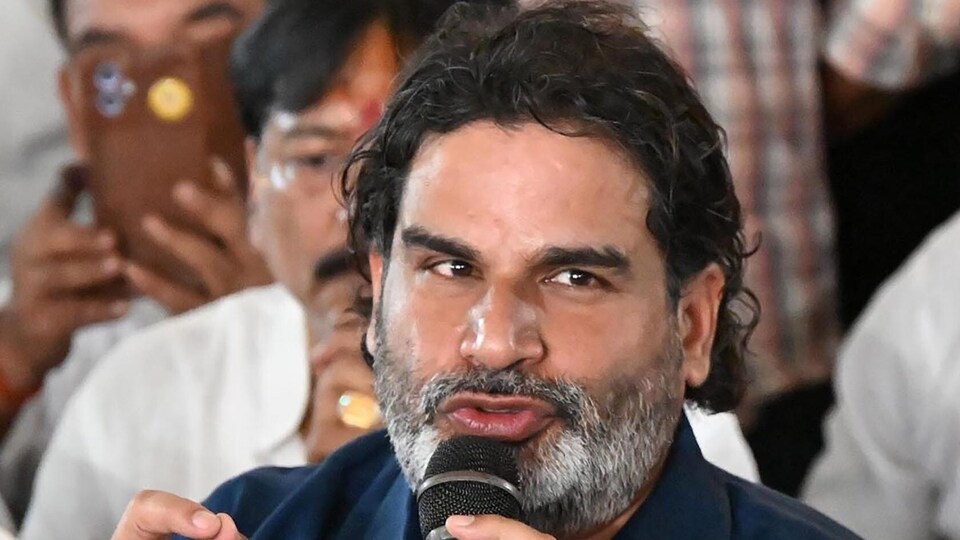
The party said that the nearly ₹28,000 crore currently lost due to the prohibition could be used to secure loans worth ₹5–6 lakh crore from the World Bank and the International Monetary Fund (IMF).
The ban, imposed by the Nitish Kumar government in April 2016, prohibits both the sale and consumption of alcohol.
Why liquor was banned in Bihar?
Nitish Kumar linked the liquor ban to women’s welfare, emphasising that alcohol abuse had the greatest negative impact on the women at home.
Subsequent surveys have shown noticeable declines in public drinking, street fights, and alcohol-related violence, particularly in rural areas of Bihar.
Prohibition also became a key aspect of law-and-order politics. The JDU leadership framed it as a demonstration of strict governance, highlighting raids, confiscations, and crackdowns on smuggling networks as proof of enforcing the “rule of law.”
Even today, the state routinely cites data on liquor, drug, and illegal arms seizures to showcase its active approach to governance.
Also Read | Bihar’s liquor ban impact: Even local deities are going thirsty
Will revoke in first hour: Jan Suraaj's promise
Prashant Kishor, the poll strategist-turned-politician, has vowed to revoke the liquor ban within an hour if his party forms the next government in Bihar.
"Ek ghante mein hata denge. (The liquor ban will be lifted within an hour once we come to power.) There is no real liquor ban in Bihar. There is a law in place that has shut down liquor shops and started home delivery,” said Kishor earlier.
Others in Jan Suraaj have taken a similar stance.
‘Only the poor are persecuted’: Jitan Ram Manjhi
There is a mixed view in the ruling NDA too. Union Minister and former Bihar CM Jitan Ram Manjhi recently called for a review of the policy, arguing that its enforcement disproportionately targets the poor while wealthy smugglers escape scrutiny.
Manjhi, whose Hindustani Awam Morcha (Secular) is part of the National Democratic Alliance (NDA) government, urged CM Nitish Kumar to conduct a fourth review of the prohibition law, asserting that previous reviews failed to address these gaps.
“Poor people, if caught consuming even 250 ml of alcohol, are prosecuted, whereas those involved in large-scale smuggling are let off," said Manjhi.
Also Read | ‘Hooch’ deaths: Kill them like Gen Dyer, why slow death, Manjhi asks Nitish
‘Can be discussed’: RJD on Liquor ban
From the Opposition, RJD MLA Bhai Virendra echoed concerns over enforcement, demanding action against “white-collar persons” violating the prohibition rules.
RJD's top leader Tejashwi Yadav has also weighed in, hinting at broader discussions on the issue, criticising the NDA government over law and order. “Any question that arises should be discussed with the people and government officials before a decision is taken,” said Tejashwi.
Research on the subject is a complex just like the political debate around it.
Has liquor ban shown any benefits?
A study published in The Lancet Regional Health: Southeast Asia in May 2024 analyzed the impact of Bihar’s alcohol ban, using national and district-level health and household survey data.
- The research found that the ban led to a significant reduction in alcohol consumption, preventing an estimated 2.4 million cases of daily and weekly drinking in the state.
- Male alcohol use, which had been rising before the ban, reversed its trend compared to neighboring states.
- The ban also contributed to a decrease of around 2.1 million cases of intimate partner violence, including reductions in emotional and sexual abuse against women.
- Men in Bihar saw a 5.6 percentage point drop in overweight and obesity rates compared to men in states without similar restrictions.
Is there a downside to liquor ban?
Despite these public health gains, experts have raised concerns about the economic impact.
The ban fueled the production and consumption of illicit alcohol, commonly referred to as “hooch".
This underground market has been linked to serious health hazards, including consumption of tainted liquor, which has resulted in multiple fatalities.
Some research suggests that the prohibition may have inadvertently affected crime rates.
A study by Aaditya Dar and Abhilasha Sahay indicates that police resources diverted to enforcing the ban may have reduced their capacity to address other criminal activities, potentially contributing to a rise in certain types of crime.
Experts have also noted negative consequences for adolescents. The increased availability of illicit alcohol has been linked to higher consumption among young people, raising concerns about mental health issues and risky behaviors.
How other Indian states tackle liquor ban
Gujarat has maintained a strict alcohol ban since 1961, aiming to reduce social harms linked to alcohol consumption. The policy restricts both sale and consumption. While the ban has reduced legal access to alcohol, demand persists, fueling a thriving black market.
A study by Dara Lee Luca, Emily Owens & Gunjan Sharma found that stricter alcohol regulations in India are associated with lower rates of motor vehicle accidents and crimes against women, though other forms of crime remain largely unaffected.
Public health risks are significant. Repeated incidents of deaths from adulterated liquor highlight the dangers of unregulated alcohol. Some communities have even developed their own enforcement mechanisms. For example, Khambela village imposes fines of ₹21,000 for alcohol consumption among other bans with fines upto ₹1 lakh.
Mizoram reinstated a full alcohol ban in 2018 to curb domestic violence and public disorder. Early reports indicated some reduction in alcohol use, but inconsistent enforcement has created loopholes exploited by smugglers.
Research by Shivani Gupta noted that prohibition can have unintended consequences on adolescents’ mental health. Inconsistent enforcement may inadvertently increase risky behaviors among youth.
Which other countries have banned liquor?
Globally, prohibition has shown similar complexities and has been difficult to enforce.
Even the US had enforced a nationwide alcohol ban, from 1920 to 1933. It aimed at curbing domestic violence and other crimes.
It is this ban which led to the rise of what is now popularly known as ‘speakeasies’.
But it also caused an increase in bootlegging and organized crime, and unsafe homemade liquor caused health hazards. Law enforcement struggled to contain the black market, and ultimately, the ban was repealed.
Currently, several nations have enforced an alcohol ban too.
In Pakistan, alcohol is banned for Muslims, while non-Muslims can obtain limited permits. Despite these legal restrictions, illicit production and smuggling are widespread.
A study by Muhammad Akhtar Abbas Khan and Farzeen Akhtar (2024) highlighted that misuse of permits contributes to a thriving black market. Toxic homemade liquor has caused numerous fatalities.
Saudi Arabia enforces a strict ban, with violations punishable by fines, imprisonment, or corporal punishment. Smuggling and underground consumption persist, primarily among expatriates and some locals.
A review by Mohammad S Alzahrani stated that 7–8 percent of Saudis use substances including alcohol, most of them aged 12–22.
In 2025, the country opened its first liquor store exclusively for non-Muslim diplomats as part of Vision 2030, signaling cautious modernization.