E-Paper



Probe agencies can’t summon lawyers for giving legal advice to clients: Supreme Court
The court said that lawyers are not immune from investigation, but a distinction must be maintained between professional advice and criminal conduct

 Prefer HTon Google


In a significant ruling aimed at safeguarding attorney-client privilege and the independence of the bar, the Supreme Court on Friday held that lawyers cannot be summoned by investigating agencies for legal advice they render to clients unless there exist substantial reasons to do so and the summons is cleared at a senior supervisory level.
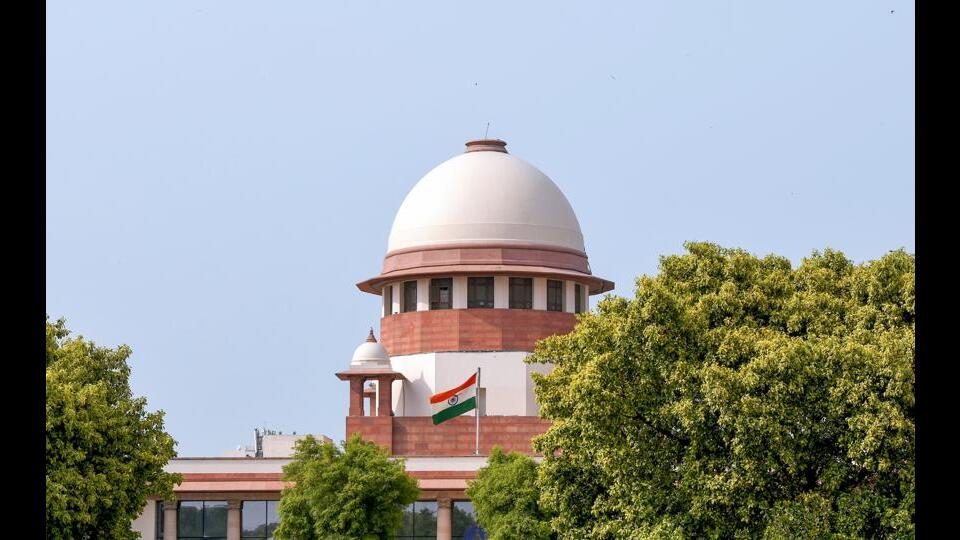
A bench of Chief Justice of India Bhushan R Gavai, and justices K Vinod Chandran and NV Anjaria said that while lawyers are not immune from investigation, a distinction must be maintained between professional legal advice, which is protected, and instances where a lawyer may be involved in criminal conduct.
The court clarified that its directions were meant only for the protection of the legal profession, which it said is essential for the administration of justice.
Reading out the operative part of the judgment, Justice Chandran clarified that no investigating agency shall seek details about a client from an advocate except in circumstances expressly permitted under Section 132 of the Bharatiya Sakshya Adhiniyam (BSA), which protects privileged legal communication.
Section 132 protects confidential communications between an advocate and their client, preventing disclosure without the client’s express consent. This privilege applies to all communications, content of documents, and advice given to a client in the course of professional service. The exception clause under this provision clarifies that the protection does not extend to communications made to further an illegal purpose or facts observed by the advocate that show a crime or fraud has been committed.
The court directed that if at all an advocate is summoned, the summons must clearly state the facts and material relied upon by the agency, instead of issuing open-ended notices requiring lawyers to disclose client instructions, documents or legal reasoning.
The bench laid down a specific protocol for digital devices belonging to lawyers, invoking provisions of the Bharatiya Nagarik Suraksha Sanhita (BNSS). If an agency seeks a lawyer’s laptop, phone, or storage device, the device must first be produced before the jurisdictional court. It added that the court ought to issue notice to the lawyer and client concerned, and the device can only be accessed in the presence of the advocate and the client, and with technical experts of their choice present during decryption or data extraction.
This, the bench held, was essential “to ensure that privileged legal communications are not compromised.” The bench drew a clear boundary, stating that the protection does not extend to lawyers who are personally complicit in an offence and that no criminal activity is to be protected.
The judgment follows a suo motu proceeding initiated after multiple instances of enforcement agencies summoning lawyers for advisory work, including the June incident involving senior advocates Arvind Datar and Pratap Venugopal in an investigation relating to share allotments, prompting objections from the organised bar.
During arguments on August 12, several bar associations urged the court to require prior approval from a judicial magistrate before issuing a summons to lawyers. Attorney general R Venkataramani and solicitor general Tushar Mehta opposed that proposal, warning that creating a separate legal procedure for lawyers could fail the Article 14 (equality) test.
The bench at the time signalled that some institutional safeguards were inevitable, after noting that summoning lawyers simply for legal advice risked creating a “chilling effect” on the profession and discouraging robust defence work.
In July, the Enforcement Directorate circulated an internal directive instructing its officers not to summon advocates in breach of Section 132 of the BSA. Friday’s judgment cements that position, providing a uniform, pan-India standard for all investigative agencies, including police, and state agencies.