
 E-Paper



Proposed UP ordinance to impose 10-yr jail for ‘spitting in food’
The new ordinances will have provisions for punishment of around 10 years for contaminating food with human waste and spitting

 Prefer HTon Google


Lucknow The Uttar Pradesh government is planning to penalise spitting in food with imprisonment up to 10 years, a punishment usually reserved for heinous crimes such as attempted murder or rape, officials aware of the matter said on Tuesday, in a move that the Opposition decried as communally inspired.
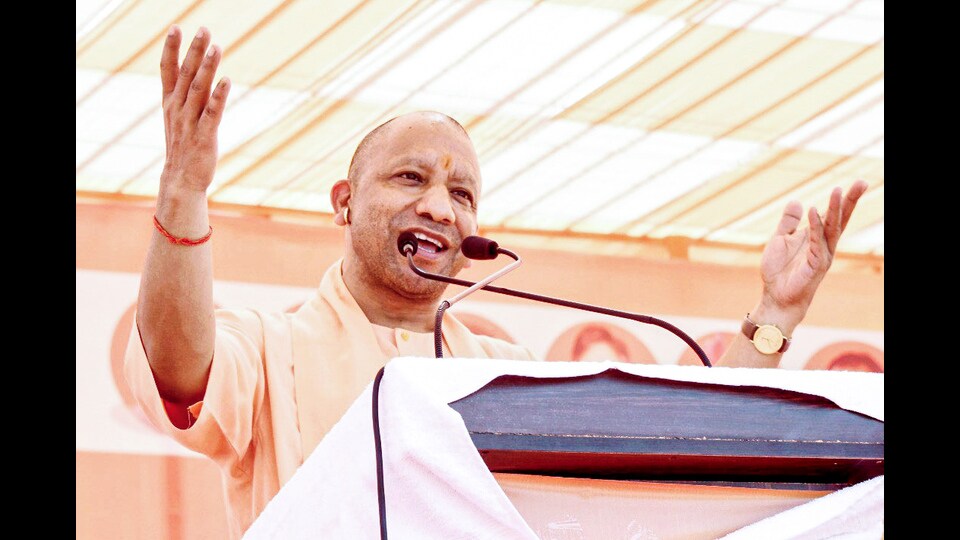
Authorities said the state will bring two ordinances that will penalise contaminating food with human waste and force all eateries to put up nameplates giving details of owners and staff, days after chief minister Yogi Adityanath spoke out against such “contamination” by “some groups”.
The two new proposed ordinances were discussed in the state cabinet on Tuesday and will be known as the UP Prevention of Contamination (Consumer Right to Know) and UP Prevention of Impersonation and Anti-harmony Activities and Prohibition of Spitting, said a press note.
The new ordinances will have provisions for punishment of around 10 years for contaminating food with human waste and spitting, officials privy to the matter said, adding that there would be provisions for cancellation of licences and penalties for mixing urine or waste.
“Contaminating food with human waste and dirty matter is a grave offence and we will bring a strong law soon,” said chief minister Yogi Adityanath, according to a government statement.
“It is the right of every consumer to know necessary details about food and drink sellers. Hence, all such sellers have to put up signboards. All staff will also need to have identity cards,” the statement added.
The decision came against the backdrop of a controversy over allegations that some vendors were allegedly spitting on food or mixing urine in fruit juice and food. The government statement referenced a string of recent rows on the issue.
A senior government official said the drafts of the proposed ordinances have stricter provisions against intentionally committing such acts. The stern measures will also be applicable if any illegal foreign migrants are found working at the eateries, added the official.
Currently, food adulteration, if it causes death, can lead to a punishment of up to three years. Multiple agencies, including police and food and civil supplies and food and drugs department etc, currently handle food adulteration complaints.
Chief minister Yogi Adityanath on Tuesday held a meeting with senior authorities of the home, law and justice, police, legislative departments and the Food Safety and Drug Administration to discuss the two proposed ordinances. If enacted, the ordinance will need a nod from the UP assembly in six months.
On September 11, Saharanpur police arrested a hotel staffer after a viral video that purportedly showed him spitting on rotis. Then, on September 14, a juice vendor in Ghaziabad and a 15-year-old boy working at his outlet were also held for allegedly mixing urine in juices. Police claimed they recovered a plastic can filled with urine from the outlet. And on September 23, a minor hotel staffer in Shamli was taken into police custody after a viral video purportedly showed him spitting on chapatis while putting it in the tandoor.
On September 19, while inaugurating a floating restaurant at Ramgarh Taal in Gorakhpur, Adityanath referred to the row. “It is good that people here will at least not be served Hapur-wala juice or rotis with spit. Whatever served here will be pure,” he said.
The Opposition attacked the government and said the decision was meant to distract the public.
“Actually the BJP is depressed and they want to run away from core issues. They could not provide employment to the youth, they can’t control inflation and they can’t do anything for the farmers. They have lost 2024 Lok Sabha Polls in UP, so now BJP wants to counter PDA by spreading hatred in the society,” said Samajwadi Party spokesperson Fakhrul Hasan Chand, referring to his party’s pichhda (backward), Dalit, alpsangkhyak (minority) outreach.
“Small vendors should not be penalised by the government with the formulation of new laws and the whole process should not appear to be focused on a particular community,” said Uttar Pradesh Congress spokesman Manish Hindavi.
Since July, the UP government has repeatedly attempted to bring in nameplates in eateries. First, it passed an order mandating restaurants and vendors along the Kanwar Yatra route to display the names, addresses and mobile numbers of their owners and staff. That directive was temporarily suspended by the top court, which sharply criticised the state government and said the primary concern should be the type of food being served, not the community of those preparing or selling it.
Then, last month, Adityanath held a high-level meeting and directed a thorough investigation and verification of all hotels, dhabas, restaurants, and eateries in the state. He also called for amendments to existing rules, ensuring the health and safety of the general public. Days later, Congress-ruled Himachal Pradesh attempted to follow suit, only to quickly backtrack after a huge political controversy.
A senior state government official said the new ordinances will ensure strict action against those involved in such cases.
“In recent times, incidents of adulterating food items like juice, dal and roti with human waste, inedible, or dirty substances have been reported from various parts of the country. These acts are atrocious, posing a serious threat to public health. Such malicious practices are completely unacceptable. To prevent such occurrences in Uttar Pradesh, concrete measures must be put in place to ensure food safety and protect the health of the common man,” the official said.


