
 E-Paper



Provide more safeguards for children with disabilities
CJI Dhananjaya Y Chandrachud on Saturday underscored the need for a comprehensive and inclusive approach towards the protection and well-being of children with disabilities.


Chief Justice of India Dhananjaya Y Chandrachud on Saturday underscored the need for a comprehensive and inclusive approach towards the protection and well-being of children with disabilities.
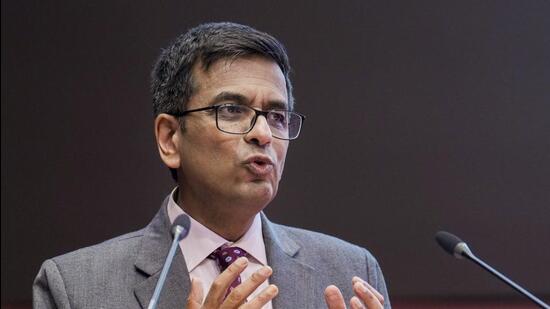
In the keynote address at the National Annual Stakeholders Consultation on Child Protection, the CJI said that this year’s theme of the consultation — focussed on the vulnerabilities of children with disabilities — holds profound significance, not only for legal frameworks but for the broader societal responsibility.
Addressing the gathering, which included justice BV Nagarathna who is the chairman of the Juvenile Justice Committee in the top court, UNICEF representatives and government officials, CJI Chandrachud acknowledged the unique challenges faced by disabled children.
“The State must ensure that children with disabilities are provided additional safeguards, recognizing that they face heightened risks and unique challenges. We must ensure that our legal, social, and institutional systems are designed not just to accommodate, but to actively protect and empower these children,” said the CJI.
In his address, the judge mentioned his personal connection to the cause. “As someone who fosters two wonderful young daughters, I am reminded daily of the joy, purpose, and love they bring into my life. They have transformed not only how I see the world but also how I engage with it — strengthening my commitment to creating a more inclusive society where every child, regardless of their abilities, is cherished and protected.”
Reflecting on the realities of caregiving, he noted: “Traditionally, caregiving has been an often-overlooked and thankless task, shaped by patriarchal norms that have historically placed the burden of care squarely on families.” The judge emphasised that the needs of persons with disabilities, especially children, are not simply private concerns but should be recognized as a collective, social responsibility.
“While we may advocate for these needs to be met by our social institutions, those institutions often fall short of providing the support that is truly needed,” the CJI pointed out.
Further, justice Chandrachud lamented the deep-rooted societal biases, stereotypes and misconceptions that compound the difficulties faced by children with disabilities, particularly those caught in the justice system. He expressed concern over the lack of procedural accommodations that could make the legal process more accessible for children with disabilities. Drawing from international examples, he mentioned that some countries, like New Zealand, have implemented specialised legal advocates and customized courtroom settings to address such challenges.
The CJI also discussed the need for a robust legal framework, pointing out that “The establishment of a distinct juvenile justice system is a key obligation under the principle of ‘parens patriae,’ which assigns the State a three-fold duty in the care of juveniles.” These responsibilities, he noted, involve informal, flexible handling of cases, prioritizing rehabilitation over punitive measures, and proactive interventions that address the complex needs of juveniles, including those with disabilities.
Highlighting the importance of guaranteeing that legal systems are equipped to deal with the specific needs of disabled children, he said: “We must ensure that our legal, social, and institutional systems are designed not just to accommodate, but to actively protect and empower these children.”
Reflecting on the legal framework, the CJI highlighted several key international instruments, including the UN Convention on the Rights of the Child and the Convention on the Rights of Persons with Disabilities, which obligate states to ensure that children with disabilities fully enjoy all human rights and have access to justice. These instruments, he emphasised, the need for procedural accommodations, such as intermediaries and adapted questioning methods, to ensure effective participation by children with disabilities in legal proceedings.
CJI Chandrachud also raised concerns about data collection, revealing that the lack of reliable data on children with disabilities, particularly those in conflict with the law, remains a significant barrier to designing effective policies and interventions. He stressed the need for “improving data collection systems within the Juvenile Justice framework” to ensure that these children are not left behind.
Touching upon the intersectionality of disabilities with other marginalised identities such as gender, caste and socio-economic status, which exacerbate the discrimination and vulnerabilities these children face, the judge cited a Supreme Court case, Patan Jamal Vali Vs State of Andhra Pradesh (2021), to illustrate how compounded vulnerabilities—such as those of disabled girls from Scheduled Castes—can lead to double marginalization and greater risks of abuse.
To address these issues, CJI Chandrachud called for greater capacity building among professionals in the justice system. He pointed out that judges, police officers and lawyers often lack the necessary training and sensitivity to handle cases involving children with disabilities. He advocated for ongoing sensitisation programmes and cross-border sharing of best practices to enhance the effectiveness of justice for these children.
Justice Chandrachud’s address also highlighted the importance of a two-day consultation structured into four key sessions, focusing on global and national legal frameworks, family-based alternative care services, mental and physical health, and legislative convergence. Each of these sessions, he noted, would provide actionable strategies to tackle the challenges faced by disabled children in the justice system.


