
 E-Paper



'Publicity interest litigation': Delhi high court dismisses plea against EVMs
The high court dismissed the petition with ₹10,000 costs, to be deposited in four weeks towards Delhi State Legal Services Authority. The petitioner, a lawyer, had argued that "democracy was in danger" by the use of EVM as the machine was prone to be hacked.

 Prefer HTon Google


The Delhi high court on Tuesday dismissed a petition seeking direction to the Election Commission to stop the use of electronic voting machines (EVMs). The bench of Chief Justice DN Patel and Justice Jyoti Singh imposed a fine of ₹10,000 on the petitioner, a lawyer.
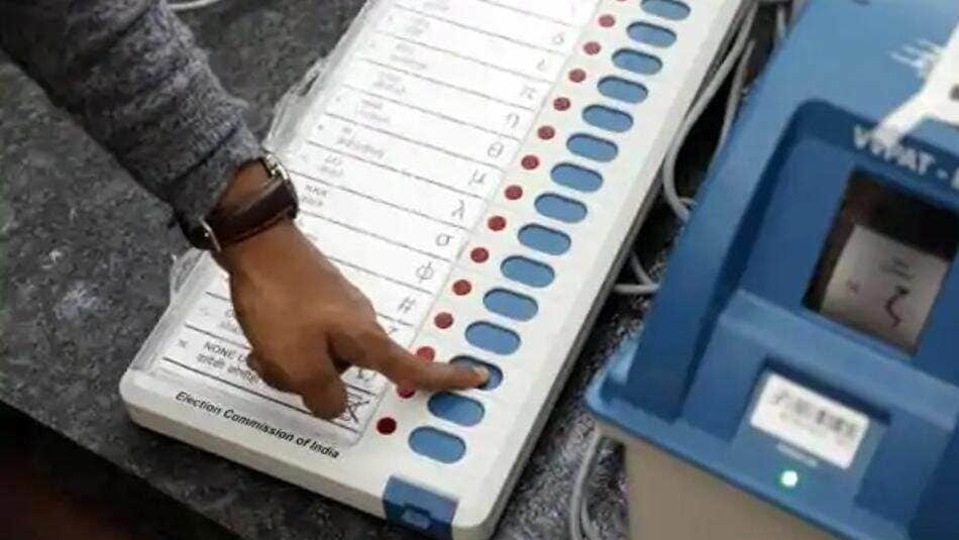
“Nothing in argued by the petitioner concretely on the working of the EVM. We see no reason to entrain the writ petition,” the court said.
The judges also said that C R Jaya Sukin, the lawyer, filed a "publicity interest litigation" based on hearsay and "baseless allegations and averments".
The lawyer had used four documents in his petition, out of which one was a news item.
"The petitioner has read the news item the filed the writ petition without looking at the EVM and working of the EVM...which is approved by the Election Commission as well as Parliament," the court said.
The court said Sukin may file a fresh petition on the issue after conducting research and making proper averments.
“The writ petition is dismissed with costs of ₹10,000 to be deposited in four weeks towards Delhi State Legal Services Authority,” the judges said.
Sukin, who appeared in-person, argued that "democracy was in danger" by the use of EVM as the machine was prone to be hacked.
The use of EVMs always comes in focus during the time of election and these machines are often slammed by political parties. Many of them have claimed that these EVMs can be hacked to show results in favour of a particular party, a claim dismissed by the Election Commission repeatedly.
The commission has though allowed the use of voter-verifiable paper audit trail - short for the commonly used VVPAT - in elections along with EVMs to ensure transparency, it has ruled out reverting to the paper ballot system. It even organised a hackathon in 2017 in a bid to end the raging debate over devices.
But in April-May assembly elections in four states and union territory of Puducherry, EVMs were again targeted by the politicians, especially in Bengal. But the EC said that results recorded in EVMs and VVPATs are same.
The EVMs were introduced in India in 1982 for a bypoll in Kerala.


