
 E-Paper



Rahul Gandhi faces expulsion threat as BJP MP plans LS motion; Rijiju flags ‘nonsense against PM Modi’, explains move
"After Substantive Motion is admitted, we'll decide after discussing with the Speaker whether to send it to committee or bring directly to House," says minister

 Prefer HTon Google


Union parliamentary affairs minister Kiren Rijiju on Friday doubled down on the BJP-led government's attack against Leader of Opposition Rahul Gandhi over his attempts to cite from former army chief Gen MM Naravane's unpublished book in the Lok Sabha. He also spoke of next steps on a motion by BJP Nishikant Dubey by which Rahul Gandhi can possibly lose his Parliament membership.
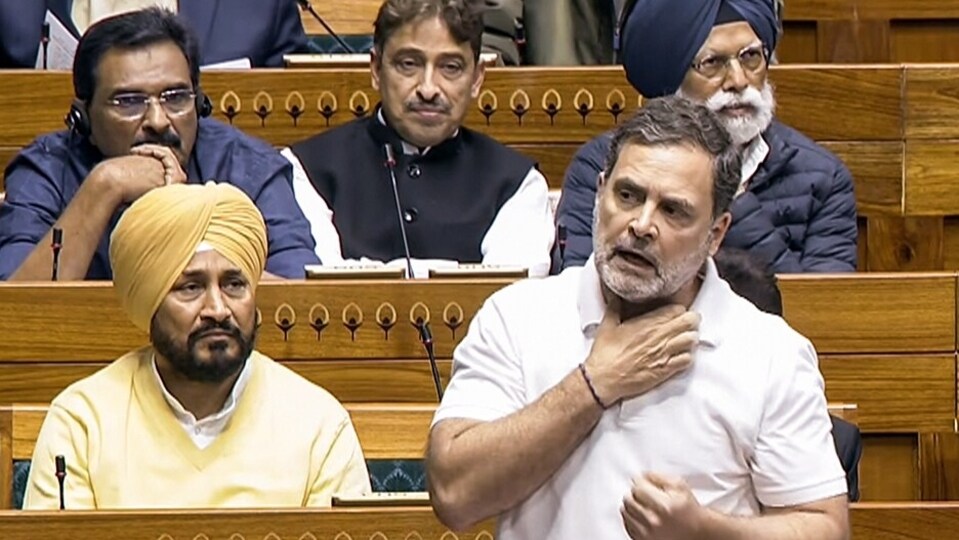
Rijiju said the government had decided to give a notice against Rahul Gandhi for “he violated rules and mentioned an unpublished book in an illegal manner”.
“He also mentioned several things in his budget speech: 'country sold out' and other nonsense for the PM,” the minister told news agency ANI.
He further said that since BJP MP Nishikant Dubey, in his capacity as an individual MP or ‘private member’, decided to bring in a Substantive Motion, “for now, we are dropping the motion that the government was going to bring”.
As for what that means, and what the BJP's next ove against Rahul Gandhi is, Rijiju explained it.
"After the Substantive Motion is admitted, we will decide after discussing with the Lok Sabha Speaker (Om Birla) whether we can send this to the Privilege Committee or Ethics Committee (of Parliament) or bring this directly to the House to discuss," he said.
What is the ‘substantive motion’ about?
BJP's Nishikant Dubey has already given notice for the motion, which can theoretically lead to Gandhi's expulsion by majority vote. Dubey has sought an inquiry by a parliamentary panel into the Congress leader's “continual misdeeds for destabilizing the country", and demanded that Gandhi be expelled as an MP, plus be banned from elections for the rest of his life.
The Lok Sabha has the power to expel its members for serious misconduct or actions that damage the dignity of Parliament. This flows from Article 105 of the Constitution and parliamentary rules read together.
- Technically, the instrument of substantive motion is a self-contained, independent proposal used to express the decision or opinion of the House on significant matters.
- ‘Substantive’ is a type of motion, and major motions such as for removal of a judge, impeachment of President, or a no-confidence motion are substantive in nature.
- In simpler words, it is a formal proposal placed before the House for discussion and decision. If admitted by the speaker, it entails a debate followed by a compulsory vote.
Row over Gen Naravane's unpublished book
Nishikant Dubey, while calling Rahul Gandhi "a major constituent of the Thuggery Gang to de-stabilise India from within”, expressly objected to Rahul Gandhi’s speech in the Lok Sabha's ongoing budget session, in which the Congress MP referred to former Indian Army chief General MM Naravane’s unpublished book.
Gandhi has claimed that Gen MM Naravane's book “exposes” PM Narendra Modi's “shirking of responsibility” during the border tension with China in 2020.
Dubey said this claim was made by Gandhi with an “ulterior motive defaming the Indian Army vis-a-vis the Ministry of Defence along with shamefully involving the Prime Minister".
Gen Naravane's ‘Four Stars of Destiny’ manuscript is pending for approval with the MoD since 2023. The former army chief has not disputed Gandhi's and others' claims being made with reference to what he has written, though he has underlined that the book is not yet published.
Rahul Gandhi recently showed a printed copy of the book; and later Delhi Police filed a case over its PDF version's online circulation as it's not been duly approved for publication.
Can Rahul really lose his membership?
A substantive motion is different from a breach-of-privilege notice or motion, and is usually considered more directly actionable. The BJP was earlier considering a privilege motion against Rahul Gandhi, as was confirmed by Kiren Rijiju.
There are historical precedents of substantive motions being used to expel members. In the most recent case, Trinamool Congress MP Mahua Moitra, a prominent face of the Opposition, was expelled by a House vote on such a motion, after a Parliamentary Ethics Committee found her guilty of a similar cash-for-question scandal in 2023.
In other examples of substantive motions, the Congress and the Opposition have given notices for a no-confidence motion of against the then Vice President and Rajya Sabha chairman Jagdeep Dhankhar, and now against LS Speaker Om Birla.
Clear parliamentary majority is with the BJP-led NDA, which is why Rahul Gandhi stares at possible expulsion. Parts of his speech in the House have already been expunged by the Speaker.
How Rahul, Congress responded so far
Rahul Gandhi, when asked about the BJP's moves, snapped at the media on Thursday, saying they were blindly following BJP directives.
"You are not yet totally employed by the BJP. At least try to do a little bit of objective stuff… You have a responsibility to be objective. You can't just take a word they give you... Every day, run your whole show on that. You are doing a disservice to this country," he said.
Congress general secretary KC Venugopal said, “We are not bothered about any motions; and if you want to hang us, we are ready for that also.”


