
 E-Paper



Rahul Gandhi’s comment adds ‘Shakti’ to BJP narrative
Since 2014, the Bharatiya Janata Party (BJP) has effectively turned the barbs of the Opposition at Prime Minister Narendra Modi to its advantage


The Bharatiya Janata Party (BJP) headquarters in the national Capital has been abuzz ahead of national polls this summer. The corridors are packed with ticket seekers. Senior leaders have been working out the details of alliances, vetting applications, and giving the final touches to the party’s narrative.
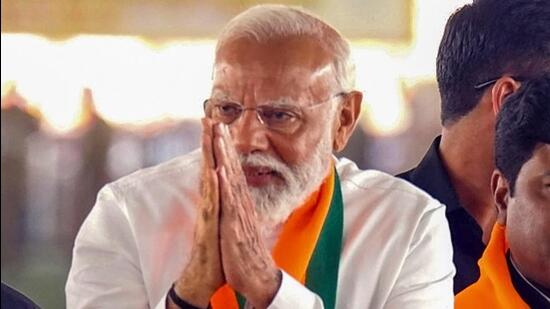
Monday was no different. One set of senior leaders was preparing to announce the seat-sharing agreement in Bihar. A second group was closely monitoring the developments unfolding vis-à-vis the electoral bonds issue. What changed the atmosphere, almost electrifying it, was the statement of Congress lawmaker Rahul Gandhi at the finale of his Bharat Jodo Nyay Yatra in Mumbai.
Gandhi attacked the BJP, alleging agencies such as the Enforcement Directorate and the Central Bureau of Investigation were being used to coerce political opponents to join the party. But his choice of words gave oxygen to the BJP’s campaign against him. Prime Minister Narendra Modi led the backlash.
Gandhi said in Hindu dharma, there is Shakti, and they were fighting it, referring to the BJP’s use of force to subdue the Opposition. He later clarified he was not talking about “any religious power” but the Shakti (power) of unrighteousness, corruption, and falsehood. The BJP had by then gone to town with the message that Gandhi is a Hinduphobe. The Congress’s spirited defence of his statement was drowned out by the BJP’s assertion of reverence for Shakti.
Modi leads the counter-narrative
Addressing a rally in Telangana, Modi hit back. “Daughters, women, sisters, the symbol of Shakti, are here before me, having taken the form of Shakti to bless me… For me, every mother, sister, and daughter is a symbol of Shakti. I am a devotee of Bharat Mata… I will sacrifice my life for the security of mothers and sisters.”
The BJP cadre, which is working to meet the target of 400 seats in the 543-member Lok Sabha, is buoyed by Gandhi’s statement, likening it to the “Chowkidar Chor Hai (watchman is a thief)” campaign of the Congress ahead of the 2019 general elections.
The campaign was a reference to the alleged irregularities in defence purchases and a potshot at Modi, who referred to himself as a watchman. The BJP responded by running a counter-campaign “Mai Bhi Chowkidar (I am also a watchman)”, which ended on a positive note for the party.
Retaliating to Lalu Prasad Yadav’s jibe at Modi for not having a family of his own, the BJP started the “Modi Ka Parivar” campaign, to underscore how the Prime Minister’s family is the country.
Since 2014, the BJP has effectively turned Opposition’s barbs at Modi to its advantage. It began with Congress leader Mani Shankar Aiyar dismissing Modi as a“Chaiwala” (tea seller) to run down his prime ministerial aspiration. Aiyar later made a more derogatory “neech ki rajneeti (unprincipled politics)” reference. On both occasions, the party turned these into successful campaigns of projecting Modi’s humble origins and how he came from a poor family and struggled his way up, his Other Backward Class background, and how the election was a clash between the entitled dynasts and an ordinary Indian.
This time too, the party is geared to utilise every barb in its election narrative. A BJP leader said the party will continue to leverage the negative campaigns against Modi. “Their negative campaigns give us Shakti [power].”


