
 E-Paper



Rahul Gandhi’s hatred of PM led him to defame Modi community: BJP MLA to SC
Purnesh Modi, MLA from Gujarat’s Surat-West, told the Supreme Court in an affidavit that Rahul Gandhi’s attitude “disentitles him to any relief in the form of stay of conviction”


NEW DELHI: Congress leader Rahul Gandhi’s personal hatred towards Prime Minister Narendra Modi led him to cast grossly defamatory aspersions on persons who incidentally bore the same surname as the prime minister, Bharatiya Janata Party (BJP) legislator Purnesh Modi, who is the complainant in the defamation case against the Congress leader, told the Supreme Court on Monday.
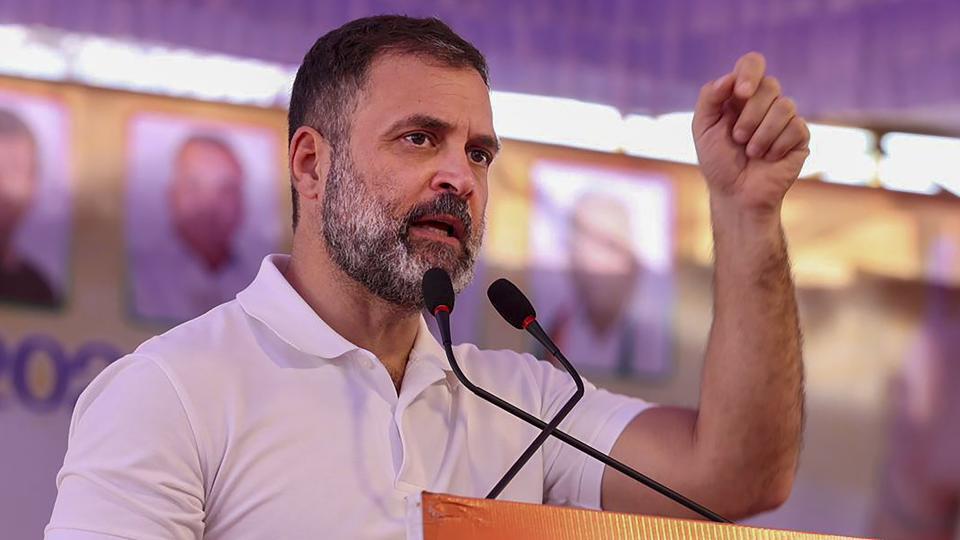
Opposing Gandhi’s plea to stay the conviction in the 2019 defamation case that cost him his membership from parliament, the MLA from Surat-West submitted that the former Congress party president had no reason to brand an entire class of people as thieves just because they bear the same surname as the PM.
“The petitioner (Gandhi) has maliciously and recklessly used scurrilous words against a large and totally blameless class of persons, of both common surname and common caste, who have caused no harm to him. The statement was made out of personal hatred towards an elected Prime Minister of the country, and the extent of hatred was so great that the petitioner was impelled to cast grossly defamatory aspersions on persons who incidentally bore the same surname as the Prime Minister,” said Purnesh Modi’s affidavit in the top court.
Settled by senior advocate Mahesh Jethmalani, the affidavit maintained that the offence of criminal defamation is an offence of moral turpitude and the defamation in the instant case is heinous in the extreme, warranting no interference by the Supreme Court either with the guilty verdict or on the question of the sentence.
“At the time of sentencing before the trial court, the petitioner, far from being repentant or contrite, displayed arrogance. He said he did not seek any mercy from the court and would not apologise for any harm to reputation of the persons he had defamed. Subsequent to the order of conviction and sentence, in a press conference, the petitioner said that he would never apologise in this case as he was not a Savarkar, but a Gandhi,” said the affidavit, adding the Congress leader now faces another defamation case.
By refusing to apologise on the ground that he is a Gandhi and not a Savarkar, the BJP MLA said, the Congress leader presumably wanted to suggest that a Gandhi will never apologise even if he or she has, for no justifiable reason, slandered an entire class of people. “The attitude of the petitioner disentitles him to any relief in the form of stay of conviction as it reveals arrogant entitlement, rank insensitivity to an offended community and contempt for the law,” said the affidavit, filed through advocate P Sudheer and drawn by advocate Harshit S Tolia.
It added that the decisions of the Surat sessions court as well as the Gujarat high court to reject Gandhi’s plea to stay his conviction are totally justified and based on sound reasons.
A bench led by justice BR Gavai is expected to take up Gandhi’s appeal on August 4. On July 21, the top court issued a notice on Gandhi’s appeal against the Gujarat high court order that declined to put on hold his conviction and a two-year jail term in the criminal defamation case.
The appeal was filed on July 15, a week after the high court dealt a blow to his endeavour to revive his Lok Sabha membership, ruling that the Congress leader “breached modesty” and that his offence involved “moral turpitude”.
In his plea, Gandhi urged the top court to immediately stay his conviction to enable him to regain his MP status, arguing the conviction order would lead to throttling of free speech, free expression, free thought, and free statement.
“It would contribute to the systematic, repetitive emasculation of democratic institutions and the consequent strangulation of democracy which would be gravely detrimental to the political climate and future of India,” the Congress leader said.
Gandhi complained that a political speech in the course of democratic political activity, critical of economic offenders, and also of Prime Minister Narendra Modi, has been held to be an act of moral turpitude inviting the harshest punishment.


