
 E-Paper



Gujarat HC dismisses Rahul Gandhi’s plea to stay his conviction in defamation case
Justice Hemant Prachchhak affirmed the decision of a Gujarat sessions court, which had refused to put on hold a magisterial court order on March 23 convicting the Congress leader

 Prefer HTon Google


In a massive setback to Rahul Gandhi, the Gujarat high court on Friday dismissed the Congress leader’s plea to stay his conviction and two-year jail term in a criminal defamation case, costing him his Parliament membership.
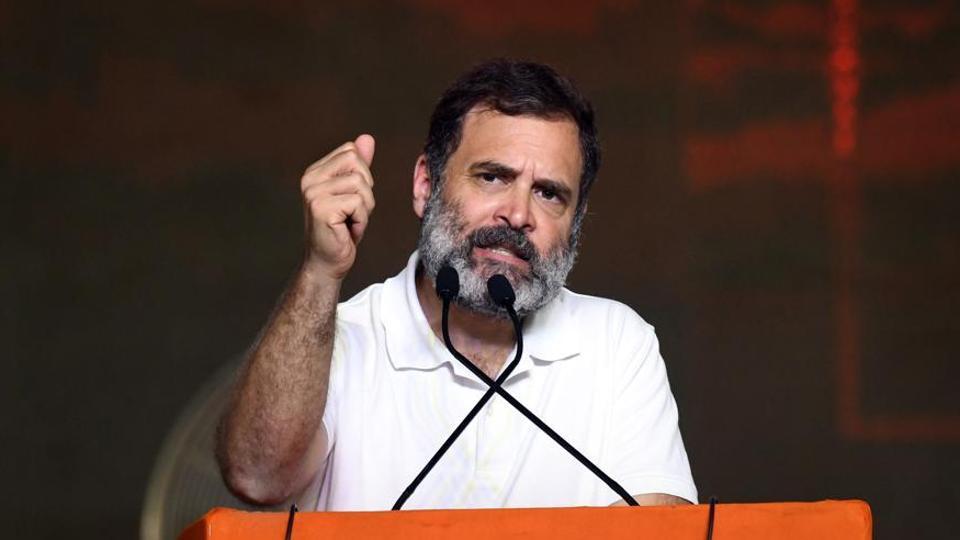
The high court order means that Gandhi’s disqualification from the Lok Sabha continues.
Justice Hemant Prachchhak affirmed the decision of a Gujarat sessions court, which had refused to put on hold a magisterial court order on March 23 convicting the Congress leader and handing out the maximum punishment provided for criminal defamation under the Indian Penal Code.
Reading out the operative part of the order, the judge noted that there are at least eight other criminal cases pending against Gandhi.
‘Even after the present case, some more cases filed against him. One such is filed by grandson of Veer Savarkar. In anyway, conviction would not result in any injustice,” said the high court, requesting the sessions court to decide Gandhi’s appeal on merits as early as possible.
Also Read:Rahul Gandhi defamation case verdict today by Gujarat high court: A timeline
The high court added that Gandhi has been seeking a stay on his conviction on “absolutely non-existent grounds”, adding a stay on conviction is not a rule but an exception.
The magisterial court had in March convicted Gandhi for his remarks ahead of the 2019 national polls about the ‘Modi’ surname. He had at that time allegedly said: “How come all thieves have Modi surname in common”.
Gandhi was sentenced to two years’ imprisonment which disqualified him as an MP under the rigours of the Representation of People Act.
Gandhi was declared disqualified as MP from Kerala’s Wayanad on March 24 following a notification of the Lok Sabha Secretariat.
Gandhi approached the sessions court, which rejected his plea for a stay on his conviction on April 20, compelling him to approach the high court.
The April 20 order cited Gandhi’s stature as an MP and former chief of the country’s second-largest political party and said he should have been more careful in his comments.
Represented by senior counsel Abhishek Manu Singhvi, Gandhi argued before the high court that the offence for which he has been awarded the maximum sentence of two years was not serious and it did not involve any moral turpitude.
Singhvi added that the consequences of denying a stay on the verdict will be irreversible, besides depriving the electorates of his constituency a representative to voice their concerns in the House. A possible bye-poll in Wayanad Lok Sabha constituency will also cause significant expenditure, he added.
Senior advocate Nirupam Nanavaty, appearing for the complainant, BJP’s Purnesh Modi, opposed any interference in the magisterial court order. Nanavaty contended that it was indeed a matter of moral turpitude to say All Modi are thieves. The senior counsel said that Gandhi cannot be absolved of his responsibility as an MP when he addresses the public. He added that the trial court had inflicted a sentence which was permissible in law.
The high court had on May 2 reserved its verdict in the case but refused to provide any interim protection to Gandhi.



