
 E-Paper



Rajasthan seeks relocation of tigers to MHTR, conservation team plans visit
Environmentalists have time and again raised their concerns over the health and fertility of the lone tigress at the Mukundra Hills Tiger Reserve, if pairing was not done soon.

 Prefer HTon Google


The lone tigress at the Mukundra Hills Tiger Reserve (MHTR) in Rajasthan’s Kota district is likely to get a companion soon as the National Tiger Conservation Authority (NTCA) has formed a team to inspect the area in an attempt to strengthen and improve the Reserve.
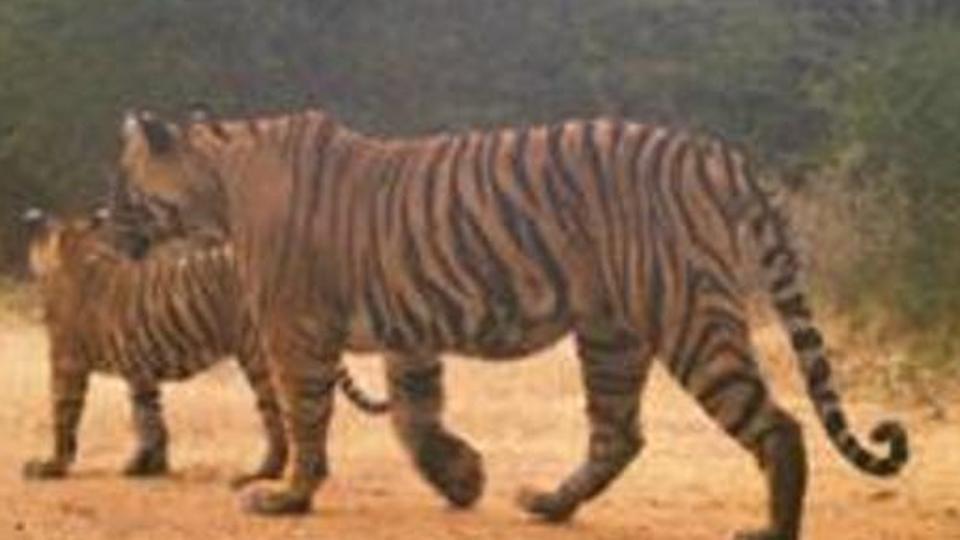
The hill reserve, which had a significant tiger population in 2018, is now left with an 8-year-old tigress MT-4 since two tigers and two cubs died last year between July-August, and another tiger MT-1 went missing.
Chief Wildlife Warden, Mohan Lal Meena said the Rajasthan forest department had submitted a proposal to NTCA for relocating two tigers and a tigress to MHTR, along with the compliance report of the recommendations made by them. “We had discussions with them, now a NTCA panel will be inspecting the compliance of work done by the state forest department,” he said.
According to Meena, the NTCA had recommended increasing the prey base, making the reserve disturbance free with relocation of villages and other steps. The prey base has increased and the shifting of over 500 chitals has been approved and relocations of villages have been completed.
Environmentalists have time and again raised their concerns over the health and fertility of the lone tigress at the Mukundra Hills Tiger Reserve , if pairing was not done soon.
Even after spending ₹30 crore on the fencing of MHTR for tiger safety and creation of the required infrastructure, the reserve is left with only one tigress. Tigress MT-4 is still living in an inner soft enclosure of 28 hectares, where tigers are kept before their release in the wild area spread over 80 square km at MHTR. Two tigers and two cubs of MHTR died between July and August last year.
“MT-4 is nearly eight years old and has delivered cubs twice. The tigress can deliver twice more before she is 10 years old. The average age of tigers in the wild is 15 to 16 years,” said Daulat Singh Shaktawat, former deputy conservator of forests of the Ranthambore Tiger Reserve in Sawai Madhopur and a representative of NTCA.
“Staying alone can have an adverse impact on the age, health and fertility of the lone tigress, so its pairing is necessary,” he said.
Shaktawat emphasised the importance of pairing by giving an example. “When the wildlife department was facing difficulty in tranquilising tiger MT-1 in the forests of Ramgarh Vishdhari Sanctuary in Bundi, it played out recorded voice calls of a tigress to lure the tiger. And the trick worked. The tiger came out after hearing the voice call of the tigress, and the forest department staff succeeded in tranquilising it,” he said. “Tigers and tigresses feel stressed if they are kept alone for long.”


