
 E-Paper



Ram Temple to be sign of cultural nationalism: BJP, RSS
The ruling BJP and its ideological fount, the RSS, are all set to pitch the Ram temple in Ayodhya that will open to devotees after a grand ceremony on January 22 as not just a site of reverence and religious significance, but as a symbol of “cultural nationalism”.

 Prefer HTon Google


The ruling Bharatiya Janata Party (BJP) and its ideological fount, the Rashtriya Swayamsevak Sangh (RSS), are all set to pitch the Ram temple in Ayodhya that will open to devotees after a grand ceremony on January 22 as not just a site of reverence and religious significance, but as a symbol of “cultural nationalism”.
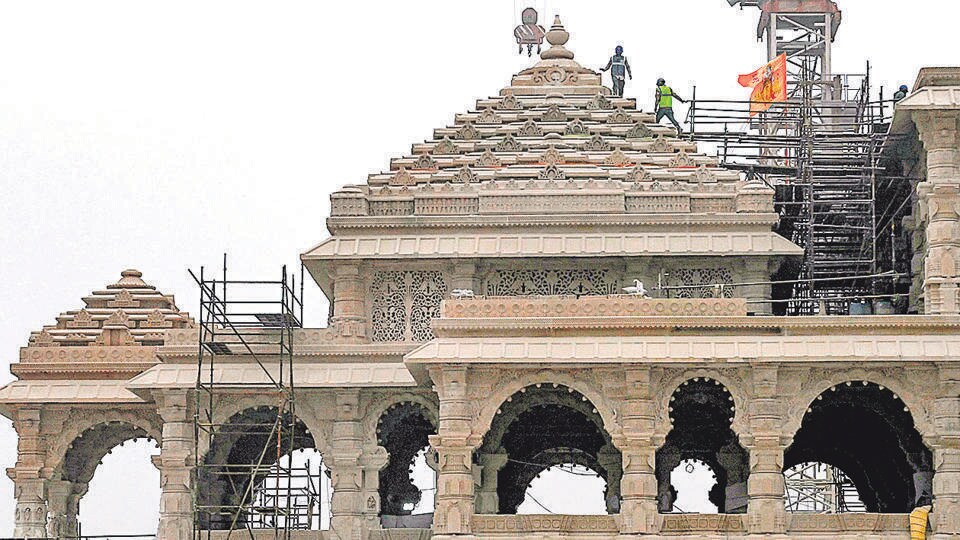
The temple will pave the way for a new “governance model drawing from soft Hindutva”, leaders aware of the development said, seeking anonymity
While efforts are underway by the party and Sangh offshoots to oversee celebrations across the country to mark the idol consecration and organise tours for devotees, BJP and Sangh functionaries are giving shape to a new narrative about the temple.
“The next step is Ram Rajya. Lord Ram was maryada purshottam, a man of impeccable ideals, a ruler who was just and welfarist. The concept of Ram Rajya was supported even by Mahatma Gandhi, who saw it as a model state where everyone was happy and well provided for,” a functionary of the RSS said.
The construction sanctioned by the Supreme Court will evolve into “a model of governance that the BJP has been promising, Sabka Saath, Sabka Vikas”, said the functionary who has been a part of the temple campaign.
The BJP, which is expected to leverage the construction of the Temple for electoral gains as it prepares to face a combative opposition in the upcoming Lok Sabha polls, is keen to embed its electoral narrative with references of the temple being a symbol for “cultural nationalism”, “cultural pride”, and “political will”.
Just as it had done ahead of the Kashi Vishwanath temple redevelopment, the party does not want the construction to be confined to a religious prism, but is keen to sell it as an example of developmental agenda.
The party has been pointing to the infrastructure development, a new airport, augmented train and bus services and hospitality avenues that will contribute to the economy and create jobs.
“The Ram temple will dictate its own narrative in Indian polity. While the issue was central to the political discourse from 1989 till 2014, there was a deliberate and conscious effort made to underestimate the impact of Ayodhya (as a movement),” said a BJP leader and former union minister.
The movement for the construction of the temple touches the “psyche of the country”, the leader said. “Rajneeti ka swar shaashvat hai (polity is eternal) and any issue to remain relevant needs to gel with that. The Ram temple issue will continue to dominate the polity, this time for establishing a new governance model that is fair, just, all inclusive,” he said.
Leaders of several opposition parties have, however, criticised the BJP for politicising the temple inauguration. Last week, Congress’s KC Venugopal criticised the BJP and questioned “whether it was right to turn such an event into a function of a party or a government”. Samajwadi Party’s Akhilesh Yadav also took potshots at the BJP government for taking over the ceremony, including sending out invitations.
Responding to the opposition’s accusation that the BJP has politicised the issue, the leader said while their opponents tried to disassociate the movement from the common people, designating it as a religious movement mainstreamed politically by the Sangh Parivaar, there were parties that used it to carve their own political space.
“Let’s not forget how Lalu Prasad Yadav and Mulayam Singh Yadav used the Ramjanmabhoomi issue to build their own political edifice in Bihar and Uttar Pradesh. They encashed on the schisms created by the pseudo secularists around the campaign to make both the Congress and the Left redundant in the states,” the leader said.
While the BJP is confident of eliciting the support of people across castes and demographic divides for fulfilling the promise of a temple in Ayodhya, Ajay Gudavarthy, professor at Jawaharlal Nehru University said, “People do see cultural belonging in an issue like the Ayodhya temple but excessive politicisation gives it a different shape that is more acrimonious than cultural and much less spiritual.”
He said the issue might help consolidate the already existing core social base of the BJP, but it may not create the kind of euphoria it did in 1990s. “It may not remain an exclusive or sole issue that can determine the voting preferences even in much of north India,” he said.
The BJP thinks otherwise.
On the impact that the party expects in the Lok Sabha polls from meeting a long-standing promise of constructing the temple, a second BJP leader said the process of engaging individuals from various castes for the process of temple building mirrors the party’s social engineering.
“The presence of individuals from castes included in the OBC, SC and ST categories at the momentous event signifies that soft Hindutva is a force to reckon with, especially at a time when parties whose politics was based on caste are scrambling to find a leader against the BJP,” said the second leader.
In the past the BJP gained electorally riding on the Ramjanmabhoomi campaign that began as a yatra in 1990 led by party patriarch LK Advani from the Somnath temple in Gujarat and ended in the demolition of the Babri Masjid on December 6, 1992.
“After the party passed a resolution demanding the construction of the temple in 1989, the party’s presence in the Lok Sabha went up from two in 1984 to 85 in 1989 and further to 120 in 1991,” the second leader said.
The construction of temple figured in resolutions passed by the RSS and BJP. In 1959, the RSS passed a resolution, making a strong statement about “temples turned into mosques” with a pointed reference to the Kashi Vishwanath Temple in Varanasi. In 1987, the Sangh in its annual meeting, the Akhil Bharatiya Pratinidhi Sabha, passed a resolution, demanding that the “government allot sufficient open ground and extend all necessary facilities to the Sri Rama Janmabhoomi Trust and desist from giving any encouragement to the tactics of obstructionists and religious fanatics.”
Two years later, in 1989, the BJP adopted a resolution on the Ram Janmabhoomi at the meeting of its national executive in Palampur. It demanded the handing over of the Ram Janmabhoomi to Hindus for the construction of a temple and subsequently incorporated into the party’s manifesto.


