
 E-Paper





Follow the latest breaking news, major developments and agenda-setting stories from India and around the world with the newsdesk at Hindustan Times. Operating round the clock, the desk brings together experienced editors, reporters and correspondents to deliver fast, accurate and contextual reporting across subjects that influence public policy, governance, business, society and international affairs. The HT News Desk covers politics, elections, government policies, the economy, business and markets, science and technology, the environment, law and order, infrastructure, education, climate issues and geopolitics, while closely tracking developments across states, institutions and global capitals. The team also leads coverage of major breaking news events, policy announcements, court proceedings, natural disasters, public emergencies and significant international developments. Reports published by the newsdesk are based on information gathered from reporters on the ground, official statements, government agencies, court records, regulatory filings, recognised institutions and other authoritative sources. Stories undergo editorial scrutiny and verification processes to ensure accuracy, fairness and relevance, and are updated as events evolve and additional information becomes available. Whether covering a key political decision in New Delhi, an economic policy shift affecting millions, a landmark court ruling or a major global event, the HT News Desk aims to provide readers with reliable, fact-based journalism that delivers not only the latest developments but also the context and analysis needed to understand their wider implications.
Ramp up Covid-19 testing in containment zones, hospitals: ICMR to states
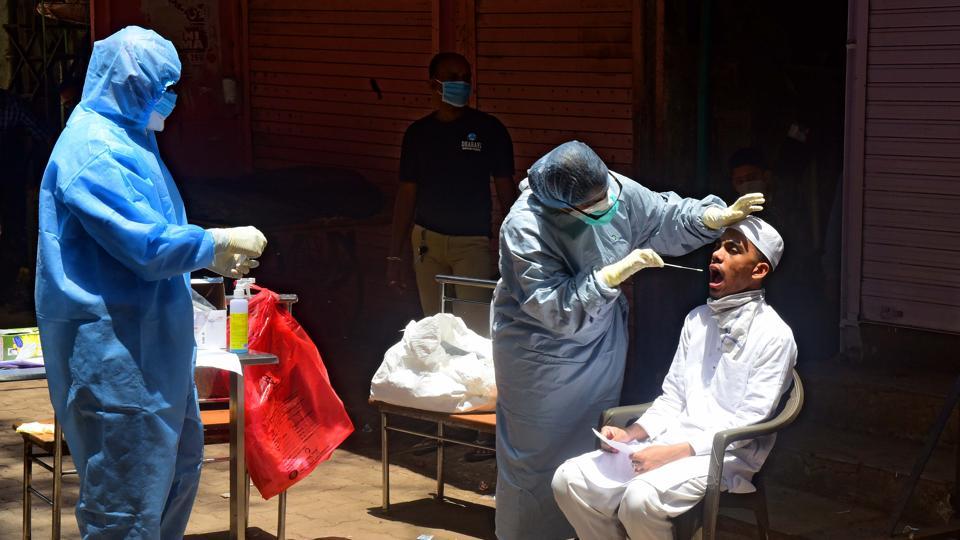
“Since test, track and treat is the only way to prevent spread of infection and save lives, it is imperative that testing should be made widely available to all symptomatic individuals in every part of the country”, said Director General of ICMR.


Director General of Indian Council of Medical Research (ICMR), Dr Balram Bhargava, has directed all states to ramp up testing for Covid-19 in containment zones and hospitals.In a letter to Chief Secretaries of all States on Friday, Bhargava stated that “Real Time RT-PCR is the gold standard test for detecting cases of Covid-19.”
“The test requires specialized laboratory setup with specific biosafety and biosecurity precautions to be followed. Average time taken is around 4-5 hours from receipt of sample to getting the result. The advantage of this platform lies in its accuracy of detection as well as ability to run up to 90 samples in a single run. However, in view of the specialized laboratory requirements, this test cannot be performed at every district level labs which do not have molecular virology facilities,” he wrote.
Bhargava stated that TrueNat and CBNAAT systems have also been deployed for diagnosis of Covid-19 in view of availability of customised cartridges for Covid-19 diagnosis.“These platforms have widespread availability even at district and PHC as these platforms are widely used for diagnosis of Tuberculosis as well as other infectious diseases. These platforms have a quick turnaround time (30-60 minutes) but only 1-4 samples can be tested in one run, limiting the maximum numbers that can be tested to 24-48 samples per day,” he added.
Bhargava stated that in an effort to ramp up the testing capacity, ICMR has approved a total of 960 labs in public and private sector.“However, inspite of these developments in testing, there is an urgent need to introduce rapid point of care diagnostic tests to make testing widely available in all parts of the country,” he said.
He wrote, “Rapid antigen-based detection assays have been used successfully for early diagnosis of diseases like Malaria, Leishmania, viral and bacterial respiratory infections etc. Such tests can be used as point of care diagnostics in field settings and have minimal biosafety and biosecurity requirements. ln view of this, ICMR had been exploring alternate quick and reliable options for diagnosis of Covid-19.”
Since test, track and treat is the only way to prevent spread of infection and save lives, it is imperative that testing should be made widely available to all symptomatic individuals in every part of the country and contact tracing mechanisms for containment of infection are further strengthened, Bhargava noted.He advised that all the patients who are being tested, may be requested to share one personal identity, issued by Government of lndia to establish the authenticity of the individual.
“Also, it has been noted that the phone numbers shared by individuals at the time of testing are often incorrect. Therefore, it is advisable that at the time of testing, a missed call should be given on the shared phone number to verify its correctness,” he wrote.


