
 E-Paper



‘Religion’, ‘animal thirst’ cited as reasons to approve infra projects in wildlife areas
About 50 projects in and around India’s critical tiger and wildlife habitats have been approved nod at a meeting of the standing committee of the national board for wildlife.


Religion, quenching animal thirst and public interests are some of the reasons cited by an environment ministry panel to recommend big ticket projects in and around India’s critical tiger and wildlife habitats.
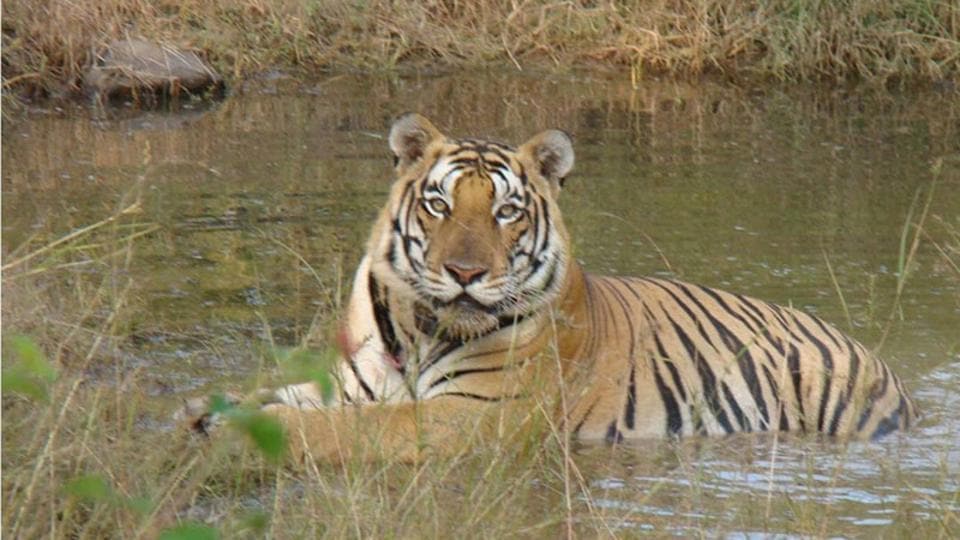
About 50 such projects got nod at a meeting of the standing committee of the national board for wildlife (SC-NBWL) headed by environment minister Anil Madhav Dave, the minutes of the meeting released this week revealed.
Religion was invoked to allow widening of a road through Nagarjunasagar Srisailam Tiger Reserve in Andhra Pradesh. The project is dubbed “public utility for the devotees” as it would provide better connectivity between Atmakur to Kolanu Bharathi Temple.
The minutes of the meeting held on January 3 said the National Tiger Conservation Authority (NTCA) recommended the project after due feasibility assessment carried out by a team of officers and scientists.
While allowing a check dam at Balaram Ambji sanctuary in Gujarat, the committee maintained that the water stored there will help wildlife to quench their thirst during dry season.
A large area of the sanctuary will be utilised for building the dam.
The committee recommended an approach canal through Shoolpaneshwar Wildlife Sanctuary in Narmada district of Gujarat, stating it will provide irrigation facilities to farmers of 10 villages.
The panel also allowed conversion of meter gauge line to broad gauge through Melghat Tiger Reserve in Maharashtra as Indian Railways claimed that an alternate route would result in “felling of thousand of trees”.
The minutes showed that the railway’s claim has not been vetted by any expert agency and the concerns of the NTCA on impact of the faster train line through the reserve on tiger dispersal, habitat connectivity for genetic exchange and protection failed to find much consideration.
Minister Dave overruled the concerns and allowed the project saying the mitigation measures by the NTCA would be enforced through a memorandum of understanding with railways.
Pushp Jain of non-government EIA Resource Centre, however, said the government has failed to provide any assessment of the habitat loss because of the alternate route that could have benefitted people in districts of Akola, Amravati and Bhandara.
Conservationists say the conversion will also result in cutting of the trees on 161 hectares of the forestland but the convoluted minutes fail to provide details.
Ravi Singh, chief executive officer of World Wide Fund (WWF) for nature said the standing committee was within its rights to take these decisions as they did not violate any law. “One has to consider the pressure of devotees or demand for development by locals. But, it does not mean that the government should not improve habitat for wildlife,” he told HT.
The NDA government has modified rules to expedite approvals in and around the wildlife areas for ease of doing business especially for mining, irrigation and linear projects.
An analysis of approvals by the highest advisory body of the environment ministry by the Centre for Science and Environment (CSE) showed that close to 400 projects have been approved by the NDA government in two-and-a-half years as compared to 260 by the UPA government in five years.
The rejection rate fell from 11.9% to 0.01% in the same period indicating that projects in green habitats have suddenly become feasible.
The CSE had said the ministry has introduced new norms to control pollution from these projects but panel members have expressed concern over monitoring its implementation.


