
 E-Paper



Researchers develop faster method to test for Covid-19
The method eliminates the need for a biosafety lab, which makes it possible for it to be used at airports and railway stations to test passengers before they board a plane or a train.


Researchers from the New Delhi-based Institute of Genomics and Integrative Biology (IGIB) have developed a new method of coronavirus disease (Covid-19) testing that is faster, cheaper, and almost as accurate as the Reverse Transcription-Polymerase Chain Reaction (RT-PCR) test, considered the gold standard of testing for the infection.
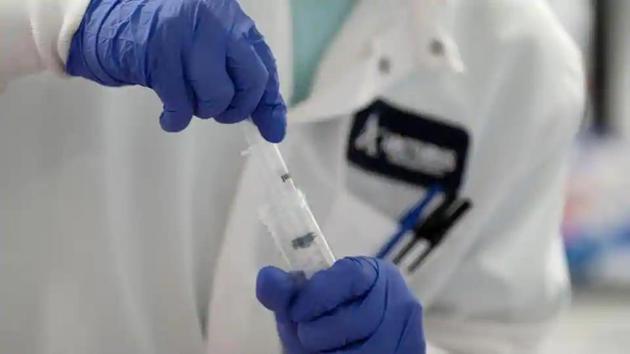
The method eliminates the need for a biosafety lab, which makes it possible for it to be used at airports and railway stations to test passengers before they board a plane or a train.
Instead of amplifying the genetic material of the Sars-CoV-2 virus that causes Covid-19, the technique developed by researchers from IGIB uses mass spectrometry to detect two peptides (building blocks of the viral protein). Mass spectrometry can detect the presence and quantity of various organic and inorganic compounds by detecting the ions released by them.
“The benefit of this method is that we do not need the viral RNA to be intact after sample collection because we do not need to amplify the genetic material. This means, after collecting the swab samples we can directly put it in a detergent that breaks down the genetic material of the virus leaving it unable to infect anyone,” said Shantanu Sengupta, senior principal scientist at IGIB.
“For RT-PCR, the sample has to be carefully transported in a medium and taken to a biosafety lab to prevent those handling it from getting the infection,” added Sengupta, one of the corresponding authors of the paper, which has been published in the Springer Group’s Journal of Proteins and Proteomics.
The specificity (the measure of a test’s ability to correctly generate a negative result for people who don’t have the condition) of the method is 100% and sensitivity (ability of a test to correctly identify those with the disease) 90.4%, meaning all those who test positive using the method will be truly positive but there is about a 10% chance that a person might test negative despite having the infection.
The researchers analysed 103 samples using the new method against the RT-PCR to calculate the specificity and sensitivity of the test against RT-PCR.
This is much better than the alternative rapid antigen kits, currently in use in India for scaling up testing, that can throw up 20 to 50% false negatives.
“This is the only method that directly observes the RNA as compared to RT-PCR where the proteins have to bind with a primer before we can detect it. This eliminates the possibility of a false negative if the quality of the RNA collected it not good and it does not bind or there is lysis (detergent) that prevents the RNA from binding. In our method, the only step that can go wrong is the digestion of proteins. And, to prevent that from generating wrong results, we have added a human peptide to the test as well, which will be visible even in negative tests where the preparation has been proper,” said Sengupta.
After a swab sample is collected, the viral proteins that make up its genetic material has to be digested and prepared, which takes about 25 minutes. The mass spectrometry test itself takes just about 2.3 minutes, meaning from sample collection to delivering a result it will take only 30 minute, compared to five to six hours for the RT-PCR test.
“We can detect the presence of two peptides specific to SARS-CoV-2 in a 2.3 min gradient run with 100% specificity and 90.4% sensitivity when compared to RT-PCR. Importantly, we further show that these peptides could be detected even in the patients who have recovered from the symptoms and have tested negative for the virus by RT-PCR, highlighting the sensitivity of the technique. This method has the translational potential in terms of the rapid diagnostics of symptomatic and asymptomatic Covid--19 patients and can augment current methods available for diagnosis of Sars-CoV-2,” said Dr Anurag Agarwal, director, IGIB.
Apart from the initial cost of setting up the mass spectrometry machine, which costs between R 50 lakh and Rs. 2 crore, the test can cost as little as a tenth of the price of an RT-PCR test.
“The cost per sample analysis at the lab level is just Rs. 100, which will go down further if done at a mass scale. Plus, there are several mass spectrometers available at high-end diagnostic labs, academic institutions, and pharmaceutical companies. We have reached the saturation point when it comes to RT-PCR machines in the country, so we can now deploy other technologies,” Sengupta said.
The method also allows for effective pooling of samples. “Around 2,000 samples can be tested in one go by intelligently pooling upto 10 samples together using an algorithm developed by my colleagues. This can be done even if the positivity rate is as high as 20%. However, people with symptoms are unlikely to travel from an airport or railway station, meaning the positivity will be lower still,” said Sengupta.
Pooled testing is when samples from more than one person are mixed together and tested. And, if one of the batches comes back positive, the samples from only that batch are retested individually to detect the person who has the infection. This method helps save cost and scale up testing.


