
 E-Paper



Right wing think tank moots Nanaji Thali to meet nutritional needs
The Deen Dayal Upadhaya Research Institute (DRI) has proposed a ‘Nanaji Thali’ using locally grown produce to meet nutritional requirements and wants the government to consider nutritional needs over food security.

 Prefer HTon Google


A Sangh-backed think tank, the Deen Dayal Upadhaya Research Institute (DRI) wants the government to consider nutritional needs over food security; it has proposed a “Nanaji Thali”, a concept that uses locally grown produce to meet nutritional requirements.
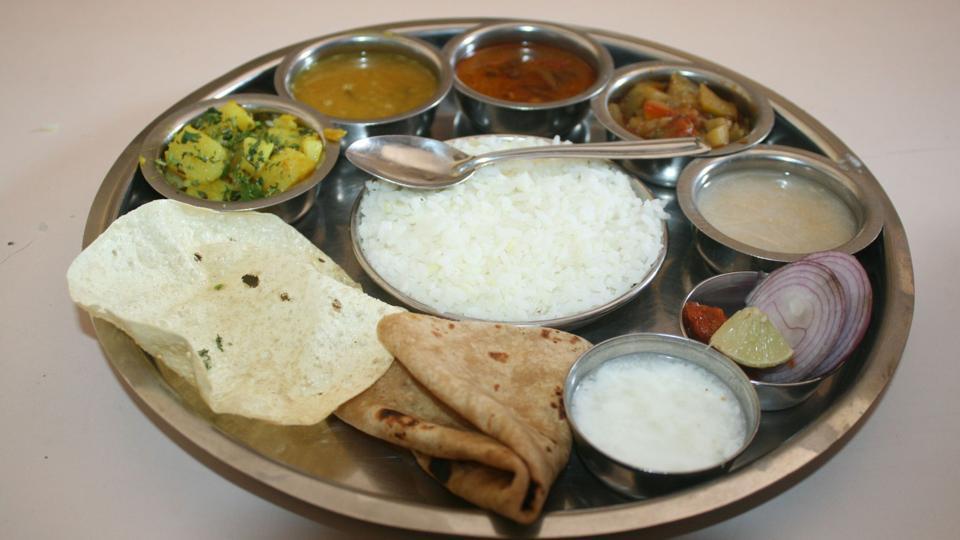
Named after Nanaji Deshmukh, whose birth centenary celebrations are underway, the thali (plate) suggests incorporating indigenous crops and produce that are part of food habits of the people.
Nanaji Deshmukh was a Bharatiya Jana Sangh leader who worked extensively in the fields of education, health, and rural self-reliance.
“Nanaji used to say government policies and programmes should not be limited to food security. This should now be reoriented as ‘nutrition security’ of which food security can be a part,” said Atul Jain, general secretary of the DRI.
To explore the suggestion the DRI is organising a national workshop in Shillong in June in collaboration with the Indian Council of Agricultural Research, under the ministry of agriculture and the women and child development ministry of Madhya Pradesh.
“It will be attended by agriculture scientists and practitioners, social activists and policy makers to discuss how using local foods can be incorporated in for instance midday meal schemes,” Jain said.
So far, three workshops have been held in Bhopal, Chitrakoot and Jabalpur to discuss the subject. Jain said the general consensus was there is a need for localisation of food and its availability, as also incorporating indigenous food habits of the people.
“The seminar will not be discussing only nutritional values of various ingredients in different parts of the country, but also on ways to ensuring how do they reach the thaali. The first step, of course, would be identifying nutritional ingredients region-wise, and then finding the ways out to ensure their availability locally. That is why the topic: Agriculture for Nutrition,” he said.


