
 E-Paper



Road ahead even more daunting than during 1991 crisis: Manmohan
The senior Congress leader said he was “deeply saddened” at the devastation caused by the Covid-19 pandemic and stressed on the need to improve key social indicators.


Former prime minister Manmohan Singh on Friday said the economic liberalisation process started 30 years ago catapulted India to a $3 trillion economy, but added that the road ahead is even more daunting than during the 1991 crisis and priorities of the nation need to be recalibrated to ensure a “healthy and dignified” life for every single Indian.
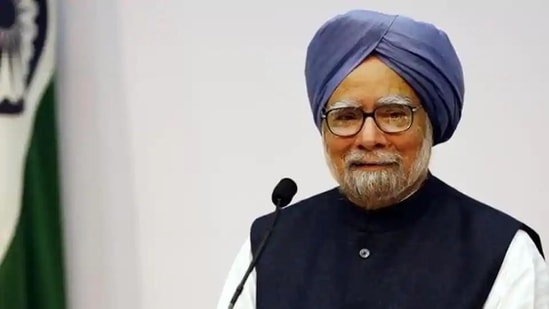
The senior Congress leader said he was “deeply saddened” at the devastation caused by the Covid-19 pandemic and stressed on the need to improve key social indicators. “The social sectors of health and education have lagged behind and not kept pace with our economic progress. Too many lives and livelihoods have been lost that should not have been,” he said in a statement on the 30th anniversary of the presentation of the 1991 Union Budget (on 24 July).
In order to bring the economy back on track, the PV Narasimha Rao government (June 21, 1991- May 16, 1996) launched economic reforms by ending the era of licence-quota raj and by encouraging privatisation. The process was initiated by Singh as the finance minister, in his budget speech on July 24, 1991.
Singh recalled his budget speech three decades ago where he quoted Victor Hugo, ‘No power on Earth can stop an idea whose time has come’, and said: “Thirty years later, as a nation, we must remember Robert Frost’s poem, ‘But I have promises to keep, And miles to go before I sleep’.”
Singh said that successive governments in the last three decades followed the path of reform that was laid in 1991, which brought India into the league of the world’s largest economies.
“More importantly, nearly 300 million fellow Indians have been lifted out of poverty in this period and hundreds of millions of new jobs have been provided for our youth.”
He, however, added that it was not a time “to rejoice and exult but to introspect and ponder”. “The road ahead is even more daunting than during the 1991 crisis,” he said.
The reform process unleashed the spirit of free enterprise, which has helped produce world-class companies and helped India emerge as a global power in many sectors, the former PM said.
“The economic liberalisation process in 1991 was triggered by an economic crisis that confronted our nation then, but it was not limited to crisis management. The edifice of India’s economic reforms was built on the desire to prosper, the belief in our capabilities and the confidence to relinquish control of the economy by the government,” he added.
Singh said he was fortunate to play a role in this reform process along with several of his colleagues in the Congress party. “It gives us immense joy to look back with pride at the tremendous economic progress made by our nation in the last three decades,” he said.


