
 E-Paper



Rose above emotions as CM after Godhra: Modi
“I reached Godhra… It was a painful sight. There were dead bodies everywhere, but I knew I was in a post where I had to rise above my emotions,” Modi said in the podcast I reached Godhra… It was a painful sight... But I knew I was in a post where I had to rise above my emotions. I did all I could and kept myself together.Narendra Modi, Prime Minister


Prime Minister Narendra Modi on Friday said that the scenes in Gujarat’s Godhra town after a train was set ablaze in 2002 were painful, but, as chief minister, he knew he had to control himself and rise above emotions, shining light on his mental make-up after the incident.
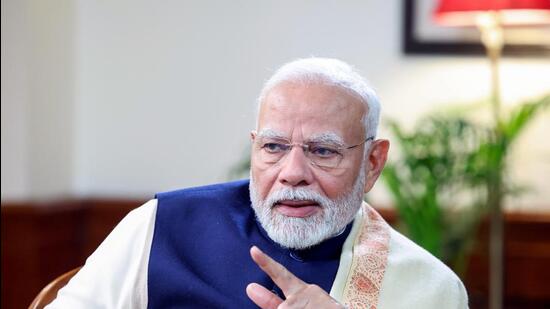
In a two-hour-long podcast with Zerodha founder Nikhil Kamath, Modi spoke about his childhood, the place of young people in politics, relationship with Chinese premier Xi Jinping, his feelings about the US denying him a visa, India’s stance on peace amid a flurry of global conflicts, the ideology of freedom fighters such as Mahatma Gandhi and VD Savarkar, and the differences between his first, second and third terms. He also said that his life’s mantra was that as a human being, he could make mistakes, but he never did anything with wrong intentions.
Modi said that he first became a legislator on February 24, 2002 and on February 27, he went to the assembly for the first time. “I was three days old as an MLA and the Godhra incident happened. I was restless, I was worried, I was in the House... I said I want to go to Godhra,” he said.
Modi said he took a single-engine helicopter owned by ONGC over the objections of his staff and insisted that he was not a VIP. “I reached Godhra… It was a painful sight. There were dead bodies everywhere, but I knew I was in a post where I had to rise above my emotions. I did everything I could and kept myself together,” he said.
On the morning of February 27, 2002, 59 Hindu pilgrims and kar sevaks returning from Ayodhya on board the Sabarmati Express when a group of people set fire to the train near the Godhra railway station in Gujarat. Violent riots quickly broke out across the state, eventually killing close to 1,000 people, many of them Muslims.
On the night of February 27, police rounded up around 70 people from Godhra and charged them with murder, attempt to murder, criminal conspiracy, arson and other charges for the train burning. Later, many were arrested.
In 2011, a local court convicted 21 people, acquitted 63 others, and sentenced 11 to death. In October 2017, the Gujarat high court confirmed the verdict, but commuted the sentence of 11 people to life imprisonment.
The riots that followed the Godhra incident spurred a web of separate trials, the most prominent of which were eventually monitored by the Supreme Court. In 2012, Modi was cleared of complicity in the violence by a special investigation team appointed by the apex court. The SIT also rejected allegations that the administration did little to curtail the riots. Eventually, in the nine high profile cases handled by the SIT, 534 people were put on trial and 172 were convicted.
In the podcast, Modi also spoke about other challenges during his tenure as chief minister, including when there were blasts at five places, and said that he never let anxiety or restlessness deviate him from his mission.
“Imagine my situation as the chief minister. I said I wanted to go to the police control room, but my security denied saying it is risky. I insisted that I will go. I went and sat in the car, and said I will go to the hospital first. They said there were blasts in hospitals too, but I insisted that I will go. You can say there was anxiety, restlessness in me. But my way was to be totally involved in my mission, a sense of responsibility takes over,” he said.
Referring to himself as different from “professional politicians”, the PM said there were many people in politics who came with the aim of winning elections and occupying positions, and some were also opportunists.
“I am not one of them...I have been raised on one ideology, and it can be summed up as - nation first... And for that I am ready to move ahead and try new things, but it has to be nation first,” he said.


