
 E-Paper



Rural minister Tomar meets with states to scale up flagship projects
The government has already released more than ₹36,000 crore to the states and Union territories this current fiscal, which includes ₹33,300 crore under MGNREGS to quickly pay all dues and help states start new works.


With the nationwide lockdown nearing its end on May 3, and the government keen on extending concessions to more sectors of economic activities, the Union rural development ministry is eyeing ways to strengthen the rural sector that provides livelihood to a majority of Indians.
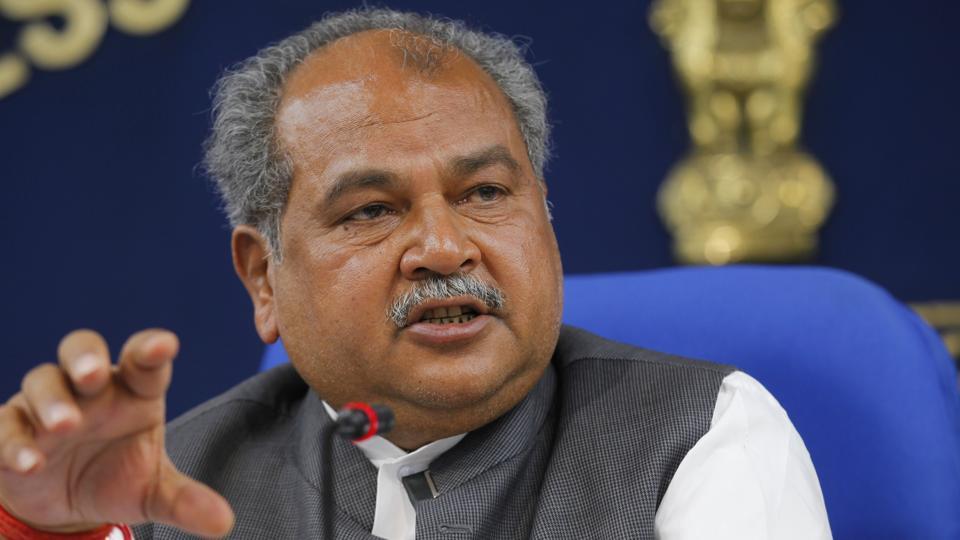
Union rural development and agriculture minister Narendra Singh Tomar met his state counterparts through video conferencing Friday to discuss ways to scale up key flagship schemes such as the guaranteed employment programme MGNREGS, the rural housing scheme (PMAY-G), rural roads programme (PMGSY) and the National Rural Livelihood Mission (NRLM).
Tomar, who heads two crucial sectors that hold the key to rural growth, maintained the challenge presented by Covid-19 must be used as an opportunity to “strengthen rural infrastructure, create employment in rural areas and facilitate diversification of rural livelihoods.”
His comments assume significance as tens of thousands of rural labourers have lost jobs and are either at home or in government-aided shelters currently. The supply chains are stretched and production process has been hit badly. Even some big states can’t maximise their opportunities in MGNREGS due to large areas coming under Covid-19 containment zones.
Tomar’s comment came hours after Prime Minister Narendra Modi asked the gram panchayats to become self-sufficient, indicating a major shift in the government’s approach to tap rural potential.
The government has already released more than ₹36,000 crore to the states and Union territories this current fiscal, which includes ₹33,300 crore under MGNREGS to quickly pay all dues and help states start new works.
Tomar reiterated that MGNREGS should focus on water conservation, water recharge and irrigation work. Under PMAY (G), the government wants to complete 48 lakh houses.


