
 E-Paper



SC: Casual stay of bail orders disastrous for human liberty
SC criticizes casual staying of bail orders, emphasizing disastrous implications for human liberty. Plans to set guidelines to limit such practices.


The practice of casually staying bail orders is wrong, the Supreme Court emphasised on Friday, adding the top court will put an end to such a practice because of its “disastrous” implications for human liberty.
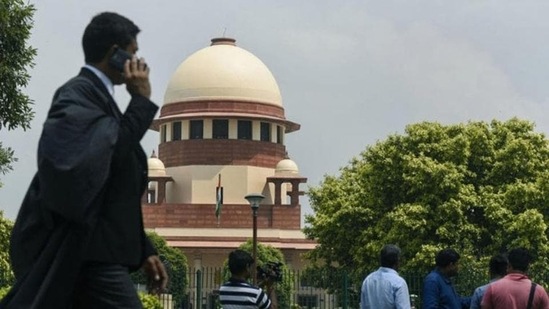
“It would be disastrous if we start staying bail orders like this. What will be the fate of Article 21 (right to life and liberty) then,” commented a bench of justices Abhay S Oka and Ujjal Bhuyan.
The court was hearing a case in which a bail order of an accused in a money laundering case was stayed by the Delhi high court without rendering any reasons. The bail order remained stayed for a year before a vacation bench in the Supreme Court stepped in on June 7 to direct that the accused will be released forthwith.
After the Enforcement Directorate (ED) contended on Friday that it was an established practice among several courts since power to cancel bail would include power to stay such orders, the top court asserted its authority to end such practices.
Also Read | What does SC’s red line for arrests by ED mean?
“How can you say there’s anything in law or there’s some practice. If it’s a practice, it’s a wrong practice. Just because some orders are passed, it does not become justified. It can’t be a practice in matters involving the liberty of individuals. Orders granting bail contain reasons. How can it be stayed casually?” the court asked advocate Zoheb Hossain, who appeared for the Enforcement Directorate (ED) in the matter.
Solicitor general Tushar Mehta, who happened to be online during the virtual hearing, stepped in to point out that there could be some exceptional circumstances requiring the higher court to suspend the order of bail immediately. He cited instances where accused have flown out overnight after getting bail orders and landed in countries with whom India does not even have extradition agreements.
“If the court is mulling guidelines on the issue, it will have huge ramifications. However, if the court’s order is confined to this case, we may have nothing to say. We are not defending this impugned order of the high court which has not given any reasons,” Mehta added.
Also Read | Kejriwal still a criminal, must resign as CM, demands BJP after interim bail
To this, the court court reiterated that bail orders should be stayed only in exceptional cases. “It must happen in very rare cases. If there’s a terrorist involved in serious activities, then there could be something. But it cannot happen casually,” said the bench.
The court also indicated it would lay down specific guidelines on when a bail order could be stayed. “What we are going to say is that orders granting bail can be stayed only when there’s perversity and where special conditions are required or a person is a terrorist,” it stated while reserving the judgment in the matter.
In the present case, Parvinder Singh Khurana was granted bail by a Delhi court on June 17, 2023, in connection with a money laundering case. After ED filed an appeal, the Delhi high court on June 23 stayed the bail order but did not give any reason. Khurana then moved the Supreme Court against the stay order, prompting a vacation bench to direct his release on June 7.
On Thursday, the Supreme Court had condemned the practice of higher courts casually staying bail orders granted by trial courts, particularly when the accused is neither a terrorist nor considered a threat to society. “What is this happening? A person is granted bail, you (Enforcement Directorate) approached the high court and merely on your asking, the order granting the bail remains stayed for one year. This is shocking,” it observed.
The bench underscored that such stays should not be granted merely at the behest of investigating agencies, especially when detailed reasons for granting bail have been provided by the trial courts. It expressed its discontent with the casual way a detailed bail order was stayed by a “one-line order” from the high court.
The court on the day indicated its intention to deliver a comprehensive judgment that would establish clear guidelines and deterrents against the casual staying of bail orders. “Let’s say something about the casual manner in which an order granting bail was stayed. We will have to say something on this practice by courts. It cannot be like this... What signals we are sending. We are not only blaming you (ED), but we are blaming us as well.”
The top court’s stance comes against the backdrop of a recent controversy involving Delhi chief minister Arvind Kejriwal, who is in judicial custody in connection with alleged illegalities in the framing of the 2011-22 excise policy. On June 21, the Delhi high court stayed the bail granted to Kejriwal by a trial court in a money laundering case linked to the excise policy case. The trial court cited a lack of direct evidence against Kejriwal and suggested potential bias in the ED’s approach. Following ED’s appeal, the stay came in less than 24 hours after the order of bail by the trial court, but the High Court’s initial stay order by a vacation bench did not provide any reasons, raising significant legal and ethical questions.


