
 E-Paper



SC directs states to reveal criteria for release of prisoners, no surrender for now
The Supreme Court on Friday directed that prisoners granted bail or parole as a measure to decongest jails need not surrender till further orders as the threat of the Covid-19 third wave looms large


The Supreme Court on Friday directed that prisoners granted bail or parole as a measure to decongest jails need not surrender till further orders as the threat of the Covid-19 third wave looms large.
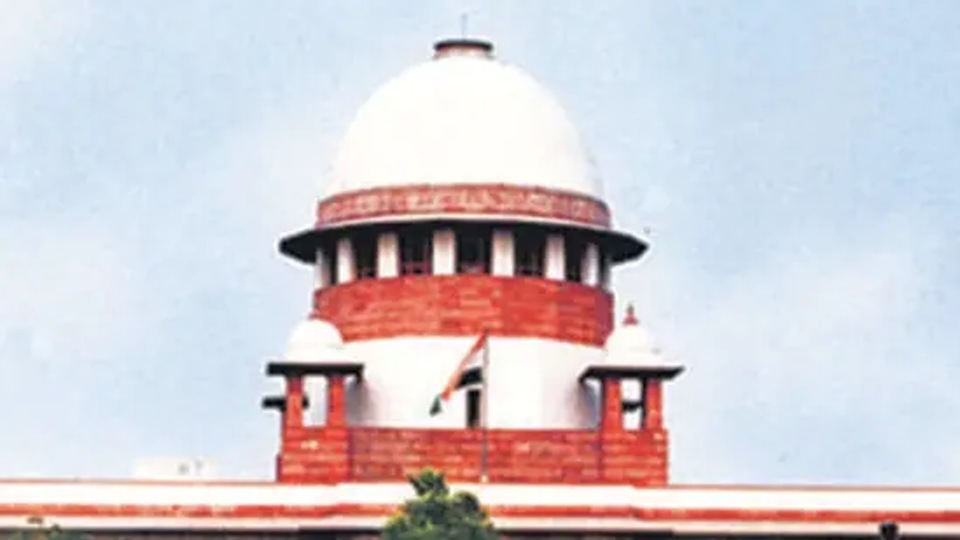
The order was passed by a three-judge bench headed by Chief Justice of India (CJI) NV Ramana while dealing with a suo motu petition on containing the spread of Covid-19 in prisons. The bench also directed states to inform within a week on the criteria adopted by the various state high powered committees (HPC) to release prisoners.
On May 7, when the country was in the grip of the second wave of the pandemic, the Supreme Court had said that prisoners granted bail or parole last year on the recommendation of the HPC should be released forthwith on bail on the same terms and conditions. Those on parole got a 90-day extension under the same order.
The bench, also comprising Justices L Nageswara Rao and AS Bopanna, found an absence of any information on whether its order was complied with. The court was in the dark over whether the HPCs, constituted by a court order of March 23, 2020, had considered age and co-morbidities of prisoners to recommend release.
The bench said, “There is no uniformity in the criteria to be applied. Tripura and Haryana are considering the age factors while other states have not taken into account age or co-morbidity. There is no information on how our orders are being implemented.”
Since the HPC in every state/UT comprises the chairperson of state legal service authority, the chief secretary and the Director-General of Police, the court directed the National Legal Services Authority (NALSA) and all the states to file a report or affidavit with regard to “criteria or norms followed for release of prisoners” and “whether age or co-morbidity condition of the prisoner is being considered” in recommending release.
This report has to be filed by next Friday as the Court will hear the matter next on August 3.
Senior advocate Dushyant Dave, assisting the court as amicus curiae, told the court that several lawyers informed him about prisoners released on the recommendation of HPC being asked to surrender. The bench observed, “For the time being, prisoners already released shouldn’t be asked to surrender till further orders.”
Solicitor General Tushar Mehta appearing for the Centre supported this view. Mehta said, “The government has no objection if the release of prisoners is extended till this court finally decides.” He even supported the direction calling for criteria adopted by HPCs to release prisoners.
The HPCs formed by the states and Union territories had recommended the release of those prisoners charged with crimes punishable with seven years or less sentence. The top court had left it open to the committees to consider the sentence undergone, severity of the offence, and stage of trial as relevant criteria to aid their decision.
The court allowed HPCs to even consider fresh cases for release based on standard operation protocol prepared by the NALSA. On June 1 this year, as a further step to decongest prisons, the bench allowed Probation Boards to process applications for early release of prisoners based on good conduct.
After the court took up suo motu the cause of prisoners in jail last year, nearly 50,000 prisoners came to be released on bail or parole. By January-February this year, when the Covid-19 wave dipped, the released prisoners were asked to surrender.
Nearly 90 per cent surrendered when the court on May 7 felt that the situation had again become grim. The court said, “India has more than four lakh prison inmates. Some of the prisons in India are overburdened and are housing inmates beyond optimal capacity…decongestion is a matter concerning the health and right to life of both the prison inmates and the police personnel working there.”


