
 E-Paper



SC emphasises limited judicial intervention in sector-specific tribunals
The SC bench highlighted the importance of allowing these bodies the freedom to develop sectoral laws through a consistent and principled approach.


The Supreme Court on Tuesday emphasised the principle that constitutional courts should exercise restraint while reviewing decisions of specialised tribunals, particularly in matters requiring technical expertise and sectoral knowledge.
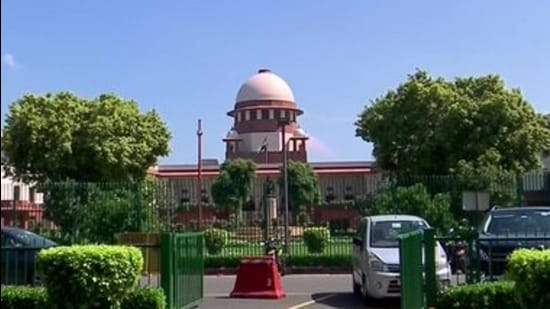
A bench of justices PS Narasimha and Pankaj Mithal ruled in favour of a restrictive scope of appellate jurisdiction in cases involving specialised tribunals and statutory regulators, highlighting the importance of allowing these bodies the freedom to develop sectoral laws through a consistent and principled approach.
“The restrictive scope of appellate jurisdiction is a product not only of statutory preconditions but also a necessary measure to enable freedom to statutory regulators and tribunals to develop sectoral laws through a principled and consistent approach,” the judgment, authored by justice Narasimha, stated.
The top court’s judgment reinforces the judiciary’s recognition of the need for specialised bodies to interpret and apply laws in a manner that promotes clarity, consistency and the systematic evolution of sector-specific legal frameworks. By limiting the scope of its appellate jurisdiction, the top court ensures that statutory regulators and tribunals have the necessary space to evolve legal principles and develop consistent approaches within their respective domains.
The case before the Supreme Court involved a dispute arising from the extension of the scheduled commissioning date under a 2015 power purchase agreement (PPA). The central question was whether the extension was justified under the force majeure clause of the PPA, and consequently, whether the reduction in the tariff payable to a famer categorised as a solar power developer and his special purpose vehicle was appropriate.
The solar power developer faced delays in the commissioning of their project, which they attributed to external factors beyond their control, including delays by government bodies in providing necessary approvals. The Karnataka Electricity Regulatory Commission (KERC) initially ruled in 2018 that the delay was attributable to the power developer’s own negligence. However, the Appellate Tribunal for Electricity (APTEL) in 2021 overturned this decision, finding that the delays were due to factors outside the respondents’ control and that the force majeure clause was applicable.
Bangalore Electricity Supply Company, a power distribution entity, challenged APTEL’s decision before the Supreme Court, arguing that the tribunal had erred in its appreciation of the facts and that the delay should not have been excused under the force majeure clause.
The court, in its judgment, upheld APTEL’s decision, noting the limited scope of its appellate jurisdiction under Section 125 of the Electricity Act, 2003. It emphasised that the court’s jurisdiction under this provision is confined to cases that involve a “substantial question of law”.
Drawing parallels with previous rulings, including the interpretation of Section 15Z of the SEBI Act that governs the Supreme Court’s appellate jurisdiction in cases arising from the Securities Appellate Tribunal (SAT), the judgment highlighted the necessity of allowing tribunals like APTEL the autonomy to interpret and apply the law within their specialised fields, ensuring the consistent and coherent development of sectoral laws.
Holding that APTEL had correctly reappreciated the evidence in the present case, considering additional factors such as delays caused by government authorities in granting necessary approvals, the bench concluded that the tribunal’s findings were reasonable and justified, and therefore, there was no substantial question of law warranting interference by the Supreme Court.
The judgment also addressed the appellant’s contention regarding the direction to pay a late payment surcharge to the solar power developer, affirming APTEL’s decision on the ground that the surcharge was explicitly rooted in the terms of the PPA and aligned with the intention of the parties involved.
The court asserted that it would not interfere with the factual findings of specialised tribunals unless there is a clear legal error or a substantial question of law arising from the tribunal’s decision.


