
 E-Paper



Justice BR Gavai-led bench to hear Waqf Act petitions on May 15, day after he becomes CJI
Senior advocate Kapil Sibal, appearing for Muslim parties, reminded the court that the assurances given by Centre should continue till the next date of hearing.

 Prefer HTon Google


The Supreme Court on Monday adjourned till next week the hearings on petitions challenging the constitutional validity of the Waqf Amendment Act, 2025, as the bench headed by chief justice of India (CJI) Sanjiv Khanna cited inability to pass even an interim order due to his impending retirement on May 13.
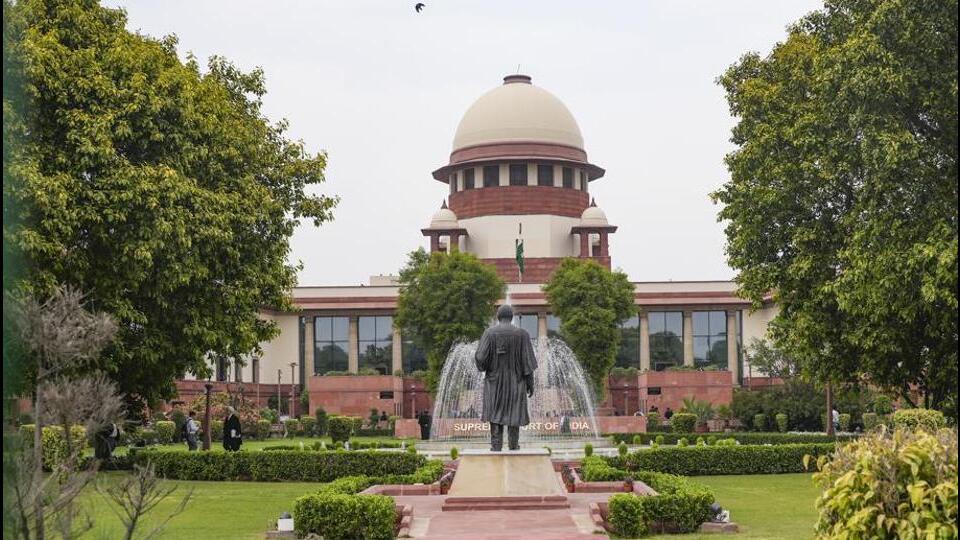
The matter will now be listed before a bench headed by justice Bhushan R Gavai on May 15, a day after he takes oath as the CJI.
“I do not want to reserve a judgment or orders even at the interim stage. This matter will have to be heard reasonably on every date. It will not be before me,” the bench headed by CJI Khanna said.
Commenting on the responses filed by the Centre and petitioners, the bench, also comprising justices Sanjay Kumar and KV Viswanathan, said, “You have raised valid points on registration of Waqf and given some figures also which have been disputed by petitioners. There are certain aspects that we have dealt with, but we need clarifications.”
Noting that the exercise would become futile in view of the limited working days CJI Khanna has in office as CJI, the bench said, “We will post it before the bench of Justice Gavai for hearing on the interim and final order. I want to give him time to go through these documents.”
Senior advocate Abhishek Manu Singhvi appearing for some of the petitioners remarked, “The court has got a quick way of getting rid of all of us.”
Senior advocate Kapil Sibal, appearing for Muslim parties, reminded the court that the assurances given by Centre should continue till the next date of hearing.
“We would have loved to persuade you as every contention has an answer. It’s painful for us to remind ourselves of the date (of your retirement). We cannot embarrass you as there is no time,” Solicitor General Tushar Mehta said.
The court had heard the matter on April 17 and allowed the Centre to file a response on the several legal issues raised in more than 70 petitions filed before the top court. It had refrained from passing any order and had kept the matter on May 5 to consider the aspect of any interim order. Meanwhile, it recorded the assurance given by Mehta on the status of waqf and inclusion of non-Muslims in Central Waqf Council and Waqf Boards.
These were the two contentious issues common to all petitions besides other aspects of challenge against the 2025 law. Mehta assured that no non-Muslim will be appointed to the Council or Boards and if a state makes any appointments, the same shall be deemed to be void. Further, he assured that no Waqf, including a Waqf by user, whether declared by way of notification or by way of registration, shall be de-notified, nor will their character or status be changed.
The Centre had opposed issuing any blanket ban on the operation of the law claiming that the law was passed considering the extensive misuse under the earlier Waqf legislations of 1995 and 2013. It cited extensive complaints on encroachment of government property and private land being as Waqf and asserted that since 2013, there has been a “shocking” 116% increase in Waqf properties.
This figure was denied by the petitioners led by All India Muslim Personal Law Board which claimed that the government suppressed facts as the claim is erroneous. It said that the statement is based on the list updated on Waqf Asset Management System of India or WAMSI portal which keeps updating the waqf properties that are registered even prior to 2013. It sought to dispel the impression that new waqf properties were added after 2013.
The Centre had further justified inclusion of non-Muslims in Waqf Council and Boards by claiming that the law respects the essential religious practices of the Muslim community by leaving matters of faith and worship untouched, while regulating the “secular, administrative facets of waqf management”. During arguments, the bench had asked if Muslims too can be part of Hindu endowments.
The Centre’s assertions were objected to by the petitioners, which included Muslim scholars, parliamentarians, religious bodies, and Opposition parties among others.
The Centre submitted that waqf which encompasses charitable purpose extends to education, healthcare, orphanages, etc which constitutes non-religious or secular functions to justify the presence of non-Muslims in Waqf Boards and Council.
However, the petitioners pointed out that state laws on Hindu endowments also serve charitable purpose which relates to management of schools, colleges, hospitals, orphanages, rest houses, etc., run by the endowment.
The Centre accused petitioners of building a “deliberate, purposeful and intentionally misleading narrative” that waqfs without documentation would be affected. “This is not only untrue and false but purposefully and deliberately misleading this court,” it claimed.
While approximately 70 petitions have been filed challenging the legislation, the Supreme Court ordered petitioners to select five lead petitions to address all challenges and list under the common title ‘In Re: Waqf Amendment Act 2025’.
The petitions nominated as the lead cases include those filed by Jamiat Ulama-i-Hind president Arshad Madani, social worker Muhammad Jameel Merchant, AIMPLB general secretary Mohammed Fazlurrahim, Manipur MLA Sheikh Noorul Hassan, and AIMIM chief Asaduddin Owaisi.


