
 E-Paper



SC notice to Centre on pleas challenging Delhi HC’s split verdict on marital rape
Exception 2 of Section 375 of the Indian Penal Code (IPC) decriminalises marital rape and mandates that sexual intercourse by a man with his wife (who is not under 18) is not rape.


The Supreme Court Friday issued a notice to the centre and other parties on a plea against the Delhi High Court's split verdict on pleas seeking to criminalise marital rape and do away with the exception in rape laws that protects husbands. A bench of Justice Ajay Rastogi and Justice BV Nagarathna listed the matter for further hearing in February 2023.
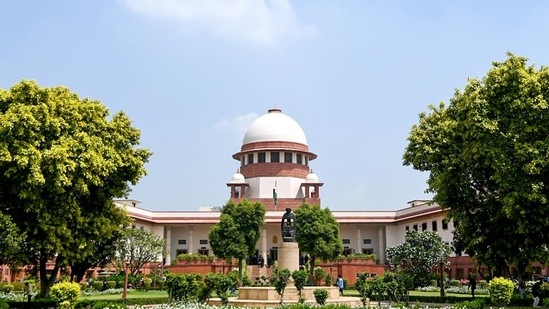
The court heard a petition from the All India Democratic Women's Association and others challenging the Delhi court's divided judgment on grounds it is unconstitutional since it discriminates against married women sexually attacked by their husbands.
Exception 2 of Section 375 of the Indian Penal Code (IPC) decriminalises marital rape and mandates that sexual intercourse by a man with his wife (who is not under 18) is not rape.
In May a two-judge bench of the Delhi High Court differed in their judgment on the matter; Justice Rajiv Shakdher said the exception was violative of Article 14 of the Constitution while Justice C Hari Shankar said it does not violate any law and could continue to operate.
"As far as I am concerned, the impugned provisions -- exception 2 to section 375 and section 376 (E)... are violative of Articles 14, 15, 19(1) (A) and 21 of the Constitution and are hence struck down.'' Courts cannot substitute their subjective value judgment for the view of the democratically elected legislature and the exception is based on an intelligible differentia," Justice Shakdher said.
"There is no support available, either statutory or precedential that every act of unconsensual sex by a man on his wife is rape. The impugned provision does not violate Article 14, but is based on an intelligible differentia having a rationale nexus... The impugned exception (375) does not violate article 21, 19(1)A… it cannot be called unconstitutional and therefore can exist… and, in such circumstances, the court cannot substitute its subjective values… for the view of the democratic elected legislature. I am of the considered opinion that the challenge of the petitioner cannot sustain," Justice C Hari Shankar differed


