
 E-Paper



SC pulls up TN govt over police banning Ram Mandir consecration ceremony telecast
The top court held that the state government must pass speaking orders whenever such requests are made and that any oral or general orders purportedly issued by police cannot be acted upon

 Prefer HTon Google


The Supreme Court on Monday pulled up the Tamil Nadu government for some general orders reportedly issued by police to restrict the live-streaming of the Ram Mandir Pran Prathistha (consecration) ceremony and performing religious activities, calling these orders “atrocious” and directing the state not to summarily deny such permissions.
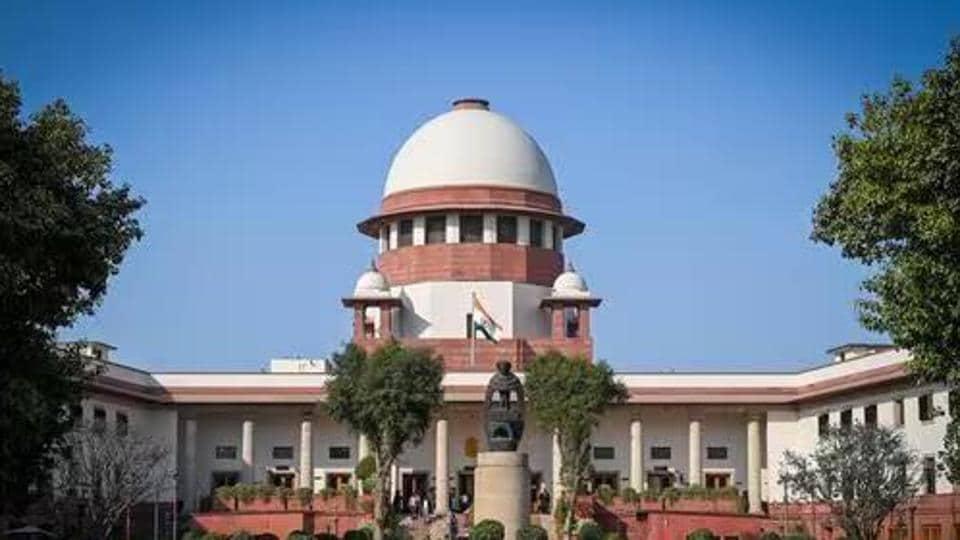
Admitting a public interest litigation (PIL) that alleged a blanket ban on the live-streaming of the consecration ceremony as well as religious rituals and processions, the top court held that the state government must pass speaking orders whenever such requests are made and that any oral or general orders purportedly issued by police cannot be acted upon.
“We believe and trust that the authorities will act in accordance with law and not on the oral instructions... The authorities will examine application seeking permission for such live-telecast and deal with it in accordance with law. If rejected, then reasons shall be given for rejection of any such requests,” the court recorded in its order, acting on the petition filed by BJP’s state unit secretary Vinoj P Selvam.
Also Read: ‘Ram Rajya will begin today’: Chief priest on Ayodhya temple pran pratishtha
During the hearing, senior counsel Dama Seshadri Naidu, representing the BJP functionary, adduced some orders issued by police that he said put curbs on the live-streaming and other religious functions at the occasion of the consecration ceremony in Ayodhya’s Ram Janmabhoomi Temple.
“A political party hates religion. That party comes to power. It now wants the government to hate religion too,” said Naidu, attacking the DMK.
Supporting the plea, solicitor general Tushar Mehta, appearing for the Union government, said that LED screenings in temples are being stopped in the state.
“A strong message must go from the highest court of the country to the state government that the Constitution of India still governs the nation, and that it applies to the state of Tamil Nadu also,” said the law officer, adding nobody can be prevented from performing religious rituals.
At this juncture, Tamil Nadu’s additional advocate general (AAG) Amit Anand Tiwari appeared, countering the allegations.
“My instructions are that there are no restrictions in place. This is a politically motivated petition,” the senior counsel contended.
The bench, however, expressed its displeasure upon perusal of the orders adduced by Naidu, who pointed that the only reason for the denial was that minority communities reside near the place for which permissions were being sought.
“What kind of reasons are given for rejection? Can this be a reason that a particular community is in minority, so you won’t allow the procession? Can a reason be given that Hindus are a minority at some place so you will not allow? These reasons are atrocious. If this reason has to follow, no procession or ritual can happen across the state,” the bench told Tiwari.
It asked the AAG to ascertain that no request is rejected because of such reasons.
“That is why we asked directed you to maintain data. We will know how many permissions were granted and how many were refused and the reasons,” the bench added.
Tiwari responded that they may ask for a permission of a live-telecast and other religious activities in front of a mosque. He added that the state will take decisions in accordance with law.
Fixing the hearing on January 29, the bench retorted, “You have all the powers, regulate it then... We want to know the reason. If this is the reason, you will be in problem.”
Selvam’s petition, filed through advocate G Balaji, stated that the DMK-government in the southern state has banned live-telecast of the auspicious occasion of ‘Pran Pratishtha’ of Lord Ram at Ayodhya in all the temples across the state of Tamil Nadu.
“The government has also banned all kinds of poojas, Archana and Annadanam (poor feeding) bhajans on this auspicious occasion. Such arbitrary exercise of power by the state government (through police officials) per se violates fundamental rights guaranteed under the Constitution,” it added.



