
 E-Paper



SC rejects Centre’s plea to review backward class list ruling
A five-judge bench, headed by justice Ashok Bhushan, held that there were not sufficient grounds to entertain the review petition filed by the Centre in May.


The Supreme Court has dismissed the Union government’s petition for a reconsideration of its May 5 judgment, ruling that state governments have no power to draw up their own lists of backward classes after a constitutional amendment in 2018.
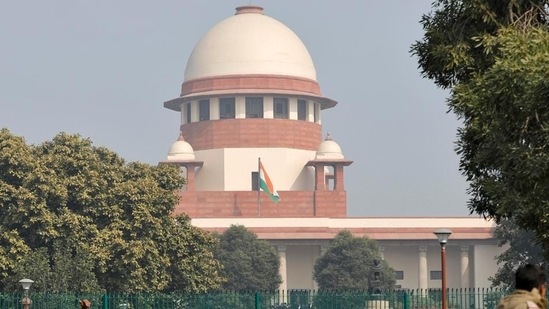
A five-judge bench, headed by justice Ashok Bhushan, held that there were not sufficient grounds to entertain the review petition filed by the Centre in May.
“The grounds taken in the review petition do not fall within the limited ground on which review petition can be considered. The various grounds taken in the review petition have already been dealt with in the main judgment,” said the bench while also rejecting a plea to stay the judgment and an application for an open court hearing.
The other members of the bench included justices L Nageswara Rao, SA Nazeer, Hemant Gupta and S Ravindra Bhat. The review petition was considered by the judges in chambers on June 28. The order of dismissal was released on Thursday evening.
The only option left before the union government is a curative plea, which is entertained by the top court in extremely rare cases.
In its review petition, the government contended that the judgment required a re-look because there were errors apparent on the face of the record. It questioned the interpretation given to the 102nd constitutional amendment by the majority of the judges on the bench.
By a 3-2 majority, the May 5 verdict of the apex court-- which also unanimously struck down a state law granting reservation to the Maratha community in government jobs and education in Maharashtra -- held that state governments must rely on the Union government to include or exclude any community for granting reservation to socially and educationally backward classes (SEBCs).
The five-judge bench interpreted the 102nd constitutional amendment, whereby provisions were inserted to give constitutional status to the National Commission for Backward Classes (Article 338B) and for empowering the President to notify the list of socially and educationally backward classes of state or Union territory (Article 342A).
While justices Ashok Bhushan and SA Nazeer maintained that the amendment was confined to the list to be issued for central government jobs, justices L Nageswara Rao, Hemant Gupta and S Ravindra Bhat said that the scheme of the amendments took away the power of the state to identify backward classes.
The majority view dismissed the Centre’s understanding of the amendments even as attorney general (A-G) KK Venugopal insisted that the 102nd amendment was not meant to deprive state legislatures from enacting laws determining the SEBCs and conferring benefits on them, something that has become a hot political issue.
According to the top law officer, Articles 15(4) and 16(4) of the Constitution were untouched by the insertion of Article 342 , which meant that the states continued to exercise their power to identify SEBCs and provide for reservation.
Several states, including Maharashtra, Punjab, Rajasthan, Tamil Nadu and Karnataka, also asserted their right under Articles 15(4) and 16(4) to make special provisions for SEBCs and give them benefits of quota.
Both the Centre and states further urged the court to lend credence to the parliamentary select committee report of 2017 and a statement of Union minister Thawarchand Gehlot on the floor of Parliament in August 2017 that the amendments did not affect the rights of the state governments to notify backward classes for reservation.
But the majority judgment rejected this plea, holding: “There is no reason to depart from the text which is in clear terms and rely upon the legislative history to construe Article 342 A contrary to the language...”
Stating that the states could only make suggestions to the President who had the exclusive authority to notify the list of SEBCs, justice Bhat added that once the list was notified, states could only exercise their power under Article 15(4) and 16(4) to decide on extent of reservations, the kind of benefits, the quantum of scholarships, etc.


