
 E-Paper



Supreme Court scraps Mishra bail in Lakhimpur killings
In its 24-page order, the apex court also criticised the “myopic view” adopted by the high court while dealing with the case in which eight people were killed in the violence on October 3, 2021.


The Supreme Court on Monday cancelled the bail granted to Ashish Mishra, the son of Union minister Ajay Mishra ‘Teni’, in the Lakhimpur Kheri violence case, bemoaning the “tearing hurry” shown by the Allahabad high court in allowing the bail plea.
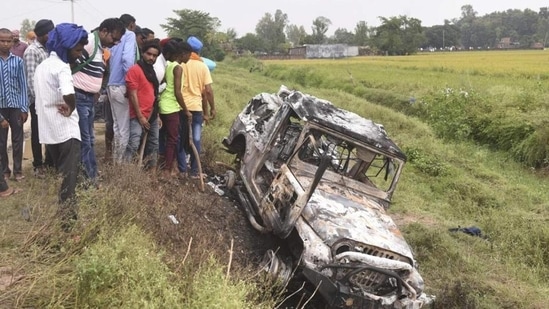
Directing Mishra to surrender within a week, the top court expressed its “disappointment” over the proceedings before the high court, where, it said, victims were “denied a fair and effective hearing” at the time of granting bail to the main accused in the case, which involved death of four farmers during a protest against the now-repealed farm laws in October 2021.
A bench, headed by Chief Justice of India NV Ramana, set aside the February 10 high court order for “ignoring judicial precedents and established parameters for grant of bail” and asked the high court to decide Mishra’s bail afresh, in “a fair, impartial and dispassionate manner”, preferably within three months.
Allowing a petition filed by the families of three of the victims who were mowed down by a convoy of cars during a farmers’ protest against the now-repealed farm laws in October 2021, the bench directed that the families would be given sufficient opportunity to be heard when Mishra’s bail plea is considered in future and that they would also be provided with a legal aid counsel with adequate experience in criminal law in case they are unable to engage a lawyer at their own expense.
“We are constrained to express our disappointment with the manner in which the high court has failed to acknowledge the right of the victims... Victims certainly cannot be expected to be sitting on the fence and watching the proceedings from afar, especially when they may have legitimate grievances. It is the solemn duty of a court to deliver justice before the memory of an injustice eclipses,” held the bench, which also included justices Surya Kant and Hima Kohli.
It noted that not only could the families not present their arguments after losing their internet connection during the online proceedings, their request for re-hearing the bail plea was summarily rejected by the high court.
“Where the victims themselves have come forward to participate in a criminal proceeding, they must be accorded with an opportunity of a fair and effective hearing. If the right to file an appeal against acquittal, is not accompanied with the right to be heard at the time of deciding a bail application, the same may result in grave miscarriage of justice,” it added.
In its 24-page order, the apex court also criticised the “myopic view” adopted by the high court while dealing with the case in which eight people were killed in the violence on October 3, 2021. Four farmers and a journalist were run over by a car allegedly belonging to Mishra. In the ensuing violence, three people – two political workers and a driver – were killed.
“Instead of looking into aspects such as the nature and gravity of the offence; severity of the punishment in the event of conviction; circumstances which are peculiar to the accused or victims likelihood of the accused fleeing; likelihood of tampering with the evidence and witnesses and the impact that his release may have on the trial and the society at large; the high court has adopted a myopic view of the evidence on the record and proceeded to decide the case on merits,” it underscored.
The bench further took a grim view of the high court examining the evidence as recorded in the first information report, lamenting that “the observations on merits of a case when the trial is yet to commence, are likely to have an impact on the outcome of the trial proceedings” by prejudicing either the case of the prosecution or the defence.
“The high court has taken into account several irrelevant considerations, whilst simultaneously ignoring judicial precedents and established parameters for grant of bail...the high court exceeded its jurisdiction by touching upon the merits of the case,” stated the court order.
It further reminded the state government to ensure “adequate protection for the life, liberty and properties of the witnesses, as well as for the families of the deceased”.
Mishra was arrested on October 9 after the top court pulled up the Uttar Pradesh government for the way the state had handled the investigation in the case till then.
On November 17, the bench set up a new special investigation team (SIT) to probe the violence and inducted three Indian Police Service (IPS) officers in the team. The court, which initiated suo motu proceedings into the matter, also appointed former Punjab and Haryana high court judge Rakesh Kumar Jain to monitor the probe into the violence.
After Mishra was granted bail by the high court on February 10, a petition seeking its cancellation was filed in the top court by Jagjeet Singh, Pawan Kashyap and Sukhwinder Singh – kin of three of the victims who died in the violence.
Apart from complaining about not being heard by the high court, in their petition, they feared that the witnesses in the case would be intimidated as the accused is influential. They rued that the bail order did not consider the heinous nature of the crime, the overwhelming evidence against the accused in the charge sheet, the likelihood of the accused fleeing from justice, and the possibility of his tampering with evidence or influencing witnesses.
While reserving its order on their petition on April 4, the bench remarked that it expected the Uttar Pradesh government to challenge the bail to Mishra after the SIT’s recommendation twice in February to appeal against the reprieve to the main accused.
But the state government, on its part, indicated its reluctance to do so, claiming that Mishra is neither a flight risk nor a threat to the witnesses in the case. Lending tacit support to the bail order, the government added that it did not accept the recommendation of the top court-mandated SIT seeking cancellation of Mishra’s bail since the team’s apprehensions regarding threats to witnesses were not substantiated.
Appearing for Mishra, senior counsel Ranjit Kumar argued on April 4 that not only had the high court heard the victims’ families before passing the order, it went into all the issues raised by the prosecution before granting the bail. He added that if the Supreme Court were to cancel Mishra’s bail, no other court would ever give him relief until the trial is over. Kumar claimed that Mishra was not even at the spot when the incident happened and that he is willing to comply with any additional condition for continuance of bail.
Relatives of the Lakhimpur victims hailed the top court’s decision. Jagdeep Singh, son of one of the deceased farmers Nakshatra Singh, said, “The Supreme Court’s decision has reposed my faith in the judiciary.”
“I am hopeful that the judiciary will ensure that all accused in the Tikunia violence are brought to justice whether he is a Union minister’s son or any other person,” Singh added.
Pawan Kashyap, brother of deceased journalist Raman Kashyap, also applauded the SC decision to cancel Mishra’s bail. “I thank the Supreme Court and all those who have stood by us in our fight for justice,” said Kashyap, adding , “I thank lawyers who have stood by us in our fight for justice”.
Ashish Mishra was not available for his comment on the SC decision, while there was no official response from minister Ajay Mishra ‘Teni‘.


