E-Paper



SC seeks details from Uttarakhand govt on forest encroachers in Rishikesh
The Supreme Court on Monday ordered the Uttarakhand government to place before it a comprehensive account of all persons occupying forest land in Rishikesh

 Prefer HTon Google


New Delhi: The Supreme Court on Monday ordered the Uttarakhand government to place before it a comprehensive account of all persons occupying forest land in Rishikesh, strongly indicating that the scale of encroachment could not have occurred without “collusion and connivance” of state authorities and political patronage.
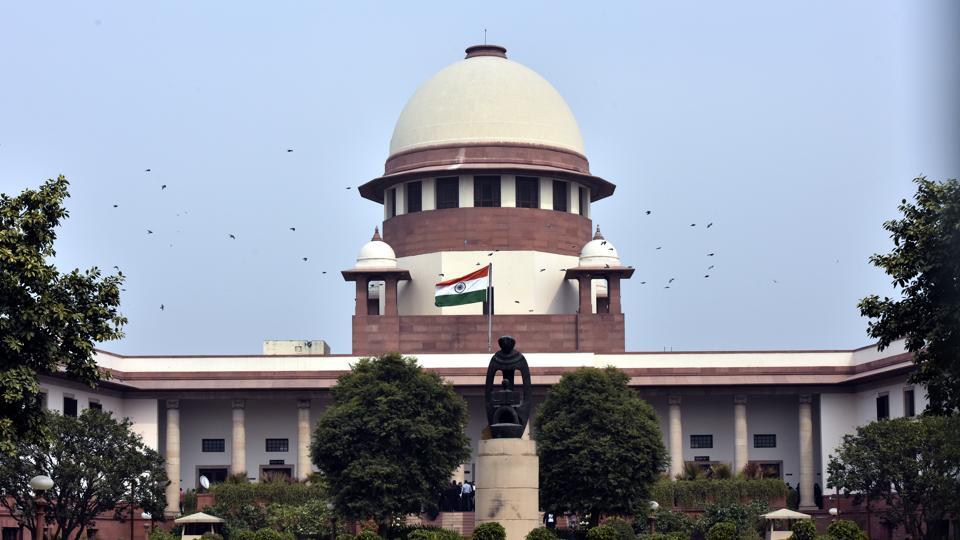
A bench comprising Chief Justice of India Surya Kant and Justice Joymalya Bagchi described the situation as “shocking” and questioned how thousands of acres of forest land continued to remain under private occupation despite the withdrawal of the original allotment more than four decades ago.
“It seems to us that each and every person holding executive position was accountable for consistent and persistent negligence in the matter, even as it appears to be a case of collusion and connivance with landgrabbers,” stated the bench in its order, directing the state to disclose the identity of occupiers to ascertain whether they enjoyed protection from authorities tasked with safeguarding the land.
The court was hearing the matter after the Uttarakhand government submitted an interim report pursuant to the apex court’s December 22 order, which initiated suo motu proceedings over large-scale encroachment of forest land in Rishikesh.
Unimpressed with the state’s explanation, the bench asked why the authorities needed court intervention to reclaim land that belonged to the government. “Why did you need the court order to retrieve your own land? What have you done since 2000 when your state came into existence?” the bench asked the deputy advocate general, Jatinder Kumar Sethi, adding that it took the state “23 years to wake up and do the ritual of taking back the land”.
Warning of personal accountability, the bench said it would “haul up” every officer concerned and remarked that “God knows who were the encroachers…the political influence and the protection they received from the state authorities”.
In its order, the court noted that although notices were issued against encroachers only in 2023, the process stalled once the high court granted interim protection, after which the authorities “again went into a slumber”.
The bench directed the state to file a detailed affidavit within two weeks, along with site plans, maps and the particulars of all occupiers of the encroached land.
The case traces its roots to around 2,866 acres of land in Rishikesh that were leased in 1950 to the Pashulok Seva Samiti for allotment to landless families. The allotment was withdrawn by the forest department of the erstwhile Uttar Pradesh government in 1984, and the land reverted to the state through a surrender deed. Despite this, private occupation continued for decades.
In its December 22 order, the Supreme Court restrained private parties from creating third-party rights over the land and directed the forest department to take immediate possession of vacant parcels, while maintaining status quo for existing residential constructions for the time being.
The directions were issued while hearing a petition filed by a woman who challenged eviction proceedings initiated against her for occupying a residential unit allegedly built on forest land. The case traces its origins to a November 2025 order of the Uttarakhand High Court, which upheld the eviction.
In its order, the high court noted that in 1950, around 2,866 acres of land in Rishikesh were leased to the Pashulok Seva Samiti for allotment to landless families. However, the allotment was withdrawn by the forest department of the erstwhile State of Uttar Pradesh on October 23, 1984, and the land stood reverted to the state through a surrender deed.
Despite this, private claims continued to be asserted. The high court recorded that the petitioner had come into possession of the land only in 2001 and had “no right” to remain there, observing that the land had already reverted to the state decades earlier. It upheld orders of the sub-divisional magistrate directing eviction with police assistance, a decision affirmed by the sessions court.