
 E-Paper



SC seeks procedural protocol of AAIB probe into Air India plane crash
The Supreme Court on Wednesday asked the Union government and the DGCA to place on record the “procedural protocol” being followed in the ongoing investigation by the AAIB into the June 2025 crash of Air India’s Boeing 787 Dreamliner at Ahmedabad

 Prefer HTon Google


The Supreme Court on Wednesday asked the Union government and the Directorate General of Civil Aviation (DGCA) to place on record the “procedural protocol” being followed in the ongoing investigation by the Aircraft Accident Investigation Bureau (AAIB) into the June 2025 crash of Air India’s Boeing 787 Dreamliner at Ahmedabad, which claimed 260 lives.
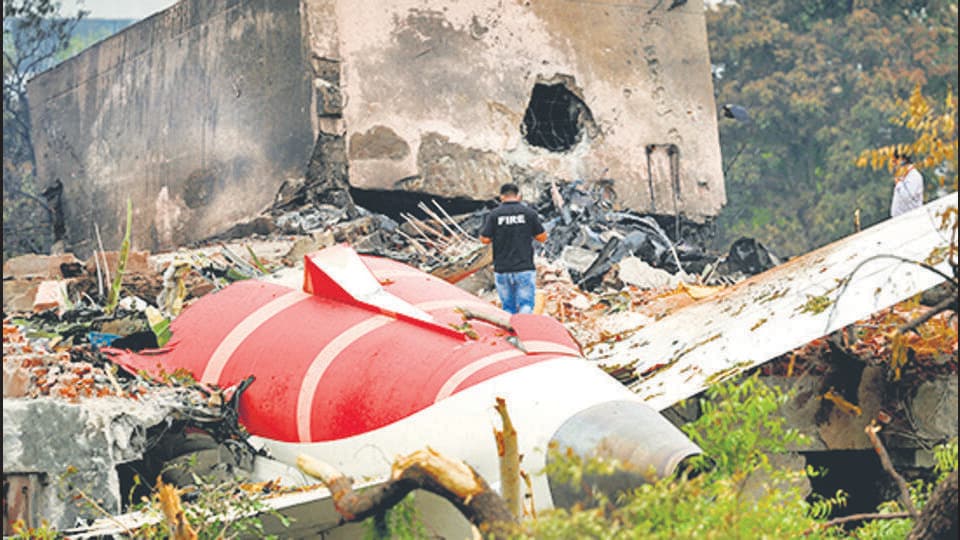
Terming the tragedy “very unfortunate”, a bench of Chief Justice of India Surya Kant and Justice Joymalya Bagchi said that the court would like to examine the procedure adopted and the nature of the inquiry set up to determine the cause of the crash.
“We would want to see the procedural protocol that has been followed in this matter. We think that is important,” the bench told Solicitor General Tushar Mehta, directing the Centre and the DGCA to file an affidavit detailing the steps taken so far.
The Solicitor General informed the court that the investigation was at its “fag end” and was likely to conclude in three weeks, though certain components required examination in foreign jurisdictions. The court recorded his assurance that a brief report on the procedural framework followed in the probe would be filed.
At the same time, the bench underscored the need for restraint, observing that the matter involved complex technical issues and significant loss of life. “These proceedings are not meant for a blame game between different nations or airlines…Very complex issues are there,” observed the bench, adding that comments about a particular aircraft model or airline should be made conservatively.
The hearing arose from pleas seeking an independent, court-monitored investigation into the crash. One of the petitions has been filed by the father of Captain Sumeet Sabharwal, one of the pilots who died in the accident, challenging the AAIB’s preliminary report that was widely reported as indicating possible pilot error.
Senior advocate Gopal Sankaranarayanan, appearing for the deceased pilot’s father and the Federation of Indian Pilots, submitted that blame had effectively been placed on the cockpit crew, with even notices being issued to relatives of the deceased pilot who are employed elsewhere.
Advocate Prashant Bhushan, appearing for NGO Safety Matters Foundation – another petitioner in the case, argued that similar incidents involving Boeing 787 aircraft had occurred and that a formal court of inquiry was warranted under the applicable rules in cases involving fatalities.
Bhushan also contended that in previous major air crashes in India, courts of inquiry headed by former high court judges had been constituted, and that Rule 12 of the Aircraft (Investigation of Accidents and Incidents) Rules mandates such a course in serious accidents.
SG Mehta urged that all such contentions be placed on record and maintained that the ongoing investigation should be allowed to conclude. The court further observed that the role of the AAIB is to determine the cause of the crash and not to apportion responsibility. “Let us give them some time,” he said. It added that the court would first await the outcome of the AAIB probe before deciding whether a separate court of inquiry would be necessary.
The June 12 crash of Air India Flight AI-171, a Boeing 787 Dreamliner operating from Ahmedabad, killed all 12 crew members, most passengers on board, and several persons on the ground, taking the toll to 260. The preliminary report released in July noted that both engine fuel control switches moved from RUN to CUTOFF shortly after takeoff, resulting in loss of thrust. The cockpit voice recorder captured one pilot questioning the cutoff, the other denying responsibility, sparking global debate over pilot error versus mechanical failure. The report added no recommended actions yet for Boeing or GE engines, with the switch transition’s cause, which is the probe’s core puzzle, still unresolved amid theories of human error, malfunction, or electronics. The AAIB, on their part, has maintained that the investigation is ongoing and no final conclusions have been drawn.
In earlier hearings in the batch of petitions, the Centre had told the court that the AAIB inquiry was being conducted in accordance with international civil aviation norms under the International Civil Aviation Organisation (ICAO) framework, and that its purpose was to ascertain causes and prevent recurrence -- not to fix blame.



