
 E-Paper



Supreme Court stresses on early sexuality education
The Supreme Court advocates for earlier sexuality education, emphasizing its importance for adolescents' awareness and prevention of impulsive behavior.

 Prefer HTon Google


The Supreme Court on Wednesday pressed for sexuality education to be introduced at an earlier age, observing that children should be made aware of the changes that occur after puberty and the “care and cautions” to be taken regarding those changes.
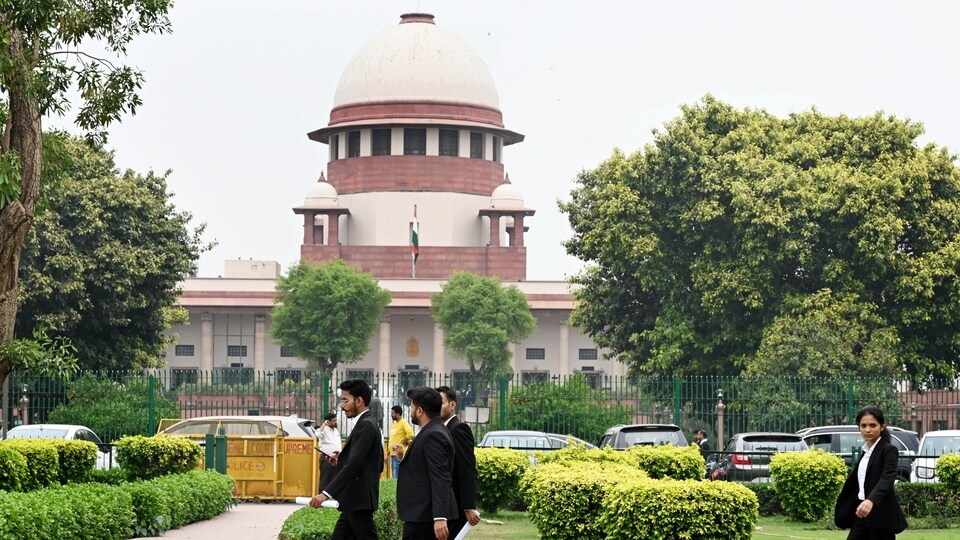
A bench of justices Sanjay Kumar and Alok Aradhe made the observation while confirming bail granted to a 15-year-old boy accused of raping a minor girl, noting that both the accused and the victim were adolescents.
The court said that while the curriculum in Uttar Pradesh included lessons on sex education from Class IX onwards, it believed that such education must begin earlier. “We are of the opinion that sex education should be provided to children from a younger age and not Class IX onwards. It is for the authorities concerned to apply their mind and take corrective measures, so that children are informed of the changes that happen after puberty and the care and cautions to be taken in relation thereto,” the bench said in its order.
The observations came in an appeal filed by the juvenile boy against an order of the Allahabad high court, which had rejected his plea for bail in August 2024. The Supreme Court, by an interim order in September 2025, had directed his release on terms and conditions to be fixed by the Juvenile Justice Board. On Wednesday, it made that bail order absolute, setting aside the high court’s decision.
While doing so, the court also took note of the state’s affidavit on the implementation of sex education in its schools. Earlier, on August 12, the apex court had directed Uttar Pradesh to file details on how sexuality education was imparted to higher secondary students. In response, an additional affidavit dated October 6 was submitted by the district authorities in Sambhal, outlining the curriculum prepared by the Secondary Education Department in accordance with NCERT guidelines.
The Supreme Court, however, expressed concern that the existing framework, beginning only from Class IX, was insufficient and called for earlier sensitisation of adolescents to prevent uninformed and impulsive behaviour during puberty.
The case arose from an FIR lodged on October 20, 2023, at Hayat Nagar police station in Sambhal district. The complainant, a Class 10 student, alleged that she had become acquainted with the boy several months earlier and that he had forced her into a sexual act after taking her to his house. She later discovered she was pregnant, following which the complaint was filed under Sections 376 (rape) and 506 (criminal intimidation) of the Indian Penal Code and Section 6 of the Protection of Children from Sexual Offences (POCSO) Act, 2012.
The Juvenile Justice Board had earlier declared the boy a minor and rejected his bail plea, a decision upheld by the sessions court, and the Allahabad high court, holding that the seriousness of the offence and the age of the victim did not justify release on bail.
The high court had noted that the “consent of a minor is of no worth” and rejected the defence argument that the case involved a consensual relationship between two adolescents. It further held that “being a minor may not be a circumstance in favour of the revisionist for grant of bail” given the nature of the allegation.
The top court’s latest observations build on the judgment delivered by the apex court in December 2024, which underscored the centrality of sexuality education in tackling child marriage. Underlining that comprehensive sexuality education (CSE) was “a vital tool in the long-term eradication of child marriage,” the court had then directed that such education be aligned with frameworks laid down by the World Health Organisation (WHO) and other global experts.
The 2024 judgment had made it clear that sexuality education must go beyond discussions on reproductive health to cover legal aspects of child marriage, gender equality and the physical and mental consequences of early marriage. It directed that the content be age-appropriate and culturally sensitive, while empowering children to understand the importance of delaying marriage and the broader implications for their well-being and future opportunities.



