
 E-Paper



SC strikes down domicile-based reservation in PG medical admissions
The judgment sets a crucial precedent, effectively mandating that PG medical admissions under state quotas must be determined solely on merit in the National Eligibility cum Entrance Test (NEET)

 Prefer HTon Google


The Supreme Court on Wednesday held that domicile-based reservations in postgraduate (PG) medical courses are impermissible, declaring them unconstitutional for violating Article 14 of the Constitution.
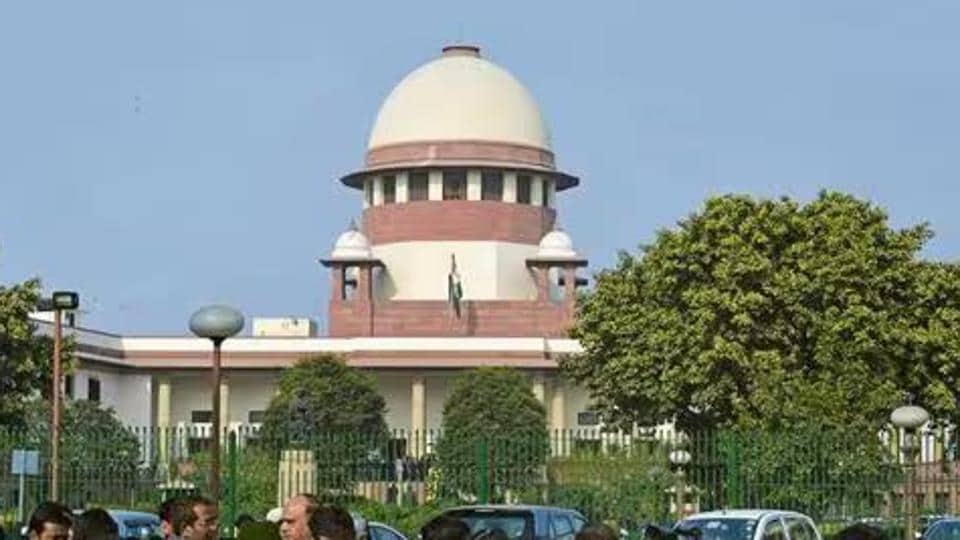
The judgment sets a crucial precedent, effectively mandating that PG medical admissions under state quotas must be determined solely on merit in the National Eligibility cum Entrance Test (NEET).
“Residence-based reservation in PG medical courses is clearly violative of Article 14 of the Constitution,” pronounced a three-judge bench comprising justices Hrishikesh Roy, Sudhanshu Dhulia and SVN Bhatti.
The bench unequivocally ruled that state-imposed domicile requirements for admission to PG medical programmes contravene the constitutional guarantee of equality and cannot be sustained.
“We are all domiciles in the territory of India. There is nothing like a provincial or state domicile. There is only one domicile. We are all residents of India,” the bench stated, underscoring that Article 19 of the Constitution grants every citizen the right to reside, trade, and pursue a profession anywhere in the country.
Also Read: Approach HC first: SC refuses to hear UAPA challenges directly
The court made it clear that the Constitution also bestows the right to seek admission in educational institutions across India, and that any form of domicile-based restriction at the PG level disrupts this foundational principle.
While acknowledging that some degree of domicile-based reservation may be permissible in undergraduate (MBBS) admissions, the bench categorically held that extending such policies to PG medical programs, where specialisation and expertise are critical, would be unconstitutional.
“Considering the importance of specialised doctors in PG medical courses, reservation in higher levels on the basis of residence would be violative of Article 14 of the Constitution,” justice Dhulia read out from the judgment.
While striking down domicile reservations for future admissions, the court provided relief to students who are currently enrolled or have already completed their PG medical education under such schemes.
“This judgment will not affect the domicile reservation already granted. Students who are undergoing PG courses and those who have already passed out from such residence category will not be affected,” clarified the bench, ruling on a bunch of petitions arising out of appeals over admission to PG medical courses at the Government Medical College and Hospital, Chandigarh.
In 2019, a two-judge Supreme Court bench, in Dr. Tanvi Behl (SV) vs. Shrey Goel and Others, was confronted with appeals against a Punjab and Haryana High Court ruling that had struck down domicile reservations in PG medical admissions as unconstitutional.
Acknowledging the gravity of the issue, especially given that Chandigarh has only one medical college, the Supreme Court’s two-judge bench referred the matter to a larger bench for an authoritative decision. The three-judge bench has now provided clarity, ensuring that admissions to PG medical courses remain merit-driven and that no state can impose restrictive domicile criteria.



