E-Paper



SC to frame nationwide demolition guidelines
The directions will ensure that proper legal procedures, including prior notice through registered post and a reasonable window for contesting orders, are followed before any demolition takes place.

 Prefer HTon Google


Mere accusations or convictions cannot justify demolishing a person’s house or property, the Supreme Court asserted on Tuesday, as it moved closer to setting out nationwide rules to regulate demolition activities and emphasised that these directives, in a “secular country” such as India, will apply equally across all communities and religions.
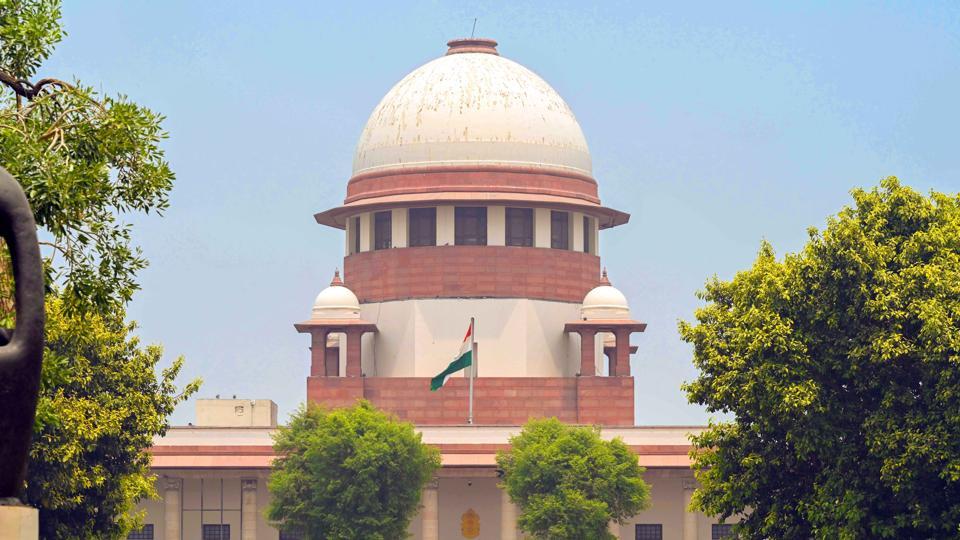
The directions will ensure that proper legal procedures, including prior notice through registered post and a reasonable window for contesting orders, are followed before any demolition takes place. The top court also indicated it may require mandatory videography of demolitions and hold officers accountable by mandating recovery of compensation for unjust demolitions.
Reserving its verdict on a clutch of petitions challenging demolitions linked to criminal accusations, a bench comprising justices Bhushan R Gavai and KV Viswanathan emphasised the need to streamline demolition procedures to avoid arbitrary actions, often referred to as “bulldozer justice”.
“We are going to make it clear that merely because someone is accused of a crime or even convicted of some offences cannot be a ground to demolish their house or properties. Unless there is a violation of any municipal law preceded by a notice, opportunity of hearing and, we will add, there should be a window after adverse orders...The idea is to give the family some time for making alternative arrangements. Why should children and elderly be brought to the road overnight?” asked the bench.
It further noted that while demolishing unauthorised structures is necessary, there cannot be discriminatory targeting of specific properties or individuals. “Even if someone is convicted, can his house be demolished? Public safety and public interest are paramount, but demolitions should not target one property when another similarly violating structure is left untouched,” it observed.
Expressing its intent to introduce a judicial oversight mechanism to ensure demolitions are applied uniformly and fairly, irrespective of religion or community, the bench remained emphatic that the directives to be issued by the top court would apply across the board while ensuring that its order is not misused by squatters and encroachers to occupy public roads, government land, forest land, water bodies and similar areas.
“We are a secular country. What we are going to lay down will be for all communities. Unauthorised constructions may belong to Hindus or Muslims, it doesn’t matter. They will have to go. We don’t want squatters to flourish. If there is any religious structure on public land, that will also have to be removed. Public safety and public interest are paramount... There cannot be a different law for one religion. Unauthorised constructions have to go irrespective of beliefs or religion,” it remarked.
The court had earlier, on September 17, issued an interim order halting demolitions without judicial oversight, highlighting the need for a balance between law enforcement and constitutional rights. It had directed that no demolition, including those linked to criminal accusations, should occur without the court’s explicit permission. This interim order, however, did not apply to unauthorised constructions on public roads, footpaths or water bodies. During that hearing, the court had stressed that “heavens will not fall” if authorities delayed demolitions to ensure proper legal and procedural safeguards were followed. The bench had on the day noted that demolitions must not be a tool for punishing individuals without due process, particularly in cases where properties were linked to those accused of crimes.
This directive had followed another matter before a different bench in the Supreme Court, which said on September 12 that the growing trend of demolishing properties of individuals accused of crimes, often targeting their families too and executed via bulldozers, is “inconceivable in a nation where law is supreme. This bench added that if not checked, this pernicious practice “may be seen as running a bulldozer over the laws of the land.”
On September 2, the justice Gavai-led bench first initiated steps towards issuing pan-Indian guidelines on demolitions, noting that demolishing homes of accused persons without following legal procedures violates fundamental rights and due process.
The court’s forthcoming guidelines are expected to emphasise due process, requiring notices, hearings, and a reasonable period for contesting demolition orders. These safeguards are aimed at preventing the arbitrary destruction of homes, particularly those of individuals accused or convicted of crimes, reflecting growing judicial response to the rising trend of “bulldozer justice” – the practice of demolishing the properties of people accused of crimes, and, sometimes, of their families, often using earthmovers or bulldozers, without following due process.
During the deliberations on Tuesday, solicitor general (SG) Tushar Mehta, appearing for Uttar Pradesh, Madhya Pradesh and Rajasthan, acknowledged the court’s concerns and agreed that demolition should not occur due to mere criminal involvement or conviction. “A mere involvement in a crime would not warrant it, let alone a conviction,” he submitted, affirming that demolitions should adhere to laws and regulations.
That position has not been reflected in the behaviour of many states, including Uttar Pradesh, where so-called “bulldozer justice” -- the demolition of the residences of those accused of a crime -- has been touted by governments as a sign of good governance and decisiveness. To be sure, all governments doing this claim the structures being demolished are illegal, although property owners have alleged that due process is not followed in these cases.
The SG proposed reforms, including ensuring written notices are sent through registered post and providing a 10 or a 15-day window to contest any demolition notice. He further agreed with the court’s suggestion that notices should also be uploaded on a public portal to ensure transparency and accountability of officers responsible for carrying out demolitions. “Pasting a notice can be fabricated; uploading it online creates an additional layer of protection,” the court said.
The bench also discussed the need for a reasonable window after an adverse demolition order is issued. “There should be some breathing space between the final order and its execution. Why should families, including children and the elderly, be rendered homeless overnight without giving them a chance to make alternate arrangements?” questioned then bench, advocating for a 10-15 day grace period for those whose homes are slated for demolition. It remarked that some form of judicial review or a mechanism to check the correctness of demolition orders could mitigate concerns of discrimination and ensure fairness.
But Mehta expressed reservations about providing additional time after a final demolition order, fearing that it could lead to misuse. “Builders or other individuals may approach courts to seek further extensions, which could unduly delay the process. While the court’s intention may be to provide fairness, it could be exploited by dubious litigants,” the SG cautioned.
The court responded that it would introduce a rider, ensuring that courts would be slow in interfering with demolition orders, and that stays should be decided within a month. The bench reasoned: “Demolition is an irreversible process, unlike eviction, which is reparable. Some time must be granted before execution to prevent families from being thrown onto the streets overnight.”
The court also floated the idea of mandatory videography during demolition operations to provide evidence in case of wrongful actions. “We can think of video recording of such demolitions. So that if the demolition is found to be illegal, property can be restituted or adequately compensated for. Officers responsible for such wrongful demolitions should be made to pay from their own pocket,” it added.
Senior counsel Abhishek Manu Singhvi, representing one of the parties in the case, highlighted that the idea of making submissions before the court for the adherence to legal procedure and due process is constructive for the issuance of guidelines for the future and not to rake up any past incident.
Senior advocate CU Singh, representing another petitioner, emphasised that municipal laws should not be misused to fight crime. “Demolition cannot be a crime-fighting measure,” stated Singh, stressing that constitutional authorities must not grandstand on the issue. Assisted by advocate Fauzia Shakil in preparing the proposal, he argued that demolitions should not be executed as a form of political policing and that the court must lift the veil on such misuse of power.
Responding, the bench affirmed that any directions issued would apply equally across communities and religions. “We are a secular country,” said the bench, adding that the court’s guidelines would ensure that demolitions are conducted without discrimination or bias.
Senior advocate Sanjay Hegde, representing another petitioner in the case, pointed out that demolitions have often been used as a show of power, particularly with the use of bulldozers. He argued that demolitions were sometimes weaponised for political gains and called for transparency through video recording.
The bench agreed that accountability was crucial, proposing that officers responsible for wrongful demolitions might be made to pay compensation from their own pocket.
Appearing for Jamiat-I-Ulama Hind, senior counsel MR Shamshad argued for a more transparent and equitable process in carrying out demolitions. He suggested that notices for demolitions should be issued in vernacular languages to ensure better understanding by affected parties. Shamshad also proposed that the officers involved in executing the demolitions be identified and held accountable by submitting affidavits affirming compliance with all legal norms. Furthermore, he recommended that a 60-day period be given after the issuance of the notice to allow residents sufficient time to respond. He highlighted concerns about selective targeting, urging the court to prevent actions where only one or two colonies or a few houses in a particular area are singled out.
In response, the court reassured that its orders apply uniformly, irrespective of community or religion. The bench said that it has consistently clarified that their decisions are meant to ensure fairness across all sections of society, underscoring the importance of non-discrimination in the application of demolition orders.