E-Paper



SC warns judges against giving questionable judgements just before retirement
The Supreme Court on Wednesday came down hard on the practice of judges delivering questionable judicial orders on the eve of their retirement, warning that such conduct may invite disciplinary action when competent authorities are left with the impression that decisions were driven by “extraneous and ulterior considerations”


The Supreme Court on Wednesday came down hard on the practice of judges delivering questionable judicial orders on the eve of their retirement, warning that such conduct may invite disciplinary action when competent authorities are left with the impression that decisions were driven by “extraneous and ulterior considerations”.
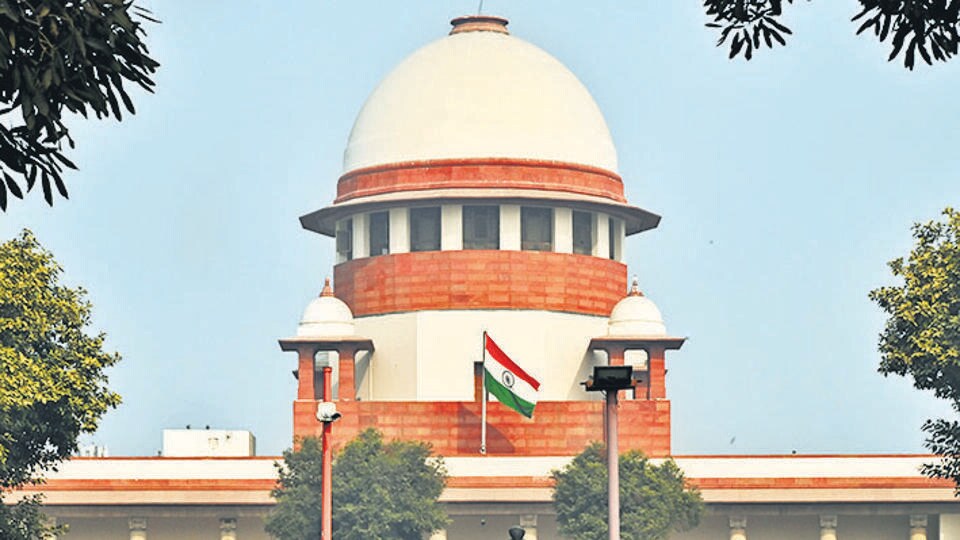
A bench comprising Chief Justice of India Surya Kant and Justice Joymalya Bagchi made the observations while refusing to interfere with the suspension of Rajaram Bhartiya, principal district and sessions judge of Panna in Madhya Pradesh.
Calling the trend “very unfortunate”, the court said that it has come across several instances where judicial officers, aware that they were nearing retirement, appeared to pass contentious orders that raised serious questions about propriety and integrity.
“We agree that no adverse action should ordinarily be taken for merely issuing judicial orders. But if an order is passed for extraneous or ulterior considerations, why not? What if a judge passes a palpably incorrect order on his way to retirement?” the bench observed during the hearing.
The court went on to remark that such conduct undermines institutional credibility. “If somebody passes these kinds of orders just before retirement, it would raise questions…This has become an unfortunate trend,” said the CJI, using a cricketing metaphor to underline the concern. “For him (Bhartiya), he was just a fortnight away from retirement when he started hitting the sixers.”
The remarks came as the court dismissed Bhartiya’s challenge to a November 19 suspension order issued by the Madhya Pradesh High Court on its administrative side. Bhartiya had moved the Supreme Court directly, seeking quashing of the suspension and reinstatement with full service benefits, arguing that he was being punished merely for passing judicial orders.
Senior advocate Vipin Sanghi, appearing for the suspended judge, contended that disciplinary action for judicial orders struck at the independence of the judiciary. He submitted that the orders in question were detailed and reasoned, not casual or summary, and that the suspension had been ordered without issuing any show-cause notice or seeking an explanation. He also pointed to Bhartiya’s past service record and gradings to argue that the action was arbitrary.
Sanghi further told the court that Bhartiya was originally due to retire on November 30, but owing to an extension granted by the Supreme Court to judicial officers, his tenure would have continued till November 2026. He urged the bench to at least direct the high court to disclose the material relied upon or consider posting the officer elsewhere pending consideration of his representation.
The bench, however, was unconvinced. It pointed out that when the impugned order was passed, Bhartiya himself believed he was barely weeks away from retirement. “This petitioner was not aware that his term was to be extended… So, for him, he was just a fortnight away from retirement,” the CJI noted, adding that the timing of such decisions inevitably casts a shadow on their bona fides.
The court also questioned why Bhartiya had approached the Supreme Court directly. “He did not even have to come to the Supreme Court. He could have gone to the high court,” the bench observed, rejecting the argument that the decision of the high court’s full court rendered judicial review unavailable. “So what? The high court was still competent to hear it on the judicial side,” it said.
In its order, the Supreme Court declined to stay the suspension while granting Bhartiya liberty to submit a representation to the Madhya Pradesh High Court on the administrative side. It directed the high court to take an appropriate decision within four weeks of such representation being filed.
The suspension of the Panna principal district and sessions judge has drawn attention within judicial circles in Madhya Pradesh. While the high court has not officially disclosed the reasons, the action is widely believed to be linked to judicial orders quashing a collector’s decision imposing a penalty of over ₹100 crore in an illegal mining case.
According to media reports, the collector of Panna had imposed the penalty on a political leader and owner of a stone crusher firm after an inquiry . The order was later set aside by the district court, a development that subsequently became the subject of intense scrutiny.
While the Supreme Court did not make any definitive finding on this aspect, Sanghi acknowledged during the Wednesday proceedings that the suspension was linked to the reversal of the collector’s order.